About This Article
Zoom Health has supplied home health products and test kits to UK customers for nearly 20 years. This article is for general information only and does not constitute medical advice. Any abnormal test results should be discussed with your GP promptly. Always consult a qualified healthcare professional before making changes to your diet, medication or lifestyle based on a home test result. Home health tests are screening tools and are not a substitute for clinical testing.
Cardiovascular disease is the leading cause of death in the UK. Heart attacks, strokes, and heart failure between them account for around a quarter of all deaths each year, and the vast majority of those deaths are preceded by years of modifiable risk – elevated blood pressure, raised cholesterol, excess visceral fat, reduced oxygen efficiency – that could have been identified, tracked, and acted upon far earlier than it was.
The barrier has never really been access to information. It has been access to data. A GP appointment produces a blood pressure reading taken in unusual circumstances, a cholesterol number every few years, and a BMI calculated from a set of waiting room scales. That is not enough information to manage cardiovascular health actively. What changes the picture is consistent, validated home monitoring that generates real data about real conditions over time.
That is what this series is about. Across five guides I have covered the monitoring tools available to UK adults at home – blood pressure monitors, pulse oximeters, body composition scales, and home cholesterol tests – explaining what each one measures, how to use it correctly, and how its data fits into the broader picture of cardiovascular risk. This hub page brings all five guides together, along with a quick finder to help you go directly to whichever guide is most relevant to your situation.
Quick finder – start here
I want to monitor my blood pressure at home – and I am not sure whether to buy a wrist or upper arm monitor.
Go to Guide 1: Upper Arm vs Wrist Blood Pressure Monitor
I want to check my blood oxygen level – or I have a respiratory or heart condition and want to monitor SpO2 at home.
Go to Guide 2: Pulse Oximetry and SpO2
My GP has found high blood pressure – or I suspect my surgery readings do not reflect my real blood pressure at home.
Go to Guide 3: White Coat Hypertension and Home Monitoring
I want to understand my weight and heart risk in more detail – beyond just BMI and bathroom scales.
Go to Guide 4: Body Composition and Heart Health
I have never had a cholesterol test – or I want to understand what my cholesterol result means for my heart risk.
Go to Guide 5: Cholesterol and Cardiovascular Risk
Guide 1: Upper Arm vs Wrist Blood Pressure Monitor – Which One Do You Actually Need?
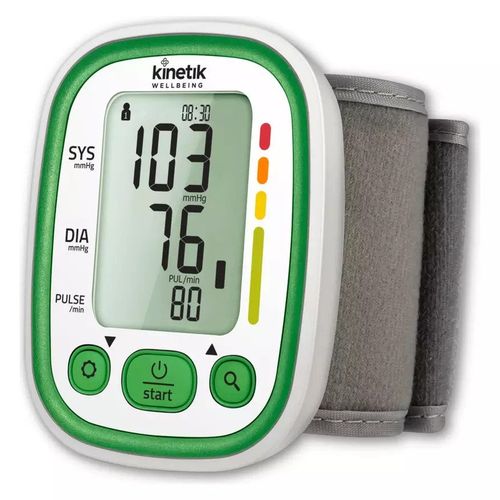
The first question most people ask when they decide to monitor their blood pressure at home is whether to buy an upper arm or wrist device. The answer matters more than it might seem, because the type of monitor you choose affects accuracy, ease of use, and ultimately the reliability of the data you collect.
This guide explains the clinical reasoning behind the choice, addresses the historical accuracy concerns around wrist monitors and how modern validated devices have addressed them, and introduces the Kinetik Wellbeing WBP3 – a clinically validated wrist monitor with a built-in positioning sensor that removes the main source of user error. At £24.99, it is an accessible starting point for anyone beginning home blood pressure monitoring.
Guide 2: What Is a Pulse Oximeter? SpO2, Normal Ranges, and When Your Reading Should Concern You
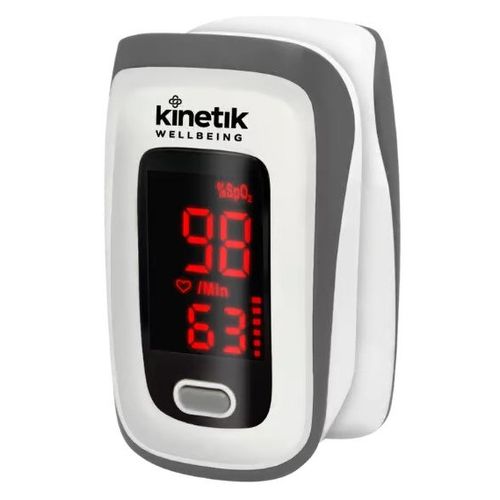
A pulse oximeter clips onto your fingertip and within seconds gives you two important numbers: your blood oxygen saturation (SpO2) and your pulse rate. Together these tell you a great deal about how efficiently your heart and lungs are working. For people with respiratory conditions, heart disease, or anyone recovering from illness, a home pulse oximeter is one of the most practical monitoring tools available.
This guide explains how pulse oximetry works, what normal SpO2 and pulse rate ranges look like, what can affect your readings and how to account for it, and when a reading should prompt you to seek medical advice. The featured device is the Kinetik Wellbeing JPD500E – FDA approved, Class IIa certified, and used by NHS Scotland – available at Zoom Health for £27.99.
Guide 3: White Coat Hypertension – Why Your GP Reading Might Be Misleading You (and What to Do About It)

Between 15% and 30% of people diagnosed with hypertension in a clinical setting have blood pressure that is normal at home – a pattern called white coat hypertension. The reverse, masked hypertension, affects a further 10% to 15%, with normal clinic readings concealing elevated pressure in everyday life. Both conditions carry real consequences: unnecessary medication in one case, undetected organ damage in the other. Neither can be identified from a surgery measurement alone.
This guide explains both conditions clearly, makes the case for the seven-day home monitoring protocol recommended by NICE and the British Hypertension Society, and walks through exactly how to build a blood pressure log that your GP will find clinically useful. The featured device is the OMRON M2 Basic, currently on sale at £29.99, with Intellisense technology and a hypertension indicator.
Guide 4: Body Composition and Heart Health – Why BMI Alone Doesn’t Tell the Full Story

BMI has been the default measure of weight-related cardiovascular risk for decades. Its limitation is that it cannot distinguish between fat and muscle, and it says nothing about where fat is distributed – yet visceral fat, stored around the abdominal organs, is one of the most significant independent drivers of elevated blood pressure, insulin resistance, and cardiovascular disease. Two people with identical BMIs can face very different risk profiles.
This guide explains the body composition metrics that matter most for heart health – body fat percentage, visceral fat score, and muscle mass – and introduces the Kinetik Wellbeing Smart Body Analyser, a Bluetooth-enabled device that measures all of these and syncs with the MedM app for long-term trend tracking. At £34.99, and with NHS Proud Supplier status and a 2-year warranty, it is the most capable device in the series for building a sustained picture of cardiovascular risk over time.
Guide 5: Cholesterol and Heart Risk – Why Your Result Only Makes Sense Alongside Your Other Numbers
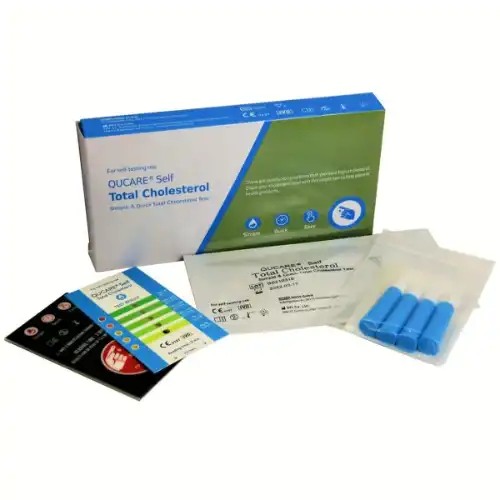
Cholesterol is the cardiovascular risk factor most people have heard of, and the one most frequently misunderstood. A total cholesterol reading in isolation tells you less than most people realise – its significance depends heavily on the HDL and LDL breakdown underneath it, on blood pressure, on body composition, and on a cluster of other factors that GPs combine into a 10-year risk score using tools like QRISK3. Understanding how cholesterol fits into that wider picture is the difference between a number and actionable knowledge.
This guide explains what a home total cholesterol test does and does not measure, how cholesterol interacts with blood pressure and visceral fat to compound cardiovascular risk, when a result should prompt a GP conversation, and how often to test. The featured product is the Qucare Total Cholesterol Test, which includes two tests, all equipment needed, and a video guide – currently on sale at £11.99 and rated 5 out of 5 by customers.
Related guides from Zoom Health
The five guides in this series cover the monitoring tools most relevant to cardiovascular health. For broader home health testing – covering thyroid, kidney function, iron deficiency, vitamin D, diabetes, and more – our complete home health testing series takes the same approach across ten conditions.
If you are considering testing beyond cardiovascular monitoring, the guides most closely connected to heart health are the cholesterol test guide from this series, the complete home health testing hub, and the kidney function and diabetes guides within it – since chronic kidney disease and type 2 diabetes are both strongly linked to cardiovascular risk and are commonly found alongside hypertension and elevated cholesterol.
For those using Lindens supplements alongside home monitoring, the Lindens supplements guide covers omega-3 and CoQ10 – both of which have cardiovascular relevance – alongside a full range of vitamins and health support supplements available from Zoom Health.
Build your home heart health monitoring kit
Browse blood pressure monitors, pulse oximeters, body composition scales, and home cholesterol tests at Zoom Health – all available with same-day dispatch and free UK delivery on qualifying orders.
Anthony Cunningham – Health Writer & Editor
Anthony Cunningham, BA (Hons), MA, is a UK-based health writer and editor with over 20 years’ experience running Zoom Health, a trusted source for home health tests, preventive care, and wellness guidance. He creates clear, evidence-based articles using NHS, NICE, and WHO guidance. Where possible, content is reviewed by practising clinicians to enhance accuracy and reliability, helping readers make informed healthcare decisions.