About This Article
Zoom Health has supplied home health products and vitamins to UK customers for nearly 20 years. This article is for general information only and does not constitute medical advice. Always consult your GP or a qualified healthcare professional before starting any new supplement, particularly if you are pregnant, breastfeeding, taking prescribed medication, or managing a medical condition. Food supplements are not a substitute for a balanced diet and healthy lifestyle.
The weight management supplement market is one of the most crowded and, frankly, one of the least honest areas of the entire supplement industry. Claims are frequently exaggerated, mechanisms are poorly understood or misrepresented, and the gap between what products promise and what the evidence supports is often substantial. I want to approach this topic differently. Rather than promoting supplements as shortcuts to weight loss, I want to be clear from the outset that the evidence for most weight management supplements is modest at best, and that no supplement replaces the fundamental requirement for a sustainable, balanced diet and regular physical activity.
With that said, there are two Lindens products in the weight management category that I can recommend with genuine confidence because their mechanisms are well-understood and their claims are grounded in solid evidence. The first is Lindens Glucomannan (Konjac Fibre) 500mg Capsules, which holds a rare EU-authorised (EFSA) health claim for its role in weight loss as part of an energy-restricted diet. The second is Lindens Cinnamon 3000mg Tablets, which supports blood sugar regulation in a way that can meaningfully reduce cravings and help maintain more consistent energy levels between meals. Both are supporting tools for a sensible approach to weight management, and I recommend them in that spirit.
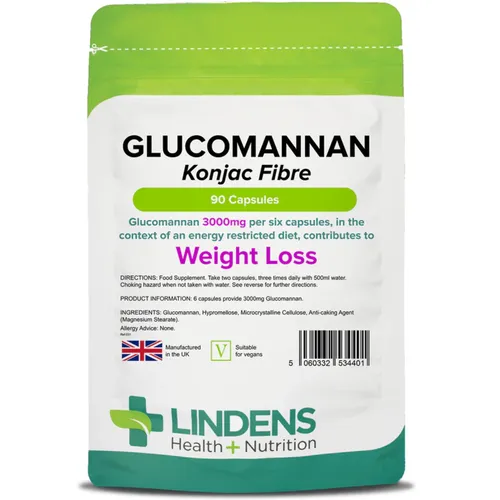
Lindens Glucomannan (Konjac Fibre) 500mg Capsules
90 capsules | £9.99
EU-authorised health claim for weight loss as part of an energy-restricted diet | Derived from Konjac plant root | Naturally high in fibre
Why Most Weight Loss Supplements Don’t Work – and What to Look For Instead
Before discussing specific products, it is worth explaining why I am cautious about most of what the weight loss supplement market offers. The vast majority of products in this category make claims that are either unsubstantiated by clinical evidence, based on studies that are too small or poorly designed to be meaningful, or which describe mechanisms that are real but whose practical effect on body weight in free-living humans is negligible. Thermogenic fat burners, appetite suppressants of unspecified mechanism, and detox or cleanse products all fall into this category to varying degrees.
The standard I apply when evaluating weight management supplements is whether they have a plausible, well-understood mechanism that has been tested in properly conducted clinical trials, and whether any regulatory body with scientific rigour has reviewed that evidence and found it sufficient to permit a health claim. In the EU and UK, health claims on food supplements are assessed by EFSA, the European Food Safety Authority, and the bar for approval is genuinely high. Very few weight management ingredients have passed this assessment. Glucomannan is one of the rare exceptions, and that matters.
This does not mean that other weight management supplements are without value. Cinnamon, for example, does not carry an EFSA weight loss claim but has meaningful evidence for blood glucose regulation that is directly relevant to weight management in practice. The distinction is between the strength of evidence available, not a binary judgement of useful versus useless.
Glucomannan: The Only EU-Approved Weight Loss Supplement Ingredient
Glucomannan is a soluble dietary fibre derived from the root of the konjac plant, native to parts of Asia where it has been used as a food ingredient for centuries. In Japan, it is most familiar as the primary ingredient in shirataki noodles, the almost calorie-free noodles used in traditional cooking. Its remarkable property is the degree to which it absorbs water: glucomannan can absorb up to fifty times its own weight in water, forming a thick, viscous gel in the stomach.
This gelling property is directly responsible for its appetite-suppressing mechanism. When glucomannan is taken before a meal with a large glass of water, it expands in the stomach, increasing the sensation of fullness and slowing the rate at which the stomach empties. The result is that meals feel more satisfying on a smaller amount of food, and the time before hunger returns is extended. At the same time, because glucomannan slows gastric emptying, carbohydrates from the meal are absorbed more gradually, producing a slower and more sustained rise in blood glucose rather than a sharp spike followed by a rapid fall. This helps to prevent the post-meal energy crashes and associated cravings that many people find undermine their efforts to reduce overall food intake.
EFSA assessed the evidence for glucomannan in the context of weight management and concluded that the data was sufficient to authorise the following claim: glucomannan, from konjac, when consumed in the context of an energy-restricted diet, contributes to weight loss. This is the only weight loss health claim approved for a fibre supplement, and it is conditional on correct use: the supplement must be taken as part of a calorie-restricted eating plan, not as a standalone intervention. Three grams of glucomannan daily, split across three doses taken before meals, is the dose specified in the approved claim.
About the Lindens Glucomannan Capsules
The Lindens Glucomannan (Konjac Fibre) 500mg Capsules provide 500mg of konjac-derived glucomannan per capsule. To meet the dose used in the EFSA-reviewed evidence and referenced in the approved health claim, the recommended intake is two capsules taken three times per day before main meals, giving a total of six capsules and 3000mg of glucomannan daily. Each pack of 90 capsules therefore provides fifteen days’ supply at the full recommended dose, or up to thirty days’ supply at a more moderate single-capsule dose.
Correct administration is particularly important with glucomannan. Each dose must be taken with a large glass of water, at least 200-250ml, immediately before eating. This is not optional: glucomannan begins absorbing water as soon as it enters the digestive system, and insufficient water intake can result in the gel forming prematurely in the oesophagus, causing discomfort. Taking it with adequate water ensures the gel forms in the stomach where it is intended to act. Starting with a lower dose for the first few days and building up gradually is also sensible, as some people experience bloating or digestive discomfort when they introduce a high-fibre supplement abruptly.
Glucomannan can slow the absorption of medications taken at the same time, so it should be taken at least an hour before or several hours after any prescribed medication. If you take regular prescription medicines, discuss the addition of glucomannan with your pharmacist or GP before starting.
Cinnamon and Blood Sugar: The Craving Connection
Blood sugar management is one of the most practically important but least discussed aspects of weight management for many people. The cycle of rapid blood glucose rises after meals, followed by sharp falls that trigger hunger, fatigue and cravings, particularly for sugary or high-carbohydrate foods, is a major driver of overeating that has nothing to do with willpower or self-discipline. It is a physiological response to glucose instability, and addressing it nutritionally can meaningfully change the experience of trying to reduce calorie intake.
Cinnamon has a well-documented relationship with blood glucose and insulin sensitivity. Its active compounds, particularly cinnamaldehyde and a group of polyphenols, appear to enhance insulin signalling at the cellular level, improving the efficiency with which cells take up glucose from the bloodstream. The practical result is a more gradual and sustained blood glucose response after meals, with less pronounced post-meal troughs. For people whose weight management is complicated by strong sugar cravings, afternoon energy slumps, or a tendency to overeat in response to hunger that arrives rapidly after meals, this mechanism is directly relevant.
The evidence base for cinnamon and blood glucose is reasonably well-developed, particularly in the context of blood sugar management in people with type 2 diabetes or insulin resistance, where several well-conducted trials have shown meaningful effects. For people without diabetes who are managing their weight, the mechanism is the same but the magnitude of effect is typically more modest. Cinnamon supplements are not a blood glucose medication and should not be treated as one. But as a nutritional support for steadier blood sugar and reduced cravings, they have a genuine and evidence-supported role.
About the Lindens Cinnamon 3000mg Tablets
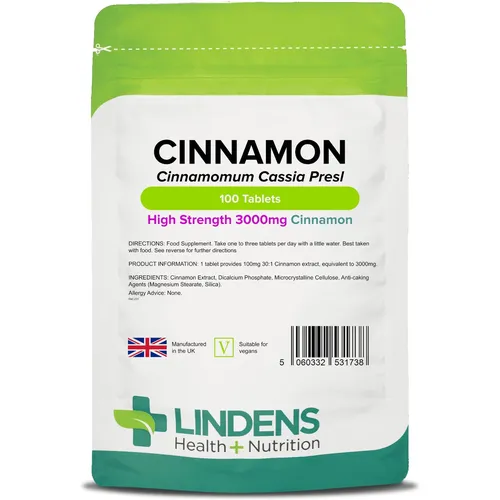
The Lindens Cinnamon 3000mg Tablets each contain a concentrated cinnamon extract equivalent to 3000mg of dried cinnamon bark (Cinnamomum aromaticum). This is a meaningfully high-strength formulation: many cinnamon supplements on the market provide 500mg to 1000mg equivalent, well below the doses used in clinical studies. The dose range in the clinical literature that has shown effects on blood glucose markers is typically 1000mg to 6000mg of cinnamon daily, and the Lindens tablet, taken at one to three tablets daily, sits comfortably within this range.
Cinnamon is also a natural source of polyphenols, vitamin K, calcium, iron and manganese, making it a nutritionally useful botanical beyond its blood glucose effects. At £7.99 for 100 tablets and a typical dose of one to two tablets daily, it represents good value for an everyday botanical supplement. The tablet is suitable for vegetarians and vegans.
One important note: the cinnamon species matters. Lindens uses Cinnamomum aromaticum, also known as cassia cinnamon, which is the variety used in most clinical studies on blood glucose regulation. High-dose cassia cinnamon contains coumarin, a naturally occurring compound that can affect liver function in sensitive individuals at very high doses. At the doses recommended here, one to two tablets daily, the coumarin exposure is well within the safe daily intake levels established by European regulatory authorities. However, people with liver conditions should discuss cinnamon supplementation with their GP, and exceeding the recommended dose is not advisable.
Using Glucomannan and Cinnamon Together
Glucomannan and cinnamon address weight management from complementary angles that work well in combination. Glucomannan acts primarily at the level of appetite and gastric emptying – it physically reduces the amount of food that feels comfortable to eat at a meal, and extends the time before hunger returns. Cinnamon acts at the level of blood glucose regulation – it moderates the post-meal glucose response and reduces the physiological drive toward cravings and snacking between meals.
Together they address two of the most common practical obstacles people encounter when trying to reduce calorie intake: feeling hungry too soon after eating, and experiencing cravings driven by blood glucose instability. Neither addresses the underlying energy balance equation, which remains the fundamental requirement for weight loss. But by making the experience of eating less while maintaining an energy deficit more physiologically manageable, they can provide meaningful practical support to a well-structured approach to weight management.
A practical combined routine would involve taking one to two glucomannan capsules with a large glass of water approximately thirty minutes before main meals, and taking one cinnamon tablet with breakfast, where blood glucose regulation in the morning has a carry-over effect on appetite and energy stability through the first half of the day.
The Honest Picture: What Supplements Can and Cannot Do for Weight Management
I want to return to where I began, because I think it is the most important thing to say about this topic. Weight management supplements, even the best of them, are supporting tools for a sensible dietary approach. They are not substitutes for it.
The glucomannan EFSA claim makes this explicit: the approved wording specifies that glucomannan contributes to weight loss “in the context of an energy-restricted diet.” This is not regulatory caution for its own sake. It reflects the reality of how the supplement works. Glucomannan reduces appetite and helps you eat less comfortably. If you are not also eating in a moderate calorie deficit, the appetite reduction it provides does not produce weight loss. The deficit is the mechanism; glucomannan makes the deficit easier to maintain.
The same logic applies to cinnamon. Steadier blood glucose and fewer cravings make it easier to stick to a healthy eating plan. They do not, by themselves, cause fat loss.
The foundation of a successful long-term approach to weight management is a dietary pattern that is sustainable, nutritionally complete, and moderately rather than severely calorie-reduced, combined with regular physical activity. Supplements occupy a useful but modest supporting role within that structure. Anyone who is significantly overweight or who has health conditions related to weight, including type 2 diabetes, cardiovascular disease or joint problems, should work with their GP or a registered dietitian rather than approaching weight management independently. A home diabetes test and a cholesterol check, both available from Zoom Health’s home testing range, can provide useful baseline information before making significant dietary changes.
Other Nutritional Factors Relevant to Weight Management
Beyond the dedicated weight management supplements, several nutrients covered elsewhere in the Lindens series have indirect relevance to weight management that is worth briefly noting.
Vitamin D deficiency is associated with increased adiposity and with markers of metabolic dysfunction. While supplementing vitamin D does not directly cause weight loss, correcting a deficiency as part of a broader nutritional approach is sensible for anyone attempting to improve their metabolic health. The full case for vitamin D is made in the Zoom Health vitamin D guide.
Magnesium plays a role in insulin sensitivity and glucose metabolism, and magnesium insufficiency is associated with impaired glucose handling. For people whose weight management involves attention to blood sugar stability, ensuring adequate magnesium intake through the Lindens Magnesium 500mg Tablets is a reasonable supporting measure.
Gut health and the composition of the gut microbiome have emerged as genuinely interesting areas in metabolic research, with evidence that the microbiome influences both energy extraction from food and metabolic signalling. The Zoom Health guide to probiotics and gut health covers this dimension in detail.
The Evidence-Based Choice for Weight Management Support
Lindens Glucomannan holds the only EU-authorised weight loss health claim for a fibre supplement. 90 capsules for £9.99. Use as part of an energy-restricted diet.
Lindens Glucomannan (Konjac Fibre) 500mg Capsules
- 500mg konjac-derived glucomannan per capsule
- EU-authorised EFSA health claim for weight loss as part of an energy-restricted diet
- Recommended dose: 2 capsules, 3 times daily before meals with a large glass of water
- 90 capsules per pack – Lindens’ number one weight management supplement
- Manufactured by Lindens in Yorkshire to ISO 9001 standards
- £9.99 from Zoom Health
Lindens Cinnamon 3000mg Tablets
- Concentrated extract equivalent to 3000mg dried cinnamon bark per tablet
- Supports blood glucose regulation and helps reduce sugar cravings
- Flexible dose of 1-3 tablets daily, best taken with food
- 100 tablets per pack
- Note: not recommended at high doses for people with liver conditions – discuss with GP first
- £7.99 from Zoom Health
Related Articles from Zoom Health
- Probiotics and Gut Health: What to Take and Why It Matters – Series 7, Post 1
- Vitamin D Deficiency: What You Need to Know and What to Do About It – Series 5, Post 1
- Magnesium: The Mineral That Does More Than You Think – Series 5, Post 3
- How to Test for Diabetes at Home and What to Do With Your Result – Series 6, Post 3
- Browse all Lindens weight management supplements at Zoom Health
Anthony Cunningham – Health Writer & Editor
Anthony Cunningham, BA (Hons), MA, is a UK-based health writer and editor with over 20 years’ experience running Zoom Health, a trusted source for home health tests, preventive care, and wellness guidance. He creates clear, evidence-based articles using NHS, NICE, and WHO guidance. Where possible, content is reviewed by practising clinicians to enhance accuracy and reliability, helping readers make informed healthcare decisions.