About This Article
Zoom Health has supplied home health products and test kits to UK customers for nearly 20 years. This article is for general information only and does not constitute medical advice. Any abnormal test results should be discussed with your GP promptly. Always consult a qualified healthcare professional before making changes to your diet, medication or lifestyle based on a home test result. Home health tests are screening tools and are not a substitute for clinical testing.
There are currently around 4.4 million people in the UK living with a diabetes diagnosis. That number alone is striking. What I find even more striking is the estimate that sits alongside it: roughly 850,000 people in this country have Type 2 diabetes and do not know it. They are going about their daily lives with blood sugar levels high enough to cause long-term damage to their eyes, kidneys, nerves and heart – and they have no idea.
That gap between reality and diagnosis is what makes home testing so important. You do not need a blood test, a doctor’s appointment, or a referral to get an early indication of whether your blood sugar is a cause for concern. Our Home Diabetes Test Kit uses a simple urine test strip that gives you results in 60 seconds, from the comfort of your own bathroom. It costs from £4.99. If it prompts just one person to seek a GP appointment who otherwise would not have, it is worth every penny.
In this guide, I want to explain how diabetes develops, why Type 2 in particular is so often missed, what the urine test checks for, and how to use the kit correctly. I will also be honest about what the test can and cannot tell you – because understanding its limitations is just as important as understanding its value.
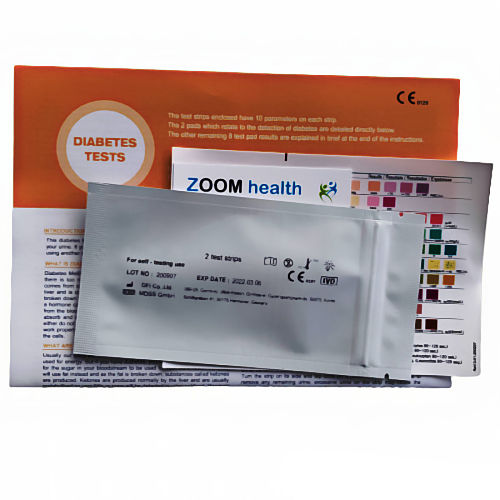
Home Diabetes Test Kit
Urine test strips. No blood required. Results in 60 seconds. Tests glucose and ketone levels. Rated 4.91/5 from 161 customer reviews. Available in a 2-test or 5-test pack.
What is Type 2 diabetes, and why is it so often missed?
There are two main forms of diabetes. Type 1 is an autoimmune condition, usually diagnosed in childhood or young adulthood, in which the immune system destroys the insulin-producing cells in the pancreas. It requires lifelong insulin therapy and typically presents dramatically enough that it is rarely missed for long.
Type 2 is a different story entirely. It develops gradually, over months or years, as the body becomes increasingly resistant to insulin or as the pancreas slowly loses the ability to produce enough of it. In the early stages, the body compensates, and symptoms are subtle or entirely absent. Many people feel broadly fine for a long time. By the time a diagnosis is made through routine blood tests, some degree of organ damage may already have occurred.
The NHS estimates that the average person with Type 2 diabetes has been living with the condition for around seven to ten years before they receive a diagnosis. Seven to ten years. That is the window we are trying to close with home screening.
Risk factors for Type 2 diabetes include:
- Being over 40 (or over 25 if you are from a South Asian, Black African or African Caribbean background)
- Being overweight or obese, particularly if weight is carried around the abdomen
- A family history of Type 2 diabetes
- A history of gestational diabetes (diabetes during pregnancy)
- Polycystic ovary syndrome (PCOS)
- High blood pressure or high cholesterol
- A sedentary lifestyle
If two or more of those apply to you, I would strongly encourage you to do a home test and then discuss the result with your GP – regardless of whether you have any noticeable symptoms.
What are the symptoms of diabetes to watch out for?
The classic symptoms of diabetes – the ones that GPs and health campaigns talk about – form a cluster that is easy to remember once you know them. The four T’s are a useful shorthand used by Diabetes UK:
- Toilet – needing to urinate more frequently, particularly at night
- Thirsty – feeling unusually and persistently thirsty
- Tired – fatigue and low energy that does not resolve with rest
- Thinner – unexplained weight loss (more common in Type 1, but can occur in Type 2)
Beyond those four, people with elevated blood sugar may also experience blurred vision, slow-healing cuts or wounds, frequent infections (particularly thrush or urinary tract infections), tingling or numbness in the hands and feet, and recurrent episodes of thrush.
The problem is that in Type 2, many of these symptoms are mild enough to dismiss or attribute to other causes – stress, ageing, a busy lifestyle. That is why I always say: if you are in a higher-risk group, do not wait for symptoms to push you to test. Test first, then interpret what you find.
What does the Home Diabetes Test Kit actually check for?
Our urine test strips screen for two things: glucose and ketones in the urine.
Under normal circumstances, glucose does not appear in urine. The kidneys filter the blood and reabsorb glucose before it reaches the urine. But when blood sugar levels rise above a certain threshold – known as the renal threshold, typically around 10 mmol/L – the kidneys can no longer reabsorb it all, and glucose spills into the urine. This is called glucosuria, and detecting it is the basis of the test.
Ketones appear in the urine when the body begins breaking down fat for energy instead of glucose – which can happen when insulin levels are very low, as in Type 1 diabetes or in a diabetic emergency. Detecting ketones alongside glucose adds an important extra layer of information, particularly for anyone who already has a diabetes diagnosis and wants to monitor their condition.
The strips also measure ten parameters in total, giving a broader picture of urinary health. For the purposes of diabetes screening, glucose and ketones are the key readings to focus on.
One important point to be clear about: urine tests show glucose that your kidneys filtered out some time ago, not your current blood glucose level. There is an inherent time delay, and a negative urine test does not guarantee that blood sugar is normal – particularly if it was taken a significant time after eating. For this reason, the urine test works best as a first-line screening tool, not as a substitute for the blood glucose tests your GP will use to confirm a diagnosis.
How to use the Home Diabetes Test Kit correctly
The test could not be more straightforward to do. Here is what I recommend for the most reliable result:
- Test first thing in the morning. First morning urine is more concentrated and more likely to show glucose or ketones if they are present. If you need to test at another time of day, aim for at least two hours after your last meal.
- Collect a clean urine sample in a clean, dry container. Midstream urine (letting a small amount pass first before collecting) gives a cleaner sample and more reliable results.
- Dip the test strip into the urine for two seconds, then remove it and hold it horizontally.
- Wait 60 seconds and read the result by comparing the colour pads on the strip against the colour chart on the foil packaging.
- Note the glucose and ketone readings in particular. A colour change in either of these fields warrants a follow-up with your GP.
If you see a slight, borderline colour change rather than a clear positive, my recommendation is to test again the following morning to confirm. Occasional trace amounts of glucose in urine can occur after a particularly high-sugar meal and do not necessarily indicate diabetes – but a repeated positive, or any positive accompanied by symptoms, needs medical attention.
The strips are accurate for 30 days after opening, provided you reseal the foil pack carefully after each use and store them at room temperature. Do not refrigerate them.
What to do if your result is positive
A positive result for glucose or ketones in your urine is not a diagnosis of diabetes. It is a prompt. It means you should contact your GP as soon as possible and ask for a fasting blood glucose test or an HbA1c blood test. These are the tests used clinically to diagnose or rule out diabetes, and they will give a precise, quantitative picture of your blood sugar control over time.
Do not delay making that call. If blood sugar levels are elevated, earlier diagnosis means earlier intervention – and the evidence is clear that lifestyle changes and, where necessary, medication introduced early can prevent or significantly delay the complications of Type 2 diabetes. Those complications – including cardiovascular disease, kidney damage, neuropathy and sight loss – are not inevitable. They are much more likely to be avoided when the condition is caught and managed early.
If your result shows ketones as well as glucose, or if you have any of the following symptoms alongside a positive test – extreme thirst, frequent urination, abdominal pain, vomiting, or rapid breathing – please contact your GP or NHS 111 on the same day. Elevated ketones alongside high glucose can indicate a more urgent condition called diabetic ketoacidosis, which needs prompt medical assessment.
Using the test if you already have a diabetes diagnosis
The Home Diabetes Test Kit is not just for people who suspect they might have diabetes. Many of our customers buy it as a regular monitoring tool when they do not want the inconvenience of a full blood glucose test – for instance, when travelling, or simply as a quick daily check between their regular blood glucose readings.
If you are managing diabetes and need to monitor your blood glucose levels precisely, a dedicated blood glucose meter is the right tool. We stock the GlucoNavii Blood Glucose Meter Starter Kit, which gives readings in five seconds and stores up to 500 results. Our GlucoNavii replacement test strips are also available separately and are among the most affordable on the market without any sacrifice in accuracy.
For people following a low-carbohydrate or ketogenic diet, the urine strips are particularly useful for tracking ketone levels as a measure of whether you are in nutritional ketosis – a goal for many people managing blood sugar through diet.
Home urine test vs blood glucose test: understanding the difference
I want to be straightforward about this, because I think honesty about what a test can and cannot do is more useful than overselling it.
A blood glucose test – whether done at home with a glucose meter or at your GP surgery – gives you your actual blood sugar level at the time of testing. It is quantitative, precise, and the gold standard for monitoring diabetes. An HbA1c blood test, done in a laboratory, reflects your average blood sugar control over the preceding three months and is what GPs use to formally diagnose and manage the condition.
A urine glucose test is a qualitative screen. It tells you whether glucose is present above a certain threshold, not exactly how high your blood sugar is. It has a built-in time delay and can, in rare cases, miss elevated blood sugar if levels are high but have not yet crossed the renal threshold.
What it offers in return is remarkable accessibility. No blood, no finger prick, no specialist equipment. Results in 60 seconds. A cost of just £4.99 for a two-strip pack. For anyone who wants a simple, low-barrier first check – or who needs to test regularly without the cost and inconvenience of blood testing – it is an excellent starting point. It opens the conversation. The blood tests confirm it.
What our customers say
With 161 customer reviews and a rating of 4.91 out of 5, the Home Diabetes Test Kit is consistently one of the best-reviewed products in our home health testing range. Customers mention the clarity of the instructions, the speed of delivery and – most importantly – the accuracy and ease of reading the results. Several customers have confirmed that a positive home result was subsequently confirmed by their GP, which gives me real confidence in the kit’s sensitivity as a screening tool.
The most common question we receive is about the difference between the 2-strip and 5-strip packs. My recommendation: if you are doing a one-off screening test, the 2-strip pack gives you a test and a retest if needed. If you want to monitor regularly – or if you are testing multiple family members – the 5-strip pack offers better value and keeps strips available for 30 days after opening.
Take the first step today
Type 2 diabetes is one of the most preventable serious health conditions in the UK – but only if it is caught in time. A 60-second urine test is not a definitive answer, but it is a meaningful first step. If the result is negative and you have no symptoms, you have some peace of mind. If the result is positive, you have the prompt you need to act quickly – and acting quickly is what makes the difference in long-term outcomes.
At £4.99 for a 2-strip pack, the Home Diabetes Test Kit is one of the most affordable health checks available. We dispatch the same day on all orders placed before 3pm, so in most cases it will arrive the next working day.
Home Diabetes Test Kit
Urine test strips. No blood required. Glucose and ketones. Results in 60 seconds. Rated 4.91/5. Same-day dispatch.
Also available: GlucoNavii Blood Glucose Meter for precise daily blood sugar monitoring.
Related guides from Zoom Health:
- Home Thyroid Test Kit guide – fatigue and unexplained weight gain can also be thyroid-related
- Blood sugar: a guide to glucose monitoring
- Full range of home health test kits
Anthony Cunningham – Health Writer & Editor
Anthony Cunningham, BA (Hons), MA, is a UK-based health writer and editor with over 20 years’ experience running Zoom Health, a trusted source for home health tests, preventive care, and wellness guidance. He creates clear, evidence-based articles using NHS, NICE, and WHO guidance. Where possible, content is reviewed by practising clinicians to enhance accuracy and reliability, helping readers make informed healthcare decisions.