
About This Article
About This Article: Zoom Health has supplied home health products and vitamins to UK customers for nearly 20 years. This article is for general information only and does not constitute medical advice. Always consult your GP or a qualified healthcare professional before starting any new supplement, particularly if you are pregnant, breastfeeding, taking prescribed medication, or managing a medical condition. Food supplements are not a substitute for a balanced diet and healthy lifestyle.
Published: 3 May 2026 | By: Anthony Cunningham
Magnesium is involved in more than 300 enzymatic reactions in the human body. It plays a role in energy production, protein synthesis, muscle and nerve function, blood glucose regulation, and the maintenance of normal bones and teeth. It is essential for DNA repair, for the regulation of the nervous system, and for normal psychological function. It is also one of the minerals most commonly found to be inadequate in modern Western diets – with dietary surveys suggesting that a significant proportion of UK adults consume less magnesium than recommended on a regular basis. Despite this, magnesium rarely receives the attention that vitamins D and C or omega 3 attract. In this guide I want to explain what magnesium actually does, why modern lifestyles and diets tend to deplete it, and what a supplement can offer.
What Magnesium Does in the Body
The breadth of magnesium’s physiological roles is genuinely remarkable, and understanding it helps explain why low magnesium status can manifest in such a wide variety of symptoms. As a cofactor in over 300 enzyme systems, magnesium is involved in almost every major metabolic process the body undertakes.
In energy production, magnesium is essential for the synthesis of ATP – the molecule that cells use to store and transfer energy. Every cell in the body requires magnesium to produce and use energy effectively, which is why fatigue and low energy are among the most commonly reported symptoms of inadequate magnesium intake. In the nervous system, magnesium contributes to normal neurotransmission and plays a regulatory role in the activity of the NMDA receptor, which is involved in learning, memory and the regulation of mood. It contributes to normal psychological function – a claim permitted under EU and UK food supplement regulations – and is the subject of ongoing research into its role in stress response and anxiety.
In muscles, magnesium is involved in both contraction and relaxation. Calcium triggers muscle contraction; magnesium facilitates the subsequent relaxation. This is why muscle cramps, twitches and spasms are frequently associated with inadequate magnesium – the relaxation phase of the contraction-relaxation cycle is impaired. In bones, magnesium contributes to normal bone mineralisation alongside calcium and vitamin D. Approximately 60% of the body’s total magnesium is stored in bone, making it as important to skeletal health as the more commonly discussed calcium.
Why Modern Diets Tend to Be Low in Magnesium
Magnesium is found in good amounts in a wide range of foods – leafy green vegetables, nuts and seeds, whole grains, legumes, dark chocolate and some mineral waters. The problem is that modern food processing removes significant amounts of magnesium from foods that would otherwise contain it. Refined grains lose the germ and bran – the most magnesium-rich parts of the grain – during milling. Highly processed foods contain little natural magnesium. A diet based heavily on refined carbohydrates, processed foods and animal protein with limited vegetables, nuts and whole grains is likely to be systematically low in magnesium, regardless of total calorie intake.
Agricultural soil depletion is a longer-term factor: intensive farming has reduced the mineral content of soil over decades, which means that even the vegetables and grains people do eat may contain less magnesium than historical figures suggest. Several lifestyle factors also increase magnesium requirements or reduce retention: chronic stress, high alcohol consumption, intense physical exercise, some medications including diuretics and proton pump inhibitors, and type 2 diabetes are all associated with lower magnesium status.
Signs That Your Magnesium Intake May Be Inadequate
Low magnesium status rarely produces acute, obvious symptoms in the way that severe mineral deficiency does. Instead, the signs tend to be gradual and non-specific – easily attributed to other causes and frequently missed. The most commonly reported include persistent fatigue and low energy that does not resolve with rest, muscle cramps or twitches particularly in the legs and feet, difficulty sleeping or poor sleep quality, a heightened stress response or a sense of being easily overwhelmed, headaches, and difficulty concentrating. None of these symptoms is specific to low magnesium and all can have multiple other causes, but if you experience several of them simultaneously and your diet is low in the magnesium-rich foods listed above, magnesium intake is worth reviewing.
It is worth noting that standard blood tests measure serum magnesium – the amount in the blood – which is a poor indicator of total body magnesium status because the body tightly regulates serum magnesium by drawing on bone stores. A normal serum magnesium level does not necessarily mean adequate tissue magnesium status. If you have specific concerns about magnesium deficiency, a conversation with your GP is the right starting point.
Magnesium and Sleep: What the Evidence Says
Magnesium’s role in sleep has attracted considerable research interest and is one of the reasons many people specifically seek out magnesium supplements. Magnesium contributes to normal psychological function and the regulation of the nervous system – both of which are directly relevant to sleep quality. It is involved in the regulation of melatonin, the hormone that governs the sleep-wake cycle, and it modulates the activity of GABA receptors, which promote the relaxation of the nervous system that facilitates sleep onset.
Research in older adults – a population with both higher rates of sleep disturbance and lower magnesium status – has shown associations between magnesium supplementation and improvements in sleep quality, sleep duration and early morning waking. The evidence in younger populations is less established, but the physiological mechanisms are plausible and the safety profile of magnesium supplementation at recommended doses is very good. For people who experience sleep difficulties alongside other potential low-magnesium symptoms, a trial of magnesium supplementation is a reasonable and low-risk step, taken alongside other sleep hygiene measures.
Magnesium and Stress: The Bidirectional Relationship
The relationship between magnesium and stress is bidirectional and self-reinforcing in a way worth understanding. Stress activates the hypothalamic-pituitary-adrenal (HPA) axis, which increases cortisol production. Elevated cortisol increases urinary magnesium excretion – meaning chronic stress actively depletes magnesium status. Lower magnesium, in turn, appears to make the stress response more reactive – a sensitised nervous system requires less stimulus to activate the HPA axis. The result is a cycle where stress depletes magnesium and depleted magnesium amplifies the stress response.
This mechanism is one reason magnesium is so frequently discussed in the context of stress and anxiety management, and why people under sustained psychological or physical stress may have higher magnesium requirements than those living lower-stress lives. Supplementation does not address the sources of stress themselves, but it may support the body’s capacity to regulate the physiological stress response – contributing to normal psychological function as the permitted health claim states.
Our Magnesium Supplement at Zoom Health
Lindens Magnesium Tablets 500mg
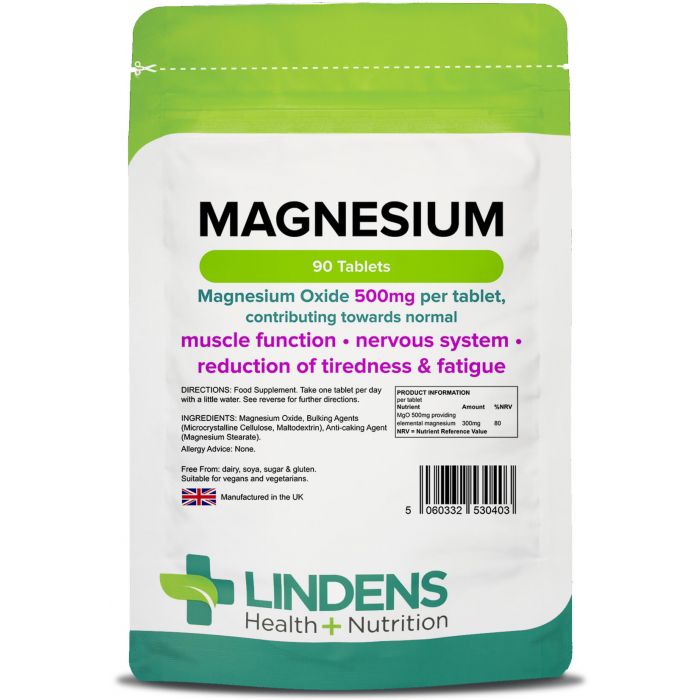
The Lindens Magnesium Tablets 500mg provide 300mg of elemental magnesium per tablet from magnesium oxide – equivalent to 80% of the European Commission’s recommended daily amount for adults. This is a meaningful daily dose that covers the majority of the recommended intake in a single convenient tablet. Magnesium oxide is the most concentrated form of magnesium per tablet weight, making it practical for high-dose supplementation in a compact format. The tablets are vegetarian-friendly, manufactured by Lindens in the UK to ISO 9001 standards, and packaged in the foil-fresh resealable pouch that protects the tablets from light and moisture. One tablet daily with water is the recommended dose.
300mg elemental magnesium | 80% RDA | Vegetarian | UK manufactured | Buy from Zoom Health
Also Consider: Lindens Calcium Magnesium & Vitamin D Tablets

If your primary motivation for magnesium supplementation is bone health, the Lindens Calcium Magnesium & Vitamin D Tablets provide all three nutrients involved in normal bone maintenance in a single daily tablet. Calcium and magnesium both contribute to normal bone structure, while vitamin D supports the absorption of both. This combination is particularly relevant for older adults, postmenopausal women and anyone concerned about bone density who wants a comprehensive bone-support supplement rather than a standalone magnesium product. As noted in our vitamin D post, a GP consultation is advisable before starting this supplement if you have existing bone health concerns.
Calcium + Magnesium + Vitamin D | Bone health formula | All-in-one supplement | Buy from Zoom Health
How to Get the Most from a Magnesium Supplement
Take magnesium with food to improve absorption and reduce the chance of digestive discomfort – some people find magnesium oxide can have a mild laxative effect at higher doses, which is less likely when taken with a meal. Evening supplementation is a popular approach for people taking magnesium primarily for sleep support, though the timing is less critical than consistency – daily supplementation over several weeks is necessary for magnesium levels to meaningfully improve, as the body replenishes tissue stores gradually.
If you are taking medications that affect kidney function, or if you have kidney disease, consult your GP before supplementing with magnesium – the kidneys regulate magnesium excretion and impaired kidney function can affect the body’s ability to clear excess magnesium. At recommended doses magnesium supplementation is safe for the vast majority of healthy adults, but this is an important exception worth noting.
Magnesium absorption is enhanced in the presence of vitamin D – another reason the combination supplement is a sensible choice for people whose primary concern is bone health – and reduced by very high intakes of calcium, zinc or fibre consumed at the same time. Taking your magnesium supplement separately from a high-dose calcium supplement is a practical consideration if you use both.
Support your magnesium intake
Browse our full range of Lindens health supplements at Zoom Health, including vitamins, minerals and specialist health support products.
About the Author
Anthony Cunningham – Health Writer & Editor
Anthony Cunningham, BA (Hons), MA, is a UK-based health writer and editor with over 20 years’ experience running Zoom Health, a trusted source for home health tests, preventive care, and wellness guidance. He creates clear, evidence-based articles using NHS, NICE, and WHO guidance. Where possible, content is reviewed by practising clinicians to enhance accuracy and reliability, helping readers make informed healthcare decisions.