About This Article
Zoom Health has supplied home health products and vitamins to UK customers for nearly 20 years. This article is for general information only and does not constitute medical advice. Always consult your GP or a qualified healthcare professional before starting any new supplement, particularly if you are pregnant, breastfeeding, taking prescribed medication, or managing a medical condition. Food supplements are not a substitute for a balanced diet and healthy lifestyle.
Hair, skin and nails are often thought of as cosmetic concerns, things you address with the right shampoo or moisturiser. In my experience, that framing misses a significant part of the picture. The condition of your hair, skin and nails is, in many ways, a visible reflection of what is happening nutritionally inside the body. When these tissues are struggling, whether that means brittle nails, dull or thinning hair, or skin that lacks resilience and feels dry regardless of what you put on it, the cause is often not on the surface at all. It is nutritional.
Hair, skin and nails are all made from structural proteins and maintained by a small group of key nutrients. Get those nutrients right, and the difference can be considerable. Get them wrong, and no topical product will compensate. In this guide I want to explain which nutrients matter most, why, and which Lindens supplements I recommend for anyone who wants to address hair, skin and nail health from the inside out. The centrepiece is the Lindens Silica for Hair and Nails 250mg Capsules, a well-formulated three-in-one product that combines the key structural mineral with two of the most important supporting nutrients in a single daily capsule.
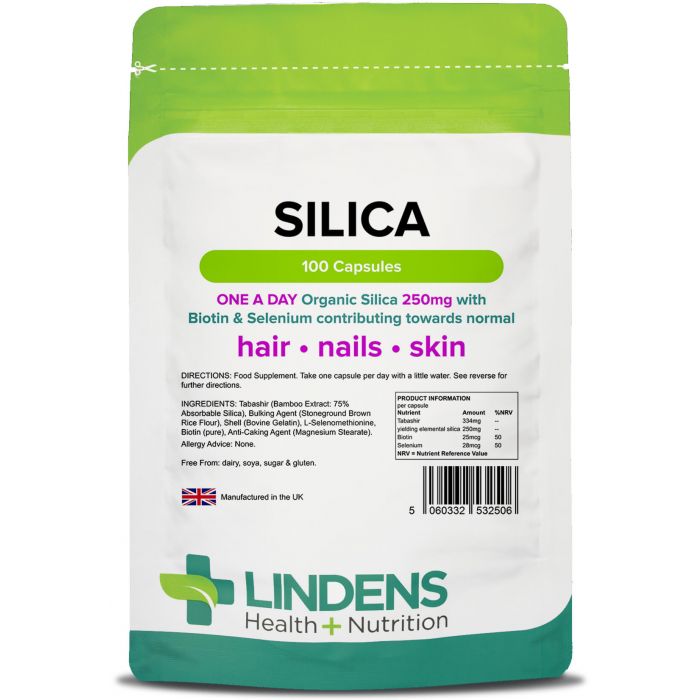
Lindens Silica for Hair and Nails 250mg Capsules
100 capsules | £9.99
250mg bamboo silica + biotin (100% NRV) + selenium (100% NRV) | Dairy and gluten free
Why Hair, Skin and Nails Are All Nutritional Tissues
It helps to understand what hair, skin and nails actually are before thinking about how to support them. All three are keratinous tissues, meaning they are built primarily from keratin, a fibrous structural protein. Hair is essentially a protein filament grown from follicles in the scalp, and around 95% of each hair strand is made from keratin. Nails are a hardened form of the same protein. Skin is more complex, involving multiple layers and a variety of structural proteins including both keratin and collagen, but the nutritional requirements that support skin health overlap considerably with those for hair and nails.
Because these tissues are made from protein and maintained by micronutrients, they are among the first places to show the effects of nutritional insufficiency. The body has a clear hierarchy of priorities: when resources are limited, it directs nutrients first to essential physiological functions such as organ health, immune function and energy metabolism. Hair, skin and nails are treated as lower priorities by the body’s distribution system, and they receive the leftovers. This is why hair loss, brittle nails and skin deterioration are classic early signs of nutritional gaps, including deficiencies in biotin, selenium, zinc, silica and protein.
This also means that addressing these issues with supplements can produce genuinely visible results, provided the right nutrients are targeted. It is not a matter of taking any vitamin and hoping for the best. It is a matter of identifying which specific nutrients support the structure and maintenance of these tissues, and ensuring you are getting adequate amounts.
Silica: The Structural Mineral Most People Have Never Heard Of
Silica, also known as silicon dioxide, is the mineral I most often find myself explaining to people who are new to this area of nutrition. It is not as well-known as calcium or magnesium, but its role in connective tissue formation, and particularly in the structural integrity of hair, skin and nails, is well-established.
Silica is a key component of connective tissue throughout the body, including the dermis (the deep layer of skin), the walls of blood vessels, and the matrix that surrounds and supports hair follicles. It is involved in the cross-linking of collagen fibres, the process by which collagen forms the dense, organised network that gives skin its firmness and elasticity. Without adequate silica, this cross-linking is less effective, and both skin and the connective tissue supporting hair follicles can become structurally weaker.
Dietary silica is found in wholegrains, oats, bananas and root vegetables, but intake varies considerably and bioavailability from food sources is not always predictable. Supplemental silica derived from bamboo extract, specifically the compound known as tabashir, is one of the most bioavailable forms available. The Lindens Silica capsules use tabashir bamboo extract containing up to 75% absorbable silica, which is a meaningfully high concentration for a plant-derived source. Bamboo is the fastest-growing plant on earth, capable of growing over 90cm in a single day, and its rapid structural growth is reflected in the density of silica it accumulates in its tissues.
Biotin: The B Vitamin That Beauty Products Can’t Replicate
Biotin, sometimes called vitamin B7, is probably the nutrient most commonly associated with hair and nail health in popular conversation, and the association is well-founded. Biotin has specific, EU-authorised health claims supporting its role in contributing to the maintenance of normal hair and normal skin, which places it in a distinct category from many nutrients whose beauty-related claims are more aspirational than evidence-backed.
Biotin is a coenzyme involved in a number of metabolic processes, including the synthesis of fatty acids and the metabolism of amino acids. Its relevance to hair and nail health relates to its role in keratin production: biotin supports the infrastructure of metabolic processes that the body uses to synthesise the keratin that hair and nails are made from. A genuine biotin deficiency, which is relatively uncommon but does occur, typically produces symptoms including hair thinning, brittle nails and a scaly rash around the eyes and mouth.
Even in the absence of frank deficiency, ensuring you meet the NRV for biotin as part of a supplement targeted at hair and nail support is a sound approach. Each Lindens Silica capsule provides 100% of the NRV for biotin, combining it directly with the silica that supports the structural environment in which hair and nails grow. The two nutrients work well together precisely because they address different levels of the same biological system: silica supports the extracellular matrix, while biotin supports the metabolic processes that produce the keratin protein within hair and nail cells.
Selenium: The Antioxidant That Protects What You’re Building
The third component of the Lindens Silica formula is selenium, an essential trace mineral with two specific EU-authorised health claims directly relevant to this topic: it contributes to the maintenance of normal hair and normal nails. Selenium is also an important antioxidant, contributing to the protection of cells from oxidative stress.
Oxidative stress is relevant to hair and nail health because free radical damage to cells in the hair follicle and nail matrix can impair the normal growth cycle and reduce the quality of the structural proteins being produced. Selenium, as a component of the enzyme glutathione peroxidase, helps neutralise free radicals in these tissues, protecting the integrity of the growth process.
Selenium deficiency is more common than many people realise in the UK, partly because selenium content in British soils, and therefore in UK-grown food, is relatively low compared to countries such as the United States. Brazil nuts are the most concentrated dietary source, but consistent daily intake from diet alone can be difficult to achieve. At 100% NRV per capsule, the selenium in Lindens Silica provides a reliable and well-dosed daily contribution without exceeding safe upper levels.
Why I Recommend Lindens Silica as the Starting Point
There are several reasons why the Lindens Silica for Hair and Nails capsules are my first recommendation when people ask about supplements for this area.
The formulation is targeted and coherent. Rather than including a broad sweep of vitamins and minerals, many of which have limited direct relevance to hair, skin and nail structure, the Lindens Silica formula focuses on three nutrients that have specific, well-supported roles: silica for structural support, biotin for keratin metabolism, and selenium for antioxidant protection of growing tissues. Every ingredient is there for a clear reason.
The silica source is high quality. Tabashir bamboo extract at 75% absorbable silica is among the better-absorbed plant-based silica sources available, and 250mg per capsule is a meaningful dose. Many silica supplements contain lower concentrations or less bioavailable forms.
At £9.99 for 100 capsules, with a one-capsule-per-day dose, this is over three months’ supply at a price that makes consistent daily use completely practical. Consistency matters enormously with hair and nail supplements, because the growth cycle of hair means that meaningful improvements typically take two to three months to become visible. You are supporting new growth from the follicle upward, not changing hair that has already grown.
One point worth being transparent about: the capsule shell is bovine gelatine, so this product is not suitable for vegetarians or vegans. If you follow a plant-based diet, the Lindens Zinc Citrate tablets at /zinc-citrate-tablets-50mg/ offer a vegetarian-friendly option that supports hair, skin and nail maintenance through zinc’s own well-documented role in these tissues.
Marine Collagen: Addressing Skin Firmness and Elasticity Directly
Alongside silica supplementation, the other Lindens product I recommend for anyone whose primary concern is skin health specifically is the Lindens Marine Collagen 400mg Capsules.

Collagen is the most abundant protein in the body and the primary structural component of skin. It forms the dense fibrous network in the dermis that gives skin its strength, firmness and ability to return to shape after being stretched. From the mid-20s onward, the body’s natural collagen production declines by approximately 1% per year, which is the underlying biological reason why skin gradually loses firmness and elasticity with age, regardless of topical skincare routine.
The Lindens Marine Collagen capsules use Naticol Type I hydrolysed marine collagen, a well-researched form derived from fish. Hydrolysed collagen, also known as collagen peptides, has been broken down into smaller amino acid chains that are more readily absorbed through the gut wall than intact collagen protein. Each capsule provides 400mg, with a recommended dose of one to three capsules daily, giving flexibility to adjust intake based on individual needs.
Marine collagen also benefits nails and hair, as the amino acids it provides, particularly glycine, proline and hydroxyproline, are the same building blocks used in keratin synthesis. The combination of Lindens Silica (supporting the structural matrix and keratin metabolism) and Lindens Marine Collagen (providing the amino acid substrate for both collagen and keratin synthesis) addresses hair, skin and nail health from complementary angles. For anyone willing to take two supplements, the two products work well together. For those who want to start with one, I suggest beginning with the silica and adding marine collagen if skin firmness is a particular concern. Marine Collagen also contains bovine gelatine in the capsule shell.
How Long Before You See Results?
This is the question I am asked most often about hair and nail supplements, and I always give an honest answer: allow at least eight to twelve weeks before judging results, and ideally assess at six months.
Hair grows approximately 1 to 1.5cm per month on average. The follicle must be supported nutritionally for several weeks before new growth that reflects that support emerges from the scalp. The part of your hair you can currently see was largely formed weeks or months ago. This means that even if supplementation is working exactly as it should, you will not see an immediate change in the hair you already have. What you are investing in is the quality of new growth.
Nails grow more slowly, approximately 3mm per month, and similar logic applies: new growth from the nail matrix reflects current nutritional status, while the nail plate you can currently see reflects past status. Changes in nail brittleness and strength typically become noticeable after two to three months of consistent supplementation.
Skin can respond more quickly in some respects, particularly hydration and surface texture, but meaningful changes in firmness and elasticity related to collagen support typically take three to six months of consistent daily supplementation to become apparent.
The key word throughout is consistent. Taking a supplement sporadically will not produce meaningful results in tissues that grow slowly and require sustained nutritional support. I always advise committing to at least three months of daily use before drawing conclusions.
Diet as the Foundation: What to Eat for Hair, Skin and Nails
Supplements work best when they complement a diet that is broadly supportive of connective tissue health, rather than compensating for a diet that is consistently inadequate. A few dietary principles are worth bearing in mind alongside supplementation.
Protein intake is fundamental. Hair, skin and nails are all built from protein, and inadequate total protein intake will limit the availability of amino acids for these tissues regardless of micronutrient supplementation. UK dietary guidelines suggest 0.75g of protein per kilogram of body weight per day for adults, but many people, particularly older adults and those eating plant-based diets, fall short of this. Adequate intake of varied protein sources, including eggs, fish, legumes, dairy and meat, provides the amino acid substrate that all three tissues need.
Vitamin C deserves a specific mention because it is essential for collagen synthesis. Without adequate vitamin C, the body cannot produce collagen effectively regardless of how much marine collagen or silica you are supplementing. Good dietary sources include citrus fruit, berries, peppers, broccoli and kiwi. If dietary intake is inconsistent, the Lindens Vitamin C+ 1000mg Time Release Tablets are a straightforward addition that supports both collagen production and the antioxidant protection of skin cells.
Omega-3 fatty acids from oily fish or flaxseed support skin hydration and barrier function, addressing the lipid component of skin health that structural supplements do not cover directly. The Series 5 guide to omega-3 supplementation covers this in more detail.
Support Your Hair, Skin and Nails from the Inside Out
Lindens Silica combines 250mg bamboo silica, biotin and selenium in one daily capsule. 100 capsules for £9.99.
Lindens Silica for Hair and Nails 250mg Capsules
- 250mg bamboo-derived silica (tabashir, 75% absorbable) per capsule
- Biotin at 100% NRV – supports normal hair and skin maintenance
- Selenium at 100% NRV – supports normal hair and nail maintenance
- 100 capsules – over three months’ supply at one per day
- Dairy and gluten free
- Note: capsule shell contains bovine gelatine – not suitable for vegetarians
- £9.99 from Zoom Health
Related Articles from Zoom Health
- Joint Health Supplements: Marine Collagen, Omega 3 and What the Evidence Shows – Series 5, Post 7
- Omega 3 Fish Oil: Why Most UK Adults Don’t Get Enough and What to Do About It – Series 5, Post 2
- Supporting Your Immune System: What the Evidence Says About Vitamins and Supplements – Series 5, Post 4
- Browse all Lindens hair, skin and nail supplements at Zoom Health
Anthony Cunningham – Health Writer & Editor
Anthony Cunningham, BA (Hons), MA, is a UK-based health writer and editor with over 20 years’ experience running Zoom Health, a trusted source for home health tests, preventive care, and wellness guidance. He creates clear, evidence-based articles using NHS, NICE, and WHO guidance. Where possible, content is reviewed by practising clinicians to enhance accuracy and reliability, helping readers make informed healthcare decisions.