
About This Article
Zoom Health has supplied home health products and vitamins to UK customers for nearly 20 years. This article is for general information only and does not constitute medical advice. Always consult your GP or a qualified healthcare professional before starting any new supplement, particularly if you are pregnant, breastfeeding, taking prescribed medication, or managing a medical condition. Food supplements are not a substitute for a balanced diet and healthy lifestyle.
The menopause is one of the most significant physiological transitions a woman goes through, and it is also one of the most under-discussed. In my experience, many women reach perimenopause with relatively little preparation for what to expect or what options are available to support their health through the transition. Some will work with their GP on hormone replacement therapy, which remains the most clinically effective medical option for managing menopausal symptoms, and that conversation is always worth having. But there is also a meaningful role for nutritional and botanical supplements in supporting wellbeing during this period, both for women who are not candidates for HRT and for those who want to complement medical management with additional support.
This guide focuses on the Lindens women’s health supplement range, which is centred on botanical products with long traditions of use in menopausal support. The lead product I want to discuss is the Lindens Menopause Formula Tablets, an all-in-one vegan formula combining four of the most established botanical extracts used in this area. I will also cover the Lindens Sage Leaf 500mg Tablets for women who prefer a targeted single-herb approach, and the foundation micronutrients that become especially important for women’s health during and after the menopause.
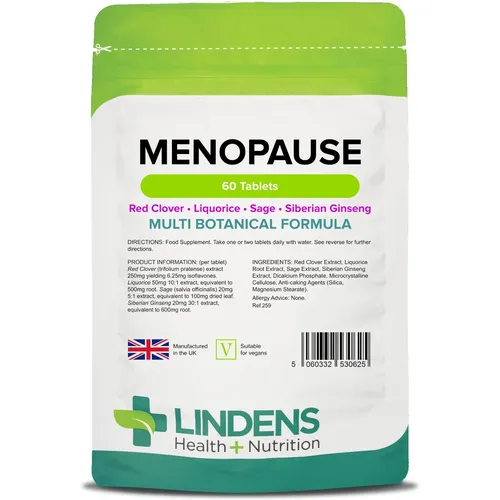
Lindens Menopause Formula Tablets
60 tablets | £9.99 | Flexible 1-2 daily dose
Red Clover, Sage, Siberian Ginseng and Liquorice Root | 100% vegan | Standardised botanical extracts
Understanding the Menopause and Perimenopause
The menopause is defined clinically as the point at which a woman has gone twelve consecutive months without a menstrual period. In the UK, the average age at which this occurs is around 51, though natural menopause can happen anywhere between the mid-40s and mid-50s. The menopause itself is a single point in time; what most women experience as “the menopause” is actually the perimenopause, the transitional period of months or years leading up to it, during which oestrogen and progesterone levels decline and fluctuate.
It is the hormonal changes of perimenopause that produce the symptoms most commonly associated with the menopause: hot flushes, night sweats, disrupted sleep, mood changes, brain fog, fatigue, joint aches and vaginal dryness. Not all women experience all of these, and severity varies considerably between individuals. But the underlying mechanism is consistent: declining oestrogen levels affect the hypothalamus (the part of the brain that regulates body temperature), sleep architecture, bone density, skin collagen production, and a range of other physiological systems that oestrogen plays a regulatory role in.
Understanding this helps explain how both botanical supplements and foundation micronutrients can be relevant. Phytoestrogen-containing botanicals like red clover and sage work through a different pathway to HRT, providing mild oestrogenic activity that may help moderate the effects of oestrogen decline. Foundation nutrients like vitamin D, magnesium and calcium address the increased risk of bone density loss and the sleep and mood disruption that often accompanies the transition. The two approaches are complementary rather than alternatives.
What Is in the Lindens Menopause Formula and Why?
The Lindens Menopause Formula brings together four botanical extracts in a single vegan tablet. Each ingredient is present as a concentrated, standardised extract rather than simple dried herb powder, which matters significantly: standardised extracts guarantee consistent levels of the active compounds in every tablet, whereas dried herb powders can vary considerably in potency between batches.
Red Clover (250mg extract, standardised to 6.25mg isoflavones). Red clover is one of the richest plant sources of isoflavones, a class of phytoestrogens that bind weakly to oestrogen receptors in the body. Because this binding is weaker than that of endogenous oestrogen, phytoestrogens are sometimes described as acting like a gentle moderator of oestrogen activity: providing mild oestrogenic stimulus when oestrogen levels are low, as in the menopause, while not producing the stronger effects of pharmaceutical oestrogens. The isoflavone content is standardised in this formula, which is the critical quality marker for a red clover supplement.
Sage (20mg of 5:1 extract, equivalent to 100mg dried leaf). Sage (Salvia officinalis) has a long tradition of use among women experiencing hot flushes and night sweats, the two symptoms most commonly reported as disruptive to quality of life during the menopause. The traditional use is supported by a growing body of clinical research. Sage’s active compounds include rosmarinic acid and other polyphenols, and the use of a 5:1 standardised extract in this formula means the potency is consistent and equivalent to a substantially larger amount of dried herb.
Siberian Ginseng (20mg of 30:1 extract, equivalent to 600mg root). Siberian ginseng (Eleutherococcus senticosus) is an adaptogenic herb, meaning it is used traditionally to help the body adapt to physical and psychological stress and to support overall vitality and resilience. The 30:1 concentration ratio reflects a very high-strength extract: each 20mg delivers the active compound equivalent of 600mg of dried root. For women experiencing the fatigue, brain fog and general sense of reduced vitality that frequently accompanies the perimenopause, an adaptogenic botanical is a meaningful addition to the formula.
Liquorice Root (50mg of 10:1 extract, equivalent to 500mg root). Liquorice root has a history of traditional use in women’s health, with mild oestrogenic properties and a reputation for supporting adrenal function. The adrenal glands play an increased role in oestrogen production after the menopause, as ovarian production declines, making adrenal support nutritionally relevant in this context. The 10:1 extract provides a meaningful and consistent dose.
The formula is 100% vegan, which is relatively unusual in the botanical supplement category where gelatine capsules are common. At £9.99 for 60 tablets, with a flexible dose of one or two tablets daily, this represents good value whether used as a once-a-day maintenance supplement or at two tablets daily during periods of more pronounced symptoms.
Lindens Sage Leaf Tablets: The Targeted Single-Herb Option
For women whose primary concern is hot flushes and night sweats specifically, and who prefer a more targeted single-ingredient approach, the Lindens Sage Leaf 500mg Tablets are an excellent alternative.
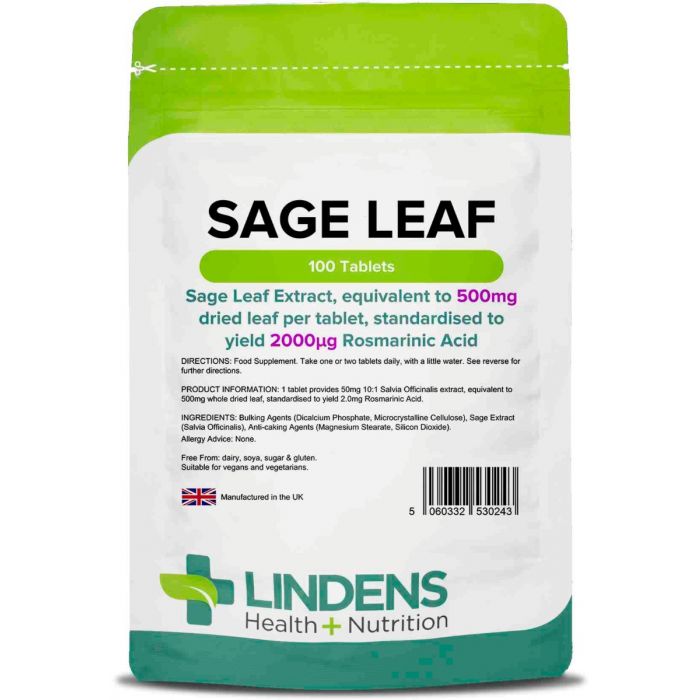
Each tablet contains a concentrated sage leaf extract (Salvia officinalis) equivalent to 500mg of the dried herb, standardised to provide 2mg of rosmarinic acid – the key active compound that gives sage its pharmacological relevance. At 100 tablets for £8.49, this is a cost-effective long-term option for daily sage supplementation, with a rating of 5.00/5 from customers who have used it. Like the Menopause Formula, the Sage Leaf tablets are 100% vegan.
The choice between the Sage Leaf tablets and the Menopause Formula comes down to whether you want a focused single-herb intervention or a broader botanical blend addressing multiple aspects of menopausal wellbeing. For hot flushes and night sweats as the primary symptom, either will provide sage at a meaningful dose. For women who also want support with energy, vitality and the adaptogenic dimension, the Menopause Formula’s addition of Siberian Ginseng and the phytoestrogen activity of Red Clover and Liquorice makes it the more comprehensive choice.
Foundation Nutrients That Are Especially Important During and After the Menopause
Beyond the botanical support offered by the Menopause Formula and Sage tablets, there are several foundation micronutrients that become significantly more important for women’s health during the menopausal transition and beyond. These are not menopause-specific supplements in the way that red clover and sage are. They are general nutritional requirements that the menopause makes more pressing.
Vitamin D and calcium for bone health. Oestrogen plays a protective role in bone density maintenance, stimulating osteoblast activity (bone building) and limiting osteoclast activity (bone breakdown). As oestrogen declines through the menopause, the rate of bone density loss accelerates, particularly in the first five years after the menopause. This makes adequate vitamin D and calcium intake critical during and after this period. Vitamin D is needed for the efficient absorption of calcium from the gut, and the NHS recommends that all UK adults take a vitamin D supplement of at least 400IU daily from October to March. Women over 50 should consider year-round supplementation. The Lindens Vitamin D3 1100IU Tablets provide a well-dosed daily option; for those who want calcium and magnesium combined, the Lindens Calcium Magnesium and Vitamin D combination tablet addresses all three bone-relevant nutrients in a single product. The full picture on vitamin D is covered in the dedicated Zoom Health vitamin D guide.
Magnesium for sleep and mood. Sleep disruption is one of the most commonly reported symptoms of perimenopause, often compounded by night sweats. Magnesium has a well-evidenced role in supporting normal sleep, contributing to the function of the neurotransmitter systems involved in sleep onset and quality. It also contributes to the normal functioning of the nervous system and to normal psychological function, both of which are relevant to the mood changes and anxiety that some women experience during the perimenopause. A detailed discussion of magnesium supplementation is available in the Zoom Health magnesium guide.
B vitamins for energy and nervous system support. The fatigue and cognitive changes that many women experience in perimenopause have multiple causes, hormonal fluctuation among them, but nutritional status plays a role too. The B vitamins, particularly B12, B6 and folate, support normal energy metabolism and normal neurological function. Women over 50 are at increased risk of B12 malabsorption due to reduced stomach acid production with age, making B12 supplementation increasingly relevant from midlife onward. The Zoom Health B vitamins guide covers this in detail.
An Important Note on Phytoestrogens and Hormone-Sensitive Conditions
Red clover isoflavones and other phytoestrogens are generally considered safe for most women, and the evidence to date does not support concerns that phytoestrogen supplements cause harm in healthy women. However, women with a personal history of hormone-sensitive cancers, including oestrogen receptor-positive breast cancer, should consult their oncologist or GP before taking any phytoestrogen-containing supplement. This is a precautionary recommendation rather than one based on evidence of proven harm, but it is the appropriate clinical approach.
Liquorice root, present in the Menopause Formula, should be used with caution by women with high blood pressure, as high doses of liquorice over extended periods can affect blood pressure regulation. The dose in the Menopause Formula is well within the range considered acceptable for most people, but it is worth being aware of if you have hypertension or are taking antihypertensive medication.
As with any supplement, if you are taking prescribed medication, discussing the addition of a new botanical supplement with your GP or pharmacist is sensible practice. This applies particularly to women taking blood pressure medications, anticoagulants, or any hormone-based treatments.
Building a Women’s Health Supplement Routine Around the Menopause
In my experience, the most effective supplement approach during the menopause is not to treat it as an isolated event requiring a single product, but to think in terms of layers. The foundation layer covers the nutrients that are widely beneficial but particularly important for women at this life stage: vitamin D, magnesium, calcium and B vitamins. The botanical layer adds targeted support for the specific symptoms of the menopausal transition: hot flushes, night sweats, energy and mood. Getting the foundation right first tends to produce the most noticeable overall improvement.
A practical starting point would be the Lindens Menopause Formula as the botanical component, combined with Lindens Vitamin D3 and Lindens Magnesium 500mg for the foundation layer. For women whose primary symptom is hot flushes and who want to keep supplementation simple, the Sage Leaf tablets alone are a reasonable first step. Both approaches are sensible and well-supported by the available evidence for botanical supplement use in this context.
Allow at least six to eight weeks before judging the effect of any new supplement. Botanical adaptogens and phytoestrogens work gradually rather than immediately, and the fluctuating nature of perimenopausal symptoms means that short-term changes can be difficult to attribute with certainty. Consistent daily use over a longer period gives a much clearer picture.
Natural Botanical Support for the Menopause
Lindens Menopause Formula combines Red Clover, Sage, Siberian Ginseng and Liquorice Root in one vegan daily tablet. 60 tablets for £9.99.
Lindens Menopause Formula Tablets
- Red Clover extract standardised to 6.25mg isoflavones
- Sage 5:1 extract, equivalent to 100mg dried leaf per tablet
- Siberian Ginseng 30:1 extract, equivalent to 600mg root
- Liquorice Root 10:1 extract, equivalent to 500mg root
- 100% vegan – flexible dose of 1 or 2 tablets daily
- 60 tablets per pack
- £9.99 from Zoom Health
Lindens Sage Leaf 500mg Tablets
- 500mg sage leaf extract per tablet, standardised to 2mg rosmarinic acid
- Targeted single-herb option for hot flushes and night sweats
- 100% vegan – 100 tablets per pack
- Rated 5.00/5 by Zoom Health customers
- £8.49 from Zoom Health (on sale from £8.99)
Related Articles from Zoom Health
- Vitamin D Deficiency: What You Need to Know and What to Do About It – Series 5, Post 1
- Magnesium: The Mineral That Does More Than You Think – Series 5, Post 3
- Tired All the Time? What B Vitamins Actually Do for Energy – Series 5, Post 5
- Sleep and Stress Supplements: Rhodiola, Lavender and Magnesium – Series 5, Post 6
- Browse all Lindens women’s health supplements at Zoom Health
Anthony Cunningham – Health Writer & Editor
Anthony Cunningham, BA (Hons), MA, is a UK-based health writer and editor with over 20 years’ experience running Zoom Health, a trusted source for home health tests, preventive care, and wellness guidance. He creates clear, evidence-based articles using NHS, NICE, and WHO guidance. Where possible, content is reviewed by practising clinicians to enhance accuracy and reliability, helping readers make informed healthcare decisions.