About This Article
About This Article: Zoom Health has supplied home health products and vitamins to UK customers for nearly 20 years. This article is for general information only and does not constitute medical advice. Always consult your GP or a qualified healthcare professional before starting any new supplement, particularly if you are pregnant, breastfeeding, taking prescribed medication, or managing a medical condition. Persistent or unexplained fatigue should always be discussed with your GP. Food supplements are not a substitute for a balanced diet and healthy lifestyle.
Published: 6 May 2026 | By: Anthony Cunningham
Fatigue is one of the most common reasons people visit their GP, and one of the most common reasons people reach for supplements. The supplement market responds to this with a vast array of energy products – B vitamin complexes, iron tablets, CoQ10 capsules, adaptogenic herbs – each promising to address tiredness and restore vitality. Some of these have a genuinely useful role for specific people in specific circumstances. Many do not, because the fatigue being experienced is not caused by a nutritional deficiency that a supplement can correct. Understanding the difference – and knowing when a supplement is appropriate versus when the real solution lies elsewhere – is the most useful thing I can offer in this guide.
What B Vitamins Actually Do for Energy
B vitamins do not provide energy in the way that food does – they do not contain calories and cannot be burned as fuel. What they do is serve as essential cofactors in the metabolic processes that convert food into usable energy. Without adequate B vitamins, the body’s ability to extract energy from carbohydrates, fats and proteins through cellular respiration is impaired. This is the specific mechanism behind the permitted health claim that several B vitamins contribute to normal energy-yielding metabolism and the reduction of tiredness and fatigue.
The eight B vitamins each have distinct roles. B1 (thiamine) is essential for the conversion of carbohydrates into energy and for normal heart and nervous system function. B2 (riboflavin) is involved in the conversion of food into ATP – the cell’s energy currency. B3 (niacin) participates in over 400 enzymatic reactions including energy metabolism. B5 (pantothenic acid) is essential for synthesising coenzyme A, which is central to fatty acid metabolism. B6 (pyridoxine) contributes to protein and glycogen metabolism, the nervous system and hormone regulation. B7 (biotin) supports fat, carbohydrate and protein metabolism. B9 (folic acid) is essential for DNA synthesis and red blood cell formation. B12 (cobalamin) is required for red blood cell formation, DNA synthesis, neurological function and homocysteine metabolism.
Because B vitamins are water-soluble they are not stored in significant quantities in the body – unlike fat-soluble vitamins such as vitamin D. They need to be obtained consistently through diet. This makes regular dietary inadequacy a realistic possibility, particularly for people with restricted diets or increased requirements.
When B Vitamin Supplements Actually Help
B vitamin supplementation is most clearly beneficial when dietary intake is inadequate or when physiological requirements are elevated. Vegetarians and particularly vegans are at significant risk of vitamin B12 deficiency, as B12 is found almost exclusively in animal-derived foods – meat, fish, eggs and dairy. B12 deficiency causes megaloblastic anaemia, neurological symptoms including numbness and tingling, and profound fatigue that responds dramatically to correction. This is a genuine, clinically significant deficiency state where supplementation is not optional but essential.
Older adults absorb B12 less efficiently due to reduced stomach acid production affecting the intrinsic factor necessary for B12 absorption. People taking metformin for type 2 diabetes, or proton pump inhibitors for acid reflux, have lower B12 absorption as a side effect of these medications. Pregnant women have significantly elevated requirements for folic acid – the NHS recommends 400mcg daily from before conception to 12 weeks. People with conditions affecting the gut – coeliac disease, Crohn’s disease, gastric bypass surgery – may absorb B vitamins less effectively regardless of dietary intake.
For people without these specific risk factors who eat a varied diet including animal products, B vitamin deficiency is uncommon and supplementation is unlikely to produce a noticeable energy effect. Taking a B complex supplement when B status is already adequate does not provide additional energy – the excess is excreted in urine, which is why B supplement users sometimes notice bright yellow urine, a harmless effect of excreted riboflavin.
Persistent Fatigue: When to See Your GP First
This is an important point I want to make clearly before discussing products. Persistent fatigue – tiredness that does not resolve with adequate sleep and rest, that has lasted more than a few weeks, or that is significantly affecting daily function – warrants a GP consultation before self-treating with supplements. Fatigue is a symptom of numerous conditions including anaemia, hypothyroidism, diabetes, depression, sleep apnoea, coeliac disease and many others. Supplementing B vitamins when the underlying cause is hypothyroidism or iron-deficiency anaemia will not help and may delay appropriate diagnosis and treatment. A simple blood test can identify many of the most common correctable causes of fatigue, and this is always the right starting point when tiredness is persistent or unexplained.
Where supplements are most appropriately used for energy is as a nutritional insurance measure for people with identified risk factors for deficiency – not as a substitute for medical investigation of unexplained fatigue.
Iron and Fatigue: A Brief but Important Note
Iron-deficiency anaemia is one of the most common causes of fatigue, particularly in women of reproductive age, vegetarians and people with conditions causing blood loss or malabsorption. Iron is essential for haemoglobin – the protein in red blood cells that carries oxygen to body tissues. When iron is insufficient, oxygen delivery to tissues is impaired and fatigue results. However, iron supplementation should not be self-prescribed: excessive iron intake causes serious harm, and iron supplementation is only appropriate when deficiency has been confirmed by a blood test. If you suspect iron deficiency, a GP visit for a blood test is the essential first step.
Our Energy and B Vitamin Supplements at Zoom Health
Best All-Round: Lindens Super Vitamin B Complex Tablets
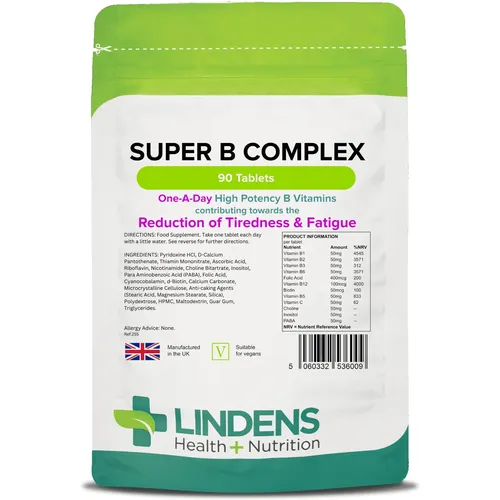
The Lindens Super Vitamin B Complex Tablets are my primary recommendation for anyone looking for comprehensive B vitamin supplementation. The formula contains all eight B vitamins – B1, B2, B3, B5, B6, B7, B9 and B12 – alongside vitamin C and additional compounds including choline and inositol, providing a well-rounded B vitamin profile in a single daily tablet. This breadth makes it more useful than a single B vitamin supplement for most people, because the B vitamins work synergistically and isolated high-dose supplementation of one B vitamin can mask deficiency of another. For people with dietary restrictions, high physiological demands, or simply those who want nutritional assurance that their B vitamin status is covered comprehensively, the Super B Complex is an efficient and well-formulated choice. Manufactured by Lindens in Yorkshire to ISO 9001 standards.
All 8 B vitamins | Plus Vitamin C | Choline and inositol | UK manufactured | Buy from Zoom Health
Best for Brain and Nerve Support: Lindens Neurovits Plus Tablets
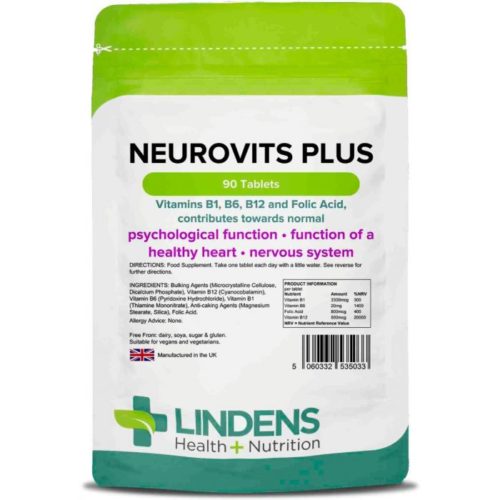
The Lindens Neurovits Plus Tablets take a more targeted approach – combining B1, B6, B12 and folic acid in a formula specifically designed to support normal neurological and psychological function alongside energy metabolism. This makes it particularly relevant for people experiencing fatigue alongside cognitive symptoms such as difficulty concentrating, low mood, or the numbness and tingling that can accompany B12 deficiency. The combination of B12 and folic acid is also specifically relevant for older adults and anyone taking medications that reduce B12 absorption. One tablet daily provides all four nutrients in a convenient, vegan-friendly format. For people who want a targeted neurological B vitamin formula rather than a comprehensive B complex, Neurovits Plus is the more focused choice.
B1, B6, B12 and Folic Acid | Neurological focus | Vegan | One daily tablet | Buy from Zoom Health
Best for Vegans and Vegetarians: Lindens Vitamin B12 Sublingual Tabs
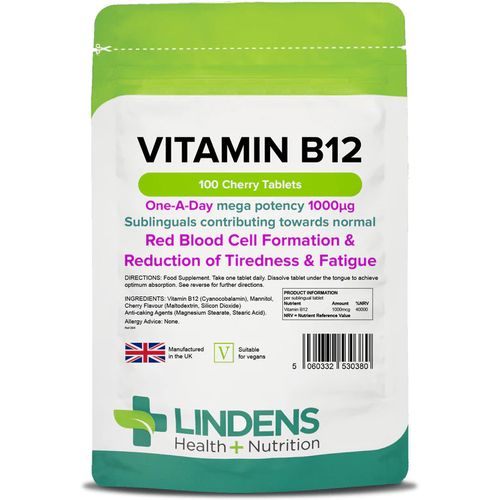
For vegetarians and vegans – and for older adults whose B12 absorption is reduced – the Lindens Vitamin B12 1000mcg Sublingual Tabs are the most effective supplementation option in our range. Sublingual delivery – dissolving the tablet under the tongue rather than swallowing it – allows B12 to be absorbed directly through the mucous membranes of the mouth into the bloodstream, bypassing the digestive process entirely. This is particularly significant for the groups most at risk of B12 deficiency: older adults whose reduced stomach acid impairs intrinsic factor production, and people taking metformin or proton pump inhibitors that reduce normal gut B12 absorption. For these groups, standard oral B12 tablets may be poorly absorbed despite adequate doses – sublingual delivery sidesteps this problem completely. For anyone following a plant-based diet, B12 supplementation is not optional – it is an essential nutritional requirement given the near-complete absence of B12 in plant foods, and the sublingual format provides the most reliable absorption regardless of digestive factors.
1000mcg Vitamin B12 | Sublingual delivery | Bypasses absorption issues | Essential for vegans | Buy from Zoom Health
What to Do If You Are Persistently Tired
A practical step-by-step approach to persistent fatigue looks like this. First, assess your sleep honestly – quantity and quality both matter, and no supplement compensates for consistently insufficient or disrupted sleep. Second, review your diet – are you eating regularly, adequately and with sufficient variety? Skipping meals, very low calorie intake and highly restricted diets all impair energy metabolism regardless of supplementation. Third, speak to your GP if fatigue is persistent – a blood test checking full blood count, thyroid function, vitamin D, B12 and ferritin covers the most common correctable causes and takes minutes. Fourth, if your diet is restricted or you have specific risk factors for B vitamin deficiency, address those with appropriate supplementation as discussed above.
Supplements work best as part of an honest nutritional strategy – not as a shortcut around the harder work of adequate sleep, a varied diet and the management of underlying health conditions. The Lindens B vitamin range provides high-quality, UK-manufactured supplementation at accessible prices for those who genuinely need it. Used appropriately, they are a valuable part of a healthy lifestyle. Used as a substitute for addressing the real causes of fatigue, they are an expensive and ineffective solution.
Support your energy and vitality
Browse our full range of Lindens health supplements at Zoom Health, including B vitamins, minerals and specialist energy support products.
About the Author
Anthony Cunningham – Health Writer & Editor
Anthony Cunningham, BA (Hons), MA, is a UK-based health writer and editor with over 20 years’ experience running Zoom Health, a trusted source for home health tests, preventive care, and wellness guidance. He creates clear, evidence-based articles using NHS, NICE, and WHO guidance. Where possible, content is reviewed by practising clinicians to enhance accuracy and reliability, helping readers make informed healthcare decisions.