About This Article
About This Article: Zoom Health has supplied home health products and vitamins to UK customers for nearly 20 years. This article is for general information only and does not constitute medical advice. Always consult your GP or a qualified healthcare professional before starting any new supplement, particularly if you are pregnant, breastfeeding, taking prescribed medication, or managing a medical condition. If you are experiencing persistent sleep difficulties or significant anxiety, please speak to your GP. Food supplements are not a substitute for a balanced diet and healthy lifestyle.
Published: 7 May 2026 | By: Anthony Cunningham
Poor sleep and chronic stress are two of the most common health complaints in the UK – and they are deeply intertwined. Stress activates the body’s fight-or-flight response, releasing cortisol and adrenaline that increase alertness and make falling asleep difficult. Poor sleep, in turn, elevates cortisol levels, amplifies emotional reactivity, and reduces the brain’s capacity to regulate the stress response effectively. The result is a self-reinforcing cycle that is familiar to anyone who has lain awake worrying about things they know they cannot address at 2am. Understanding this bidirectional relationship is the starting point for choosing supplements intelligently – because the same nutritional deficiencies can contribute to both problems simultaneously, and addressing them can help break the cycle from both ends.
The Sleep-Stress Cycle: How It Works
The hypothalamic-pituitary-adrenal (HPA) axis is the body’s central stress response system. When stress is perceived – whether from a genuine physical threat, a workplace deadline, or an anxious thought – the HPA axis triggers cortisol release. Cortisol is designed to be highest in the morning, falling through the day to allow melatonin – the sleep hormone – to rise in the evening and facilitate sleep onset. Chronic stress disrupts this rhythm. Elevated evening cortisol suppresses melatonin production, delays sleep onset, reduces time spent in deep restorative sleep stages, and increases the likelihood of early morning waking.
The sleep debt that accumulates from this disruption then feeds back into the stress system. Sleep-deprived people show significantly elevated amygdala reactivity – the brain region responsible for threat detection and emotional response – and reduced prefrontal cortex activity – the region responsible for rational evaluation and emotional regulation. The practical result is that a sleep-deprived person perceives stressors as more threatening, responds to them more intensely, and has fewer cognitive resources available to manage them. This is not a character failing – it is a predictable neurological consequence of insufficient sleep that affects virtually everyone.
The Nutritional Dimension
Several nutritional factors interact with the sleep-stress cycle in ways that are relevant to supplementation. Magnesium plays a role in regulating the HPA axis stress response and in melatonin synthesis – as covered in detail in our magnesium guide, chronic stress depletes magnesium through increased urinary excretion, and depleted magnesium amplifies the stress response. Vitamin D has a role in the regulation of mood and is categorised by Lindens under Stress, Mood and Sleep – low vitamin D status is associated with both low mood and poor sleep quality, as discussed in our vitamin D guide. B vitamins, covered in our energy guide, contribute to normal psychological function and the nervous system regulation that underpins both stress resilience and sleep quality.
Beyond these foundational micronutrients, certain botanical supplements have established traditional use and emerging research support for their roles in stress management and sleep quality. Two of these – rhodiola and lavender – are represented in the Lindens range and are worth understanding in detail.
What Supplements Can and Cannot Do for Sleep and Stress
Before discussing products I want to be direct about scope. Supplements addressing sleep and stress are most appropriate for people experiencing mild to moderate difficulty – the kind of stress that is situational or manageable, and the kind of sleep disruption that is related to stress, caffeine, irregular schedules or mild anxiety rather than a diagnosable sleep disorder or clinical anxiety condition. Significant anxiety, panic attacks, depression, or sleep difficulties that are severe or longstanding warrant a GP consultation and potentially psychological or pharmacological support that supplements cannot provide. The products below are not treatments for these conditions.
Where supplements are genuinely useful is in supporting the body’s normal stress regulation and sleep physiology as part of a broader approach that also addresses sleep hygiene, stress management and lifestyle factors. They work best as one element of a coherent strategy, not as a standalone solution.
Our Sleep and Stress Supplements at Zoom Health
Best for Stress: Lindens Rhodiola 3500mg Tablets

Rhodiola rosea is one of the most well-researched adaptogenic herbs – a category of plants traditionally used to help the body adapt to and resist the effects of stress. The Lindens Rhodiola 3500mg Tablets are a traditional herbal medicinal product (THMP) – a specific regulatory designation in the UK that requires evidence of traditional use and quality manufacturing standards, making it a more rigorously regulated product than a standard food supplement. This distinction matters: a THMP registration means the product has met Medicines and Healthcare products Regulatory Agency (MHRA) standards for safety and quality, providing a higher level of assurance than an unregistered botanical supplement.
Rhodiola is used for the temporary relief of symptoms associated with stress, such as fatigue, exhaustion and mild anxiety – this is the permitted traditional herbal claim. The plant’s active compounds, including rosavin and salidroside, are thought to modulate the HPA axis stress response, though the precise mechanisms are still being investigated. Each Lindens tablet contains a standardised extract equivalent to 3500mg of whole dried root, ensuring consistent potency. Rhodiola was originally adopted by athletes and military personnel in Russia and Scandinavia to improve performance under physical and mental stress – a heritage that gives it a longer real-world track record than many more recently popularised adaptogens. Many users report noticing effects relatively quickly compared to other botanical supplements.
Traditional Herbal Medicinal Product | 3500mg standardised extract | MHRA registered | Stress and fatigue | Buy from Zoom Health
Best for Relaxation: Lindens Lavender Essential Oil 80mg Capsules
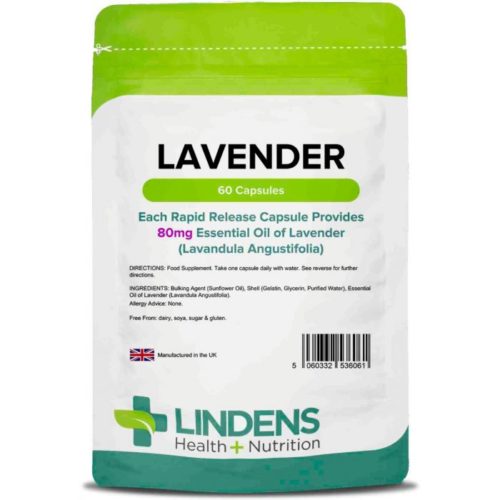
Lavender has one of the longest documented associations with relaxation and sleep support of any botanical – its calming properties have been used in traditional medicine across Europe and the Middle East for centuries. The Lindens Lavender Essential Oil 80mg Capsules deliver 80mg of essential oil of lavender in a rapid-release soft capsule – a more consistent and measurable format than aromatherapy applications, where the dose is difficult to control. Research into oral lavender oil preparations has shown associations with reduced anxiety and improved sleep quality in clinical settings. The mechanism involves lavender’s active compounds – primarily linalool and linalyl acetate – interacting with GABA receptors, the same receptor system targeted by many pharmaceutical anxiety medications, though at a much milder level of effect.
These capsules are suitable for people who experience mild anxiety or difficulty relaxing in the evening and want a gentle, natural approach to supporting the transition into sleep. They are dairy, gluten, soya and sugar free. As with all supplements during pregnancy, medical advice should be sought before use – lavender at supplemental doses during pregnancy requires individual assessment.
80mg Lavender Essential Oil | Rapid release | Relaxation support | Centuries of traditional use | Buy from Zoom Health
Essential Foundation: Lindens Magnesium Tablets
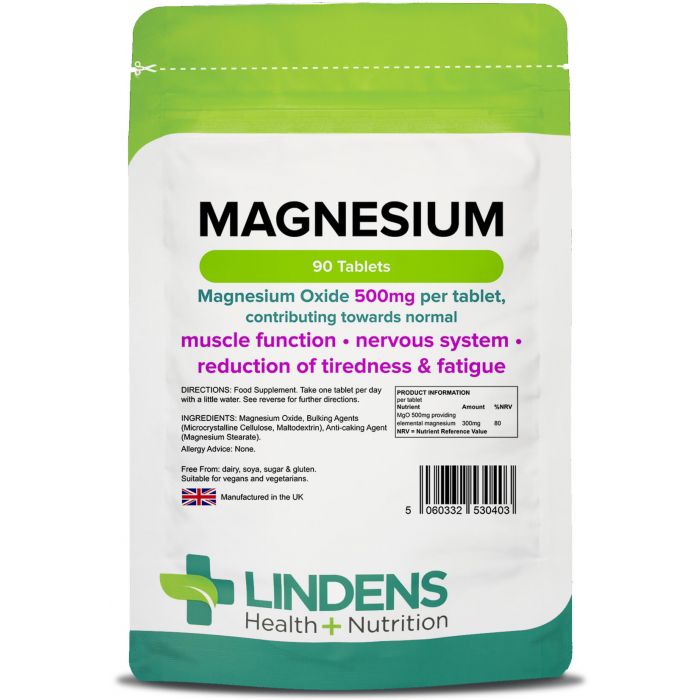
Before reaching for botanical stress supplements, ensuring foundational nutritional status is adequate is the more important first step – and magnesium is the most relevant mineral for both sleep and stress. As explained in detail in our magnesium guide, the mineral contributes to normal psychological function and plays a regulatory role in the HPA axis stress response and melatonin synthesis. The bidirectional depletion cycle – where stress reduces magnesium and low magnesium amplifies stress – means that chronic stress creates a progressive magnesium deficit that compounds over time. The Lindens Magnesium Tablets provide 300mg of elemental magnesium per tablet – 80% of the recommended daily amount – and are the supplement I would prioritise for anyone experiencing sleep or stress difficulties before moving to botanical options. Evening supplementation is a practical choice for sleep support, though consistent daily timing matters more than the specific hour.
300mg elemental magnesium | 80% RDA | Psychological function | Sleep and stress foundation | Buy from Zoom Health
Worth Considering: Lindens Vitamin D3 1100IU Tablets

Vitamin D’s role in mood regulation and sleep is increasingly recognised, and it is particularly relevant during the UK’s autumn and winter months when low mood, disrupted sleep and heightened stress reactivity tend to peak. As covered in our vitamin D guide, deficiency is widespread in the UK and the NHS recommends supplementation for the whole population during the darker months. Vitamin D receptors are present in brain regions involved in mood and sleep regulation, and research has associated low vitamin D status with increased prevalence of seasonal mood disturbance – commonly described as the winter blues. The Lindens Vitamin D3 1100IU Tablets provide 500% NRV of vitamin D3 in a vegetarian-friendly daily tablet. For people who notice a consistent seasonal pattern to their sleep difficulties or low mood, ensuring adequate vitamin D status through the winter months is one of the most evidence-supported nutritional steps available.
1100IU Vitamin D3 | Mood and sleep support | NHS-recommended winter supplement | Vegetarian | Buy from Zoom Health – £6.99
Sleep Hygiene: The Non-Negotiable Foundation
No supplement compensates for poor sleep hygiene, and I want to be honest about that before closing this guide. The practices with the strongest evidence for improving sleep quality are consistent sleep and wake times regardless of weekend schedules, a cool and dark bedroom environment, avoiding screens in the hour before bed, limiting caffeine after early afternoon, and managing alcohol intake – which impairs sleep architecture despite initially promoting drowsiness. Regular physical activity improves sleep quality substantially, though vigorous exercise close to bedtime can be stimulating for some people.
Supplements for sleep and stress work best when these foundations are in place. Rhodiola for someone under stress who also sleeps inconsistently, drinks caffeine in the evening, and uses their phone in bed is unlikely to produce the results they hope for. The same supplement for someone whose sleep hygiene is good but who is navigating a period of elevated stress is a more reasonable addition to an otherwise solid foundation.
Support your sleep and stress resilience
Browse our full range of Lindens health supplements at Zoom Health, including botanicals, minerals and vitamins for stress, mood and sleep.
About the Author
Anthony Cunningham – Health Writer & Editor
Anthony Cunningham, BA (Hons), MA, is a UK-based health writer and editor with over 20 years’ experience running Zoom Health, a trusted source for home health tests, preventive care, and wellness guidance. He creates clear, evidence-based articles using NHS, NICE, and WHO guidance. Where possible, content is reviewed by practising clinicians to enhance accuracy and reliability, helping readers make informed healthcare decisions.