
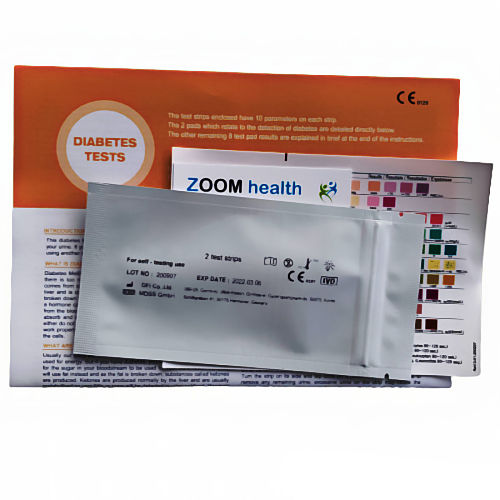
Home Diabetes Test
From £4.99
Get accurate diabetes testing at home with our easy-to-use urine test strips. Simply dip the strip in your urine sample and read your glucose and ketone levels in just 60 seconds.
- ✓ Tests both glucose and ketones in one simple urine test
- ✓ Get your results in just 60 seconds – fast and easy
- ✓2 or 5 test strips – retest anytime to confirm results
- ✓ Strips stay accurate for 30 days after opening
- ✓ 10-parameters gives you detailed health information
Your Complete Home Diabetes Testing Solution
If you’re managing diabetes or following a low-carb or keto diet, checking your glucose and ketone levels regularly is important. These urine test strips make it simple and affordable to monitor both from home – no doctor’s appointment needed.
Whether you’ve just been diagnosed with diabetes, you’re tracking your keto progress, or you just want to stay on top of your health, these strips give you the information you need to make smart decisions about your wellbeing.
The best part? You can test as often as you want. This helps you see how your meals, exercise, and daily choices affect your blood sugar and ketone levels. Catching problems early and checking regularly helps prevent complications and keeps you healthy.
What’s Included: One sealed foil pack with 2 or 5 test strips (you choose!)
How Long They Last: The strips stay accurate for up to 30 days after opening if you reseal the pack properly after each use.
Important Safety Information:
- Designed for home diagnostic use only
- Keep stored at temperatures between 2°C and 30°C in a dry location away from direct sunlight
- Keep the foil packaging sealed until you’re ready to test, and dispose of any strips that have passed their expiration date
- If you notice the test pads have changed colour or darkened in the package, this may signal degradation – use a fresh strip and consider replacing the batch
Common Questions About Diabetes Test Strips
How Reliable Are Urine Ketone Test Strips?
These strips are reliable when you use them correctly. Just make sure to follow the instructions, store them properly, and read the results at the right time. One thing to remember: urine ketone levels show what your body got rid of recently, which might be slightly different from what’s in your blood right now. For the best picture of your health, use these strips as part of your regular monitoring routine alongside other checks.
What’s the Expiration Timeframe for These Strips?
Yes, every pack has an expiration date printed on it. Always check this date before you test, and throw away any expired strips. Using old strips can give you wrong results, which could lead to bad health decisions. Store them properly (as shown on the pack) to get the longest life out of them.
What’s the Science Behind Ketone Detection?
It’s actually pretty simple! When your body burns fat instead of carbs for energy, it makes ketones. These ketones come out in your urine. The test strip has a special chemical on it that changes colour when it touches ketones. You just match the colour to the chart on the bottle to see how much ketone is there.
Can These Urine Strips Replace Blood Glucose Testing?
No, urine test strips shouldn’t replace blood glucose testing for managing diabetes. While they’re great for quick monitoring and tracking trends at home, blood tests are more accurate for measuring your current glucose levels. Urine tests show glucose that your kidneys filtered out earlier, so there’s a time delay. If you have diabetes and take medication, your doctor will likely recommend blood glucose testing for daily management. These urine strips work best as a convenient supplement to your regular monitoring routine or for preliminary screening.
Related Products





How to Use Your Test Strips
Before You Start:
For best results, use fresh urine in a clean container. First thing in the morning is perfect timing. If you can’t test right away, put the sample in the fridge (don’t freeze it) and let it warm up to room temperature before testing.
Quick Tip: For accurate results, collect a clean urine sample. Women should avoid using soaps or feminine hygiene products right before testing.
Testing Steps (It’s Easy!):
- Dip the Strip: Quickly dip the test strip into your urine sample. Make sure all the colored pads are covered. Take it out after 2 seconds – no longer!
- Wipe Off Extra Urine: Gently run the edge of the strip along the rim of your container to remove extra liquid. Don’t let the test pads touch the container.
- Tap It Dry: Tap the strip once on a paper towel to remove any drips.
- Wait and Check: Hold the strip flat (so the urine doesn’t run between the test pads) and wait exactly 60 seconds. Then compare the colours on the strip to the chart in the pack. Make sure you’re in good light so you can see the colours properly.
Reading Your Results:
Timing is Important: Read your results at exactly 60 seconds (2 minutes max). If you wait longer, the results might not be accurate.
What’s Normal: You shouldn’t normally have ketones in your urine unless you’ve been fasting, eating very few carbs, or you’re sick.
Glucose Results: Anything over 100mg/dl is higher than normal. The colour changes from pale blue to dark brown, showing glucose levels from 100mg/dl up to 2000mg/dl.
What to Do:
- If you see a slight colour change, test again tomorrow to double-check
⚠️ If high levels keep showing up, or you have any of these symptoms, call your doctor:
- Really thirsty all the time
- Need to pee a lot
- Feeling tired for no reason
- Losing weight without trying
- Blurry vision
Related Products
Understanding Diabetes and Why Testing Matters
Living with Diabetes
Whatever type of diabetes you have, understanding it helps you manage it better. The more you know about how diabetes affects your body, the easier it is to keep it under control and avoid problems down the road.
What is Type 2 Diabetes?
This is the most common type. It used to mainly affect people over 40, but now younger people are getting it too because of rising obesity rates in the UK. Type 2 happens when your body either doesn’t make enough insulin, or your cells don’t use insulin properly.
Understanding the Myths
There are many misconceptions about diabetes that can make managing the condition more confusing. Knowing the facts helps you make better decisions about your health and avoid common pitfalls.
Type 1 Diabetes
There’s no cure for Type 1 yet, so treatment focuses on keeping blood sugar as close to normal as possible. The sooner you get good control after diagnosis, the better your long-term health will be. Type 1 happens when your pancreas stops making insulin completely.
Glucose Monitoring and Testing
Regular blood sugar monitoring is essential for good diabetes management. Understanding how to test properly and what your results mean helps you stay in control and catch problems early.
Reducing Your Risk
Did you know 3.8 million people in the UK have diabetes, and most have Type 2? The good news is Type 2 can often be prevented or delayed. Simple lifestyle changes like regular exercise can make a real difference.
Types of Diabetes Explained
Type 1 happens when your body’s immune system destroys the cells that make insulin, so you stop producing it completely. Type 2 is different – your body either doesn’t make enough insulin, or your cells resist it. Different causes, but both need careful management.
More Helpful Articles
- What is Hypoglycaemia?
- Diabetic Neuropathy Explained
- What Causes Diabetic Kidney Disease?
- Diabetes Signs You Can Spot in Your Mouth
- Symptoms and Causes of Diabetic Retinopathy
- Diabetes Test Strips and Monitors
- Plant-Based Foods May Reduce Diabetes Risk
Related Products
161 reviews for Home Diabetes Test

| 5 star | 91% | |
| 4 star | 7% | |
| 3 star | 0% | |
| 2 star | 0% | |
| 1 star | 0% |
Debra R. (verified owner) –
Unfortunately 5 days after order still not recieved but this could be a postal issue