About This Article
About This Article: Zoom Health has supplied home health products and vitamins to UK customers for nearly 20 years. This article is for general information only and does not constitute medical advice. Always consult your GP or a qualified healthcare professional before starting any new supplement, particularly if you are pregnant, breastfeeding, taking prescribed medication, or managing a medical condition. Joint pain that is persistent, severe or accompanied by swelling, redness or fever should always be assessed by a GP. Food supplements are not a substitute for a balanced diet and healthy lifestyle.
Published: 7 May 2026 | By: Anthony Cunningham
Joint health supplements are among the most widely purchased in the UK, and for good reason – joint discomfort affects a significant proportion of the adult population and increases with age, physical activity and body weight. The challenge for anyone trying to navigate this category is that the products available address joint health through fundamentally different mechanisms, and choosing between them without understanding those differences is essentially guesswork. In this guide I want to explain how the main categories of joint supplement actually work, who they are most suited to, and where the research evidence is strongest – giving you a genuinely informed basis for choosing from the Lindens range.
Understanding Joint Structure: Why It Matters for Supplement Choice
A synovial joint – the type found in knees, hips, shoulders and fingers – consists of several components that can each contribute to discomfort when compromised. Articular cartilage covers the ends of the bones where they meet, providing a smooth, low-friction surface and cushioning impact. Synovial fluid lubricates the joint and nourishes the cartilage, which has no direct blood supply. The joint capsule and surrounding ligaments provide stability. Muscles and tendons control movement and absorb load.
This structure matters for supplement selection because different supplements target different components. Glucosamine and collagen provide building blocks for cartilage maintenance. Omega 3 fatty acids work primarily through their role in the body’s inflammatory response. Calcium, magnesium and vitamin D support the underlying bone structure that joints depend on. MSM (methylsulfonylmethane) provides sulphur, which is involved in the formation of connective tissue. Understanding which component of joint health is most relevant to your situation points you towards the supplement most likely to be useful.
The Evidence Landscape: Being Honest About What We Know
Joint health supplements have been more extensively researched than many other supplement categories, and the evidence picture is worth understanding clearly. Glucosamine sulphate has the most substantial research base of any joint supplement – the large GAIT trial found significant benefit for people with moderate to severe knee osteoarthritis, though effects were less clear for mild cases. Collagen supplementation has growing research support for joint comfort and cartilage markers, though studies are generally smaller. Omega 3’s anti-inflammatory properties are well established across a broad research base, with specific joint benefits most clearly seen in inflammatory arthritis conditions. Vitamin D’s role in bone health underpinning joint function is well evidenced.
For healthy, active people without significant joint pathology, the benefits of joint supplements are less certain – the evidence base is primarily built on people with existing joint conditions rather than prevention in healthy individuals. This does not mean supplements are without value for active people – the safety profile of the main joint supplements is good and a plausible biological rationale exists for their use – but expectations should be proportionate to the evidence rather than shaped by marketing claims.
Our Joint Health Supplements at Zoom Health
Top Pick: Lindens Marine Collagen 400mg Capsules

Collagen is the most abundant protein in the human body and the primary structural protein in cartilage, tendons, ligaments and skin. Type I and Type II collagen are the forms most relevant to joint health – Type I is found in tendons, ligaments and bone; Type II is the primary collagen of articular cartilage. The Lindens Marine Collagen 400mg Capsules use Naticol Type I hydrolysed marine collagen – a well-regarded marine collagen source with good bioavailability. Hydrolysed collagen has been broken down into smaller peptides that are more readily absorbed than intact collagen protein, and research suggests these peptides may stimulate fibroblasts in joint tissue to produce more collagen endogenously.
Marine collagen is derived from fish skin and scales, making it a more sustainable and generally better-absorbed source than bovine collagen. Beyond joint health, collagen contributes to the elasticity and strength of skin, hair and nails – making these capsules a particularly versatile supplement for anyone whose concerns extend to connective tissue health broadly. Take one to three capsules daily with water – consistency over weeks and months matters more than dose intensity for collagen supplementation, as changes in connective tissue occur gradually.
400mg Naticol Marine Collagen | Type I hydrolysed | Joint and skin health | UK manufactured | Buy from Zoom Health
Best for Inflammation: Lindens Omega 3 Fish Oil Capsules

EPA and DHA from fish oil act as precursors to specialised pro-resolving mediators – compounds that actively resolve the inflammatory process rather than simply blocking it. This is a meaningfully different mechanism from anti-inflammatory medications, which primarily suppress inflammation. For people whose joint discomfort has an inflammatory component – whether from inflammatory arthritis, post-exercise inflammation, or general joint irritation – omega 3 from the Lindens Omega 3 Fish Oil (30% DHA/EPA) Capsules is one of the most evidence-supported nutritional approaches available. The 30% DHA/EPA concentration delivers a meaningful dose of the active fatty acids – the specification that matters when comparing fish oil products, as covered in detail in our omega 3 guide. People taking blood-thinning medications should speak to their GP before starting fish oil at higher doses.
30% DHA/EPA concentration | Anti-inflammatory mechanism | Marine source | Heart and joint health | Buy from Zoom Health – £6.99
Essential Bone Foundation: Lindens Calcium Magnesium & Vitamin D Tablets
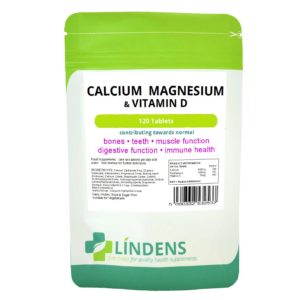
Joint health cannot be considered in isolation from bone health – the structural integrity of the bones forming a joint is fundamental to the joint’s ability to function normally and withstand load. Bone loss accelerates with age, particularly in postmenopausal women, and deteriorating bone density changes the mechanical environment of joints in ways that can accelerate cartilage wear. The Lindens Calcium Magnesium & Vitamin D Tablets provide all three nutrients essential to normal bone maintenance in a single daily tablet. Calcium and magnesium both contribute to the maintenance of normal bones – a permitted health claim with robust evidence – while vitamin D supports their absorption. As discussed in our vitamin D guide, vitamin D deficiency is widespread in the UK and its role in musculoskeletal health extends beyond bones to normal muscle function, which is directly relevant to joint support and stability. For older adults, postmenopausal women and anyone with concerns about bone density, this combination supplement is the most important foundation for long-term joint health.
Calcium + Magnesium + Vitamin D | Bone maintenance | Joint foundation | All-in-one formula | Buy from Zoom Health
A Note on Glucosamine
Glucosamine is the most widely purchased joint supplement in the UK and deserves specific mention, even though we have covered it in a dedicated glucosamine guide on the Zoom Health blog. Glucosamine sulphate is a naturally occurring compound in joint cartilage and synovial fluid. Supplementation provides the building blocks the body uses in cartilage synthesis and maintenance. The research evidence is most compelling for people with moderate to severe knee osteoarthritis, where glucosamine sulphate at 1500mg daily has shown meaningful benefit in several clinical trials. For younger, active people without diagnosed joint conditions, benefits are less certain but the safety profile is good and the biological rationale is plausible. If you are considering glucosamine, glucosamine sulphate is the form with the strongest evidence base – not glucosamine hydrochloride, which has performed less consistently in trials.
Choosing the Right Joint Supplement for Your Situation
The most useful framework for choosing joint supplements is to match the supplement’s mechanism to your situation. If your primary concern is cartilage maintenance and connective tissue support – for example, as an active person wanting to protect joints under regular load, or someone in the early stages of age-related joint changes – collagen and glucosamine address this most directly. If your joint discomfort has a noticeable inflammatory quality – stiffness that improves with movement, warmth around the joint, or systemic inflammatory conditions – omega 3 is the most relevant addition. If bone density and the structural foundation of your joints is the concern – as it commonly is for older adults and postmenopausal women – the calcium, magnesium and vitamin D combination is the priority.
For most people with general joint concerns, a combination of collagen for structural support, omega 3 for inflammatory modulation, and the calcium/magnesium/vitamin D combination for bone foundation covers the key mechanisms comprehensively. These can be taken together without interaction concerns. Consistency over months rather than weeks is the relevant timeframe for evaluating effectiveness – connective tissue has a slow turnover rate and changes are gradual.
Lifestyle Factors That Complement Supplementation
Supplements are most effective when combined with the lifestyle factors that most powerfully support joint health. Maintaining a healthy body weight reduces the mechanical load on weight-bearing joints significantly – every kilogram of body weight translates to approximately three to four kilograms of force across the knee joint during walking. Regular low-impact exercise – swimming, cycling, walking – maintains joint fluid circulation and cartilage nutrition without the high impact loading of running or jumping. Strength training that maintains the muscle mass surrounding key joints provides stability and reduces the load transferred to joint structures during movement. Staying well hydrated supports synovial fluid volume and viscosity.
Support your joint health
Browse our full range of joint health supplements at Zoom Health, or explore the complete Lindens health supplements range.
About the Author
Anthony Cunningham – Health Writer & Editor
Anthony Cunningham, BA (Hons), MA, is a UK-based health writer and editor with over 20 years’ experience running Zoom Health, a trusted source for home health tests, preventive care, and wellness guidance. He creates clear, evidence-based articles using NHS, NICE, and WHO guidance. Where possible, content is reviewed by practising clinicians to enhance accuracy and reliability, helping readers make informed healthcare decisions.