About This Article
Zoom Health has supplied home health products and test kits to UK customers for nearly 20 years. This article is for general information only and does not constitute medical advice. Any abnormal test results should be discussed with your GP promptly. Always consult a qualified healthcare professional before making changes to your diet, medication or lifestyle based on a home test result. Home health tests are screening tools and are not a substitute for clinical testing.
Chronic kidney disease affects around one in ten people worldwide. In the UK, an estimated three million people are living with it – and the majority of them do not know. Kidney disease earns its reputation as a silent condition because the kidneys are remarkably resilient organs. They can lose a significant proportion of their filtering capacity before a person notices any symptoms at all. By the time symptoms such as swelling, fatigue, or changes in urination become noticeable, the damage is often well advanced.
This is what makes home kidney testing genuinely valuable. A simple urine test – no blood, no needles, results in minutes – can detect three key markers of kidney function that are among the earliest indicators of a problem: protein in the urine, creatinine levels, and urine specific gravity. Together, these three measurements give a meaningful picture of how well your kidneys are filtering your blood, long before the kidneys reach the point where symptoms develop.
At £3.49 for two tests, our Kidney Function Test kit is the most affordable home health test in our range, and in my view one of the most important. This guide explains what the kidneys do, who is most at risk, what each of the three markers means, and what to do if your result is abnormal.
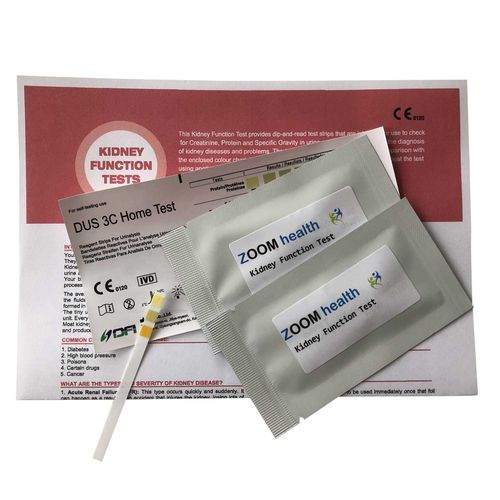
Kidney Function Test – 2 Pack
Urine test. No blood required. Detects protein, creatinine and specific gravity – three key markers of kidney health. Results in minutes. Rated 5.00/5.
What the kidneys do – and why their failure is so easy to miss
The kidneys are two bean-shaped organs, each roughly the size of a fist, positioned near the middle of the back just below the rib cage. Their primary role is filtration: every minute, around 1.2 litres of blood passes through them. Each kidney contains approximately one million tiny filtering units called nephrons. These nephrons remove waste products and excess fluid from the blood, regulate the body’s salt and mineral balance, control blood pressure through hormone production, and stimulate red blood cell production. The filtered waste becomes urine, which flows to the bladder and is excreted.
The reason kidney disease is so frequently undetected is that the kidneys have enormous functional reserve. They can continue operating adequately with only 20-25% of their normal capacity before the body begins to show signs of distress. A person can lose three quarters of their kidney function and feel broadly well. This is clinically useful in some respects – it means the body copes remarkably well with kidney damage – but it is also dangerous, because it removes the warning signs that would otherwise prompt earlier investigation and intervention.
The consequences of undetected chronic kidney disease extend well beyond the kidneys themselves. People with CKD are significantly more likely to develop cardiovascular disease – heart attacks and strokes – than the general population. Anaemia is common as kidney function declines, because the kidneys produce a hormone called erythropoietin that stimulates red blood cell production. Bone health is affected. And as kidney function falls toward end-stage disease, the only options are dialysis or transplantation. None of this is inevitable, but early detection is what makes early intervention possible.
Who is most at risk of chronic kidney disease?
CKD does not affect all groups equally. The risk is substantially elevated in people with the following conditions or characteristics:
- Diabetes. Both Type 1 and Type 2 diabetes are the leading causes of kidney disease in the UK. High blood glucose over time damages the tiny blood vessels in the nephrons, progressively impairing their filtering ability – a condition called diabetic nephropathy. Anyone with a diabetes diagnosis should have their kidney function checked regularly, and our home diabetes test guide covers that first step.
- High blood pressure. Chronically elevated blood pressure damages the blood vessels throughout the kidney, gradually reducing filtration capacity. Hypertension and CKD have a bidirectional relationship – each makes the other worse.
- A family history of kidney disease. Several kidney conditions have a genetic component, and a family history significantly raises personal risk.
- Age over 60. Kidney function naturally declines with age. Regular monitoring becomes increasingly important from the sixth decade onward.
- Cardiovascular disease. Heart disease and kidney disease share many risk factors and frequently occur together. The heart and kidneys regulate each other’s function through blood pressure and fluid balance, so damage to one often affects the other.
- Obesity. Excess weight raises the risk of both diabetes and hypertension, which are the two principal causes of CKD. Obesity also independently stresses the kidneys through increased filtration demand.
- Recurrent urinary tract infections or kidney infections. Repeated infections can scar kidney tissue over time, reducing function.
- Long-term use of NSAIDs. Regular use of anti-inflammatory painkillers such as ibuprofen or naproxen over extended periods can cause kidney damage, particularly in people who are already at risk.
- African, Caribbean or South Asian heritage. These groups have higher rates of diabetes and hypertension and correspondingly elevated CKD risk.
If two or more of these apply to you, I would recommend testing as a matter of routine rather than waiting for symptoms. The value of a urine kidney test is precisely that it can catch the very earliest signs of impaired filtration before they become clinically significant.
Symptoms of kidney disease: why waiting for them is the wrong approach
I want to be clear about this: if you are waiting for symptoms before you test your kidney function, you may be waiting too long. Early and moderately advanced CKD typically produces no symptoms at all. When symptoms do appear, they usually indicate that kidney function is significantly reduced. The most common late-stage symptoms include:
- Swelling in the ankles, feet or hands (oedema) caused by fluid retention
- Persistent fatigue and weakness, often linked to anaemia
- Shortness of breath, due to fluid accumulating in the lungs or anaemia
- Nausea, loss of appetite, and an unpleasant metallic taste in the mouth
- Reduced or increased urine output, or urine that is frothy or foamy (a sign of protein)
- Itching, caused by waste products accumulating in the blood
- Difficulty concentrating or thinking clearly
- High blood pressure that is difficult to control
Foamy or frothy urine is one of the few signs that can appear relatively early and is worth taking seriously. It indicates protein in the urine – one of the three markers our home test detects. If you notice it consistently, do not wait: test and then speak to your GP.
What the three markers measure – and what they tell you
The Kidney Function Test detects three markers in urine. Understanding what each one measures helps you interpret your result meaningfully.
Protein (proteinuria). Healthy kidneys filter waste from the blood but retain large molecules, including proteins. When the filtration barrier is damaged, protein – primarily albumin – leaks through into the urine. Proteinuria is one of the earliest and most sensitive markers of kidney damage, and it is the primary indicator used clinically to detect and stage CKD. Persistent protein in the urine at any level should always be investigated by a GP. The test measures protein at levels from 15-30mg/dL upward, covering the clinically relevant range for early detection.
Creatinine. Creatinine is a waste product of normal muscle metabolism that is filtered out of the blood by the kidneys and excreted in urine. Under normal circumstances, creatinine appears in urine at consistently high concentrations. If creatinine levels in urine are low, it suggests the kidneys are not filtering it effectively – meaning it is accumulating in the blood instead. Low urinary creatinine is therefore a marker of reduced kidney filtration capacity. Creatinine is considered more specific than urea as a kidney function marker because its production rate is relatively constant and is not significantly affected by diet.
Specific gravity. This measures the concentration of the urine – that is, how effectively the kidneys are concentrating waste products and conserving water. Healthy kidneys can produce urine that ranges widely in concentration depending on the body’s hydration needs. Kidneys that are losing their ability to concentrate urine produce persistently dilute urine regardless of fluid intake, which causes increased urination frequency. Abnormal specific gravity – either consistently too high or persistently too low – can indicate impaired concentrating ability.
Together, these three markers give a picture of the kidneys’ filtering function, concentrating ability, and structural integrity. A normal result across all three provides meaningful reassurance. An abnormal result in one or more of the three is a clear prompt for GP investigation.
How to use the Kidney Function Test
The test is a urine dip strip – straightforward to use and requiring no blood sample. Here is how to get the most reliable result:
- Test first thing in the morning. First morning urine is concentrated and most likely to show abnormalities if they are present. This is particularly important for protein and specific gravity readings, both of which can be affected by hydration levels at other times of day.
- Collect a clean midstream sample in a clean, dry container. Let a small amount of urine pass first before collecting – this reduces contamination from the urethra.
- Dip the test strip into the urine for two seconds, then remove it and hold it horizontally.
- Wait the specified time (shown in the kit instructions for each parameter) and compare each colour pad against the reference chart. Read protein and creatinine results first, then specific gravity.
- Record your results. Because kidney disease develops slowly, comparing results over time – testing quarterly or twice yearly – is more informative than a single reading.
A couple of things that can affect results: heavy physical exercise in the 24 hours before testing can temporarily elevate protein in urine (exercise-induced proteinuria), producing a false positive. Similarly, a urinary tract infection can cause abnormal protein and specific gravity readings that are not related to kidney function. If you have a UTI, wait until it has cleared before testing. If you test positive and have symptoms of a UTI – burning urination, frequency, discomfort – mention both to your GP.
What to do with your result
A normal result across all three markers is reassuring. Retest in six to twelve months, or sooner if you develop symptoms or your risk factors change. For people with diabetes or high blood pressure, I recommend testing every three to six months as part of regular self-monitoring.
An abnormal result in any one of the three markers – particularly protein – should be discussed with your GP promptly. Take your test result with you. Your GP will typically arrange a laboratory urine test (albumin-to-creatinine ratio, or ACR) and a blood test measuring eGFR (estimated glomerular filtration rate), which is the standard clinical measure of kidney function. These tests together give a comprehensive picture of kidney health and are used to diagnose and stage CKD.
A single abnormal home test result is not a diagnosis of kidney disease. Protein in urine can have several causes, including temporary dehydration, exercise, fever, or a UTI. What matters is persistent abnormality over two or more tests. If your result is borderline or you are uncertain, repeat the test a week later using the second strip included in the pack.
If CKD is diagnosed, the most important steps are addressing the underlying causes – managing blood glucose if you have diabetes, controlling blood pressure, reviewing medications that may be affecting kidney function, and making dietary adjustments if advised. Early-stage CKD is manageable, and the rate of progression can be significantly slowed with the right interventions. The goal of testing is to give you the information to start that process as early as possible.
Building kidney health into your annual testing routine
At £3.49 for two tests, the Kidney Function Test is by some distance the best-value health check in our home testing range. I think of it as a quarterly or twice-yearly habit for anyone over 50, and a more frequent check for anyone managing diabetes or high blood pressure.
It pairs naturally with several other tests in our range. Diabetes is the leading cause of kidney disease – so testing blood glucose alongside kidney function makes obvious sense. Cardiovascular disease and kidney disease are closely linked – our home cholesterol test covers that side of the picture. And if you are over 65 and noticing increased fatigue alongside changes in urination, our thyroid test and iron deficiency test are both worth including in the mix – fatigue in this age group can have multiple overlapping causes.
What our customers say
The Kidney Function Test has a perfect rating of 5.00 out of 5 from its first customer review. The reviewer noted the ease of use and accuracy of the test, which reflects the same straightforward design that makes our urine test range accessible to anyone regardless of prior medical knowledge. The two-test pack means you have a retest available if your first result is borderline or if you simply want to confirm a normal result.
Three minutes and £3.49 could be some of the best health investment you make
Kidney disease is common, serious, and almost entirely symptom-free in its early stages. A home urine test cannot replace a GP blood test for a full picture of kidney function, but it can catch the earliest signs of a problem and get you into a conversation with your doctor years before you would otherwise have gone. With two tests for £3.49 and same-day dispatch on all orders before 3pm, there is very little reason not to add it to your routine.
Kidney Function Test – 2 Pack
Tests protein, creatinine and specific gravity in urine. No blood required. Results in minutes. Rated 5.00/5. Same-day dispatch.
Also test your: Blood glucose – Cholesterol – Full range
Related guides from Zoom Health:
- Home Diabetes Test guide – diabetes is the leading cause of kidney disease
- Cholesterol test guide – cardiovascular and kidney health are closely linked
- Iron deficiency test guide – anaemia is a common consequence of reduced kidney function
- Full range of home health test kits
Anthony Cunningham – Health Writer & Editor
Anthony Cunningham, BA (Hons), MA, is a UK-based health writer and editor with over 20 years’ experience running Zoom Health, a trusted source for home health tests, preventive care, and wellness guidance. He creates clear, evidence-based articles using NHS, NICE, and WHO guidance. Where possible, content is reviewed by practising clinicians to enhance accuracy and reliability, helping readers make informed carefully healthcare decisions.