About This Article
Zoom Health has supplied home health products and drug testing kits to UK customers for nearly 20 years. This article is for general information only and does not constitute legal or medical advice. Drug testing in the workplace is subject to UK employment law; always seek qualified legal guidance before implementing a testing programme. Test results should be interpreted in context, and any positive result should be confirmed by laboratory analysis before action is taken.
Cannabis is by some distance the most commonly detected drug in UK workplace testing, and it is also the one that generates the most confusion, disagreement, and legal complexity. Part of that is because public attitudes toward cannabis have shifted considerably over the past decade. Part of it is because the drug’s unusually long detection window creates genuinely difficult questions about the relationship between a positive test result and actual workplace impairment. And part of it is because the landscape in several countries has changed significantly in recent years, creating uncertainty about what the UK position actually is.
I want to address all of this as clearly as I can, from both the employer and employee perspective. Whether you are an HR manager trying to understand how to handle a positive cannabis result, an employee uncertain about your rights, or a parent wanting to know whether your child has been using cannabis recently, the starting point is the same: understanding what cannabis tests actually measure, and what they do not.
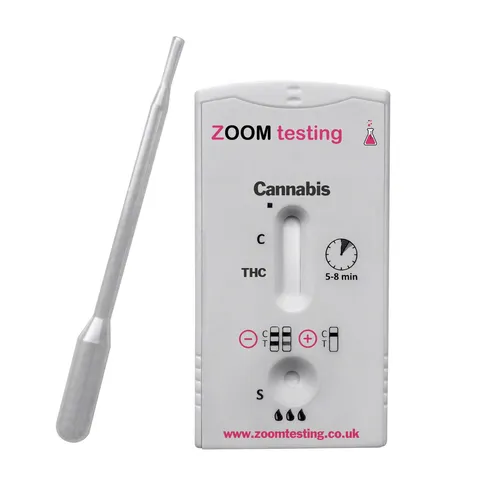
Cannabis Drug Test Kit – Urine – From £2.49 | Results in 5 minutes | 99% accurate | 50ng/mL cut-off – the standard used by employers | Detection window 7-30 days
Is Cannabis Still Illegal in the UK?
Yes, unambiguously. Cannabis remains a Class B controlled substance under the Misuse of Drugs Act 1971. Possession carries a maximum penalty of five years in prison, an unlimited fine, or both. Supply and production carry up to 14 years. There is no legal provision for recreational cannabis use, and unlike the United States, Canada, or several European countries, the UK has not decriminalised or legalised it.
The one significant exception is medicinal cannabis. Since November 2018, specialist doctors in the UK have been able to prescribe cannabis-based medicinal products (CBMPs) for certain conditions, including some forms of epilepsy, chemotherapy-induced nausea, and multiple sclerosis-related muscle stiffness. The number of patients with a legitimate medicinal cannabis prescription in the UK is growing, though it remains relatively small. This matters in a workplace testing context because a prescribed medicinal cannabis patient could test positive on a standard urine test despite using their medication entirely lawfully.
CBD products – oils, capsules, and so on – are a separate and legal category. Pure CBD does not contain THC, the psychoactive compound that drug tests detect. However, some CBD products contain trace amounts of THC, and in a small number of cases heavy use of such products could theoretically trigger a positive result at the 50ng/mL threshold used in standard workplace tests. This is another reason why a positive result should be discussed rather than automatically acted upon.
The Detection Window Problem: Why Cannabis Is Uniquely Challenging
Of all the substances that appear on standard drug test panels, cannabis has by far the longest and most variable detection window. THC – the active compound in cannabis – is fat-soluble, which means it is stored in fatty tissue and released gradually over time. The metabolite that urine tests detect, THC-COOH, can remain at detectable levels for a week in an occasional user, but for a month or more in someone who uses regularly or heavily.
This creates a genuine and important distinction that every employer needs to understand: a positive cannabis urine test does not mean someone was impaired at work. It means they used cannabis at some point within the last 7 to 30 days, which could be a Saturday evening three weeks ago. There is no urine test that can tell you whether someone was intoxicated this morning. That distinction matters enormously from a legal and fairness standpoint, particularly if disciplinary action is being considered.
The contrast with most other drugs is stark. Cocaine, for example, typically clears from urine within 2 to 4 days. Amphetamines within 2 to 5 days. A positive cocaine result carries a much stronger implication of recent use than a positive cannabis result does. Treating them as equivalent would be a significant error.
Saliva testing narrows the window considerably. Cannabis is detectable in oral fluid for roughly 4 to 24 hours after use in most people, which means a positive saliva result is a much stronger indicator of very recent use or potential current impairment. For for-cause or post-incident testing where impairment at the time of an event is the question, a saliva test is considerably more informative than a urine test. I cover the saliva versus urine distinction in detail in Post 1 of this series.
What the 50ng/mL Cut-Off Means
The Cannabis Drug Test Kit we stock uses a 50ng/mL detection threshold. This is the standard cut-off used by UK employers and professional testing laboratories, and it is calibrated to avoid false positives from passive exposure while being sensitive enough to detect genuine use.
What it means in practice is this: if THC-COOH is present in urine at or above 50 nanograms per millilitre, the test returns a positive result. Below that level, the result is negative – even if trace amounts of the compound are present. This threshold provides a reasonable balance between sensitivity and specificity, but it is worth understanding that it is a screening cut-off rather than a precise measure of cannabis consumed or time elapsed since use.
If confirmatory laboratory testing is carried out following a positive screen – which it should be before any formal action is taken – the laboratory will typically use a lower confirmation cut-off of 15ng/mL using GC/MS analysis. A result that comes back positive at 50ng/mL on a screening test and is then confirmed at 15ng/mL by a laboratory is a robust positive. A screen positive that cannot be confirmed at the lower laboratory threshold is considered a false positive, which is one of the reasons that confirmation testing matters.
Employer Rights and Legal Obligations Around Cannabis Testing
UK employers have the right to implement a workplace drug testing policy, including testing for cannabis, provided the policy is clearly communicated to employees and testing is carried out with consent. Employers cannot lawfully test employees without their knowledge, without a policy in place, or without following a fair procedure when acting on results.
The legal framework that applies is primarily employment law rather than drug law. A positive cannabis test does not give an employer the automatic right to dismiss an employee – that would depend on the nature of the role, the terms of the employment contract, the company drug policy, whether the employee has been given appropriate warnings, and a range of other factors. An employee dismissed solely on the basis of an unconfirmed positive drug screen, without a fair investigation or process, could have grounds for unfair dismissal.
There are sector-specific considerations too. In regulated industries – road transport, rail, aviation, nuclear – employers may have statutory obligations around drug testing that go beyond a general duty of care. The Road Traffic Act 1988 prohibits driving while impaired by cannabis, and the Drug Driving (Specified Limits) (England and Wales) Regulations 2014 set a legal limit of 2 micrograms of THC per litre of blood. Employers in transport must be aware of these limits when constructing their testing and fitness-to-work policies.
The ACAS guidance on workplace drug and alcohol testing is the most practical starting point for any employer building or reviewing a policy. The ICO’s guidance on data protection in drug testing is also essential reading, covering how test results must be stored, shared, and retained.
Medicinal Cannabis Prescriptions: A Growing Complication
The number of patients in the UK with a valid medicinal cannabis prescription is growing year on year, and this is beginning to appear as a practical issue in workplace testing programmes. An employee who holds a valid prescription for a cannabis-based medicinal product – for example, for chronic pain, anxiety, or a neurological condition – may test positive on a standard urine screen despite using their medication entirely within the law.
Employers need a clear policy position on this before it becomes an issue. Most occupational health frameworks recommend that employees notify their employer confidentially if they hold a prescription for any medication that could affect their workplace performance or testing results, including medicinal cannabis. The existence of a prescription does not automatically make it acceptable for an employee to be impaired at work – but it does mean that a positive test result cannot be treated in the same way as illicit use without a careful and individualised assessment.
Any employer who receives a positive cannabis result and then discovers the employee holds a medicinal prescription should immediately pause any process and take specialist occupational health or legal advice. Acting on such a result without proper investigation could expose the employer to discrimination claims under the Equality Act 2010, particularly if the underlying condition for which cannabis was prescribed constitutes a disability.
Using the Cannabis Test Kit: What You Need to Know
The Cannabis Drug Test Kit available from Zoom Health is a single-drug urine test that detects THC-COOH at the standard 50ng/mL threshold. It is available individually from £2.49 or in packs of 2, 5, 10, or 20, making it practical for single-use personal testing or for organisations that want to maintain a stock for random or for-cause screening.
The test uses a cassette format with a pipette for sample transfer. Results appear within 5 minutes and are straightforward to interpret: two lines in the result window indicates a negative result; one line (in the control area only, with no line in the test area) indicates a positive. An invalid result – where no control line appears – means the test should be repeated with a fresh kit. Accuracy is 99%, the test is CE marked and FDA approved, and kits can be stored for 10 to 18 months at room temperature.
One point worth emphasising for anyone using this test to assess their own likely result ahead of a workplace screen: individual metabolism varies considerably. The 7 to 30-day detection window is a guideline, not a guarantee. Body weight, hydration, exercise levels, and frequency of use all affect how quickly THC-COOH clears. The only reliable way to know whether you will test negative is to test yourself, as close to the actual testing date as is practical.
For Parents: What a Positive Result Means and What to Do
Cannabis is consistently the most commonly used illegal drug among teenagers and young adults in the UK. For parents who are concerned about their child’s drug use, a urine test can provide a definitive answer – but it is important to go into that process with realistic expectations about what the result will and will not tell you.
A positive result means cannabis was used at some point in the last 7 to 30 days. It does not tell you how much was used, how often, or in what context. A single use at a party three weeks ago and daily use over the past month could both return a positive result. The test is a starting point for a conversation, not a verdict.
A negative result, meanwhile, does not mean cannabis has never been used – only that levels were below the detection threshold at the time of testing. If a young person stopped using two months ago, or if the test was taken several weeks after the most recent use, it may well return negative.
The most useful role of a home cannabis test in a family context is as a prompt for an honest conversation rather than as a disciplinary tool. If the result is positive, what matters most is understanding the context – how it started, how frequent the use is, whether there are underlying issues driving it – and finding appropriate support if needed. Frank, non-judgmental dialogue tends to be far more effective than punitive responses, and a positive test result opens the door to that dialogue more reliably than suspicion alone.
The Cannabis Drug Test Kit is available individually from £2.49, or in bulk packs for ongoing testing programmes.
Featured in this article:
- Cannabis Drug Test Kit – Urine (single drug) – From £2.49
- 5 Panel Oral Fluid Saliva Drug Test Kit – From £6.99 (for for-cause/impairment testing)
- 10 Panel Drug Screen with Ketamine – £7.99 (for comprehensive workplace screening)
Related Articles
Anthony Cunningham – Health Writer & Editor
Anthony Cunningham, BA (Hons), MA, is a UK-based health writer and editor with over 20 years’ experience running Zoom Health, a trusted source for home health tests, preventive care, and wellness guidance. He creates clear, evidence-based articles using NHS, NICE, and WHO guidance. Where possible, content is reviewed by practising clinicians to enhance accuracy and reliability, helping readers make informed healthcare decisions.