About This Article
Zoom Health has more than 20 years’ experience providing health and wellbeing products and clear information to UK customers. This article looks at evening primrose oil, the claims made about fertility and cervical mucus, what the current evidence shows, and what to consider if you are trying to conceive.
Published: 11 April 2024 | Last Updated: 27 August 2026 | By: Anthony Cunningham
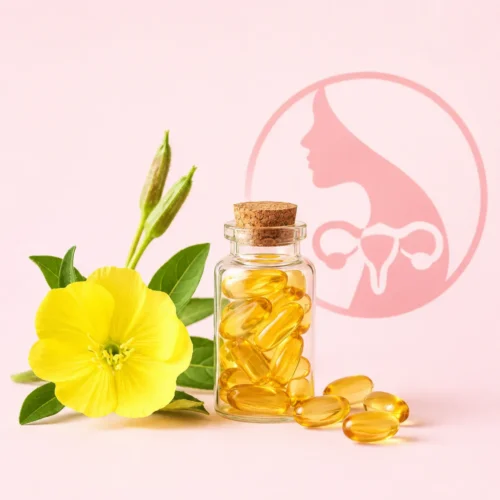
Evening primrose oil is a popular dietary supplement made from the seeds of the evening primrose plant. It contains omega-6 fatty acids, including gamma-linolenic acid (GLA), and is widely promoted for women’s health.
One of the claims sometimes made about evening primrose oil is that it can help women who are trying to conceive, particularly by improving cervical mucus. However, the evidence behind these claims is limited, and evening primrose oil should not be considered a proven fertility treatment.
Contents
- What Is Evening Primrose Oil?
- Evening Primrose Oil and Fertility
- Cervical Mucus and Conception
- Does Evening Primrose Oil Improve Fertility?
- Using Evening Primrose Oil
- Evening Primrose Oil and Pregnancy
- When to Seek Fertility Advice
- Conclusion
What Is Evening Primrose Oil?
Evening primrose oil, often shortened to EPO, is extracted from the seeds of the evening primrose plant, Oenothera biennis. It contains linoleic acid and gamma-linolenic acid (GLA), both of which are omega-6 fatty acids.
GLA can be converted by the body into substances called prostaglandins, which are involved in a wide range of normal biological processes. This has led to evening primrose oil being promoted for conditions including premenstrual symptoms, skin problems and joint complaints.
However, evidence for many of these uses remains limited. The US National Center for Complementary and Integrative Health states that there is currently not enough evidence to support evening primrose oil for any particular health condition. It has also not been shown to be effective for treating atopic eczema.
Evening Primrose Oil and Fertility
Evening primrose oil has become popular among some women who are trying to conceive. It is sometimes suggested that the GLA in the oil may influence cervical mucus and create conditions that are more favourable for sperm.
Although this idea is frequently discussed in fertility forums and complementary health information, there is currently not enough good-quality clinical evidence to show that taking evening primrose oil improves female fertility or increases the chance of becoming pregnant.
The NHS guidance on infertility treatment states that there is no evidence to suggest complementary therapies are effective for fertility problems and that further research is needed before such treatments can be recommended.
Cervical Mucus and Conception
Cervical mucus naturally changes throughout the menstrual cycle. Around ovulation it normally becomes thinner, clearer and more slippery. These changes can help sperm travel through the cervix and reproductive tract.
Sperm can survive inside the female reproductive tract for several days when conditions are favourable, which is one reason the fertile window extends beyond the day of ovulation itself.
Evening primrose oil is sometimes promoted as a way of increasing fertile cervical mucus. While this is a commonly repeated claim, it has not been established in good-quality clinical research. It is therefore better regarded as an unproven use rather than an established fertility benefit.
Does Evening Primrose Oil Improve Fertility?
At present, there is no convincing evidence that evening primrose oil increases fertility or pregnancy rates.
This does not mean that everyone taking evening primrose oil will experience no effects, but individual experiences and anecdotal reports cannot establish whether a supplement improves the chance of conception.
Fertility can be affected by many factors, including age, ovulation, sperm quality, the fallopian tubes, endometriosis and other medical conditions. In some couples no specific cause can be identified.
A balanced diet, regular physical activity, avoiding smoking, limiting alcohol and having regular unprotected sex around the fertile part of the cycle are more established parts of preconception care. You can read more in our guide to a healthy balanced diet.
Using Evening Primrose Oil
Evening primrose oil is widely available as a food supplement, usually in soft capsules. Different products can contain different amounts of evening primrose oil and GLA, so always follow the instructions supplied with the particular product.
Evening primrose oil is generally well tolerated by most adults, although possible side effects include stomach discomfort, nausea and diarrhoea.
If you take medicines or have an existing medical condition, speak to your GP or pharmacist before taking evening primrose oil or another herbal supplement. The NHS also recommends telling healthcare professionals about any herbal remedies or supplements you use.
Evening Primrose Oil and Pregnancy
Evidence about the safety of evening primrose oil during pregnancy is limited and inconclusive. It has also been investigated for its possible effects on cervical ripening and labour towards the end of pregnancy, but research findings have been inconsistent.
For this reason, evening primrose oil should not be used as a way of inducing labour or altering the cervix without advice from an appropriate healthcare professional.
If you are pregnant, think you may be pregnant or are actively trying to conceive, speak to a GP, pharmacist, midwife or fertility professional before taking evening primrose oil. This is particularly important if you take medicines or other supplements.

Featured Product: Evening Primrose Oil 1000mg
For readers looking for an evening primrose oil supplement, Lindens Evening Primrose Oil 1000mg Capsules provide 1000mg of evening primrose oil per capsule, including 9% GLA and vitamin E. This product is a general food supplement and should not be regarded as a treatment for infertility or as proven to increase the chance of conception.
When to Seek Fertility Advice
It can take time to become pregnant even when there are no fertility problems. According to the NHS, more than 8 out of 10 couples where the woman is under 40 will conceive naturally within one year if they have regular unprotected sex every two or three days.
If you have been trying to conceive for a year without success, it is sensible to speak to your GP. Women aged 36 or over, or anyone who already knows they may have a fertility problem, should seek advice sooner.
A GP can discuss your medical history, lifestyle and any medicines or supplements you take, and arrange appropriate fertility investigations if necessary.
Can Evening Primrose Oil Increase Your Fertility?
Evening primrose oil is a widely used supplement and a source of the omega-6 fatty acid GLA, but there is currently insufficient evidence to show that it improves fertility, increases fertile cervical mucus or raises pregnancy rates.
If you enjoy using evening primrose oil as a general dietary supplement, that is different from relying on it as a fertility treatment. Anyone trying to conceive should be cautious about unsupported claims and discuss supplements with a healthcare professional where appropriate.
If you are concerned about your fertility, getting appropriate medical advice is more useful than relying on complementary treatments. Fertility difficulties can have many causes, and identifying those causes can help determine which evidence-based options may be appropriate.
About the Author
Anthony Cunningham, BA (Hons), MA, is a UK-based health writer and editor with over 20 years’ experience running Zoom Health, a trusted source for home health tests, preventive care, and wellness guidance. He creates clear, evidence-based articles using NHS, NICE, and WHO guidance. Where possible, content is reviewed by practising clinicians to enhance accuracy and reliability, helping readers make informed healthcare decisions.