
About This Article
Zoom Health has supplied home health products and vitamins to UK customers for nearly 20 years. This article is for general information only and does not constitute medical advice. Always consult your GP or a qualified healthcare professional before starting any new supplement, particularly if you are pregnant, breastfeeding, taking prescribed medication, or managing a medical condition. Food supplements are not a substitute for a balanced diet and healthy lifestyle.
If there is one area of nutrition science that has genuinely shifted the way I think about health over the past decade, it is gut health. When I first started writing about supplements, probiotics were still largely seen as a niche interest, something you took after a course of antibiotics and then forgot about. Today, the picture is considerably more complex and considerably more interesting. The gut microbiome, the vast community of bacteria, fungi and other microorganisms living in your digestive tract, is now understood to influence everything from digestion and immune function to mood, inflammation and even how efficiently you absorb nutrients from food. Getting your gut health right is no longer a fringe health concern. It is, increasingly, central to everything else.
The supplement I turn to most often when people ask me about probiotic support is the Lindens Pro Bio Live Max 6 Billion CFU Veg Capsules. It delivers a meaningful dose of well-researched beneficial bacteria in a well-formulated, vegetarian capsule, at a price that makes daily use genuinely practical. In this guide, I want to explain what probiotics actually do, who is most likely to benefit, what to look for in a quality supplement, and why I recommend Pro Bio Live Max as the best starting point for most people.
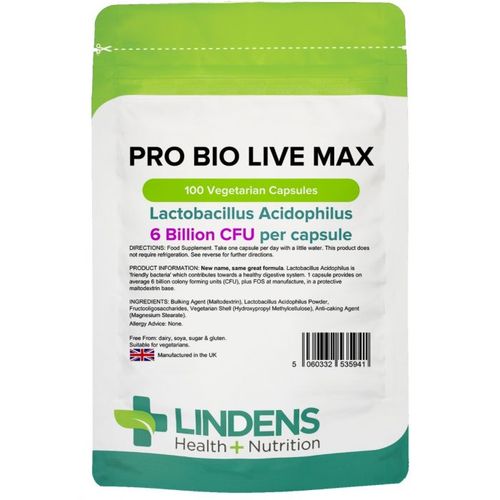
Lindens Pro Bio Live Max 6 Billion CFU Veg Capsules
100 capsules | £9.99 | ★★★★★ 5.00/5 (2 reviews)
6 billion CFU Lactobacillus acidophilus + FOS prebiotic | Vegetarian | Dairy and gluten free
What Is the Gut Microbiome and Why Does It Matter?
The human gut contains trillions of microorganisms, collectively known as the gut microbiome. The vast majority of these live in the large intestine and consist primarily of bacterial species, though fungi, viruses and other microbes are also present. Researchers have identified hundreds of distinct bacterial species in a healthy gut, with the balance and diversity of these communities having a direct bearing on how well the digestive system functions.
A healthy microbiome helps break down dietary fibre that the body cannot digest on its own, producing short-chain fatty acids in the process. These fatty acids are important fuel for the cells lining the colon, and also have anti-inflammatory effects that extend beyond the gut itself. The microbiome also plays a role in regulating immune responses. Approximately 70% of the body’s immune tissue is located in or around the gastrointestinal tract, a fact that helps explain why gut health and immune function are so closely linked.
When the balance of gut bacteria is disrupted, a state known as dysbiosis, the downstream effects can be wide-ranging. Digestive symptoms such as bloating, irregular bowel movements, cramping and excessive wind are common. But dysbiosis has also been associated with increased susceptibility to infection, changes in mood, difficulty absorbing certain nutrients, and a heightened state of systemic inflammation. Supporting a healthy gut microbiome is not just about preventing digestive discomfort. It is about maintaining a foundation for broader good health.
What Are Probiotics and How Do They Work?
Probiotics are live microorganisms that, when taken in adequate amounts, confer a health benefit on the host. In practice, most probiotic supplements contain strains of Lactobacillus or Bifidobacterium, the two genera most extensively studied for their effects on human health. The principle behind probiotic supplementation is straightforward: by introducing beneficial bacteria into the gut, you can help restore or maintain a healthy microbial balance, particularly when that balance has been disrupted.
The dose is measured in colony forming units, or CFU, which represents the number of viable (live) bacteria present in each capsule at the time of manufacture. Not all of those bacteria will survive the journey through the stomach acid to reach the large intestine, which is one reason why higher-strength formulations are generally considered more effective than very low-dose products. Research in this area has grown significantly over the past 20 years, and while the evidence base varies by specific condition and strain, there is good support for the use of probiotics in managing antibiotic-associated diarrhoea, supporting general digestive comfort, and contributing to healthy gut flora as part of a balanced diet.
It is worth being clear that probiotic supplements are food supplements, not medicines. They are not intended to diagnose, treat or cure any disease. But as a means of supporting the conditions in which your digestive system functions well, they have a well-established and evidence-backed role for many people.
Who Is Most Likely to Benefit from a Probiotic Supplement?
In my experience, there are several groups of people who tend to notice the most meaningful benefit from adding a quality probiotic to their daily routine.
People who have recently completed a course of antibiotics are the most obvious candidates. Antibiotics do not discriminate between harmful and beneficial bacteria, and a standard course can significantly deplete the population of friendly microorganisms in the gut. Bloating, loose stools and digestive irregularity after antibiotics are common symptoms of this disruption. Taking a probiotic supplement during and after a course of antibiotics is widely recommended as a practical way to help the gut microbiome recover more quickly.
People with digestive symptoms such as recurring bloating, irregular bowel habits, or a gut that tends to react badly to certain foods may also benefit. Conditions such as irritable bowel syndrome are not cured by probiotics, but many people with IBS report reduced symptoms and improved overall gut comfort with regular probiotic use. This is consistent with what the research shows: probiotics do not address the underlying cause of IBS, but they can help regulate the microbial environment in a way that reduces symptomatic flare-ups for some individuals.
People with a diet low in fermented foods are another group worth mentioning. Traditional diets included significant quantities of naturally fermented foods such as yoghurt, kefir, sauerkraut and kimchi, all of which deliver live bacterial cultures to the gut. Modern diets often lack these foods entirely. A daily probiotic supplement is a straightforward way to compensate for this absence.
People under significant stress, or those with disrupted sleep, may also find their gut health suffers as a consequence. The gut-brain axis is a bidirectional communication pathway linking the central nervous system with the enteric nervous system of the gut. Stress can directly alter gut motility and microbial balance. Supporting gut health during periods of high stress is a sensible preventive measure.
Why Lindens Pro Bio Live Max Is My Recommendation
There are dozens of probiotic supplements on the market, and the variation in quality, dose and formulation is considerable. My recommendation for most people looking to start or maintain probiotic supplementation is the Lindens Pro Bio Live Max, and the reasons are straightforward.
Each capsule delivers 6 billion colony forming units of Lactobacillus acidophilus, one of the most thoroughly studied and well-characterised probiotic strains. This is a genuinely meaningful dose. Many lower-priced probiotic products contain 1 billion CFU or fewer, which, given the attrition that occurs as bacteria pass through the stomach, may not deliver sufficient viable organisms to make a practical difference. At 6 billion CFU, Pro Bio Live Max sits comfortably in the range that the evidence supports for general digestive health maintenance.
The formula also includes 10mg of fructooligosaccharides (FOS), a type of prebiotic fibre. Prebiotics are non-digestible food components that selectively feed and promote the growth of beneficial bacteria already present in the gut. The combination of a probiotic (the live bacteria) and a prebiotic (the food source for those bacteria) in a single capsule is sometimes referred to as a synbiotic formulation, and it is a meaningful design choice. The FOS helps the incoming bacteria establish themselves more effectively in the gut environment, improving the practical value of each dose.
The capsule shell is vegetarian, made from hydroxypropyl methylcellulose rather than gelatine, which makes Pro Bio Live Max suitable for vegetarians. The product is also dairy free and gluten free, which is worth noting given that some probiotic supplements use dairy-based carriers that can be an issue for those with lactose intolerance. At £9.99 for 100 capsules, it represents excellent value for a daily supplement taken one capsule at a time.
How to Take Pro Bio Live Max: Dosage and Timing
The recommended dose is one capsule per day, taken with a little water. The product does not require refrigeration, which makes it straightforward to incorporate into a daily routine whether at home or when travelling. I generally suggest taking it with a meal rather than on an empty stomach, as food provides some buffering against stomach acid and can improve bacterial survival through the upper digestive tract.
If you are taking probiotics specifically to counter the effects of antibiotics, the standard advice is to take the probiotic at least two hours away from the antibiotic dose, so that the antibiotic does not simply destroy the bacteria you have just introduced. Continue for at least two to four weeks after finishing the antibiotic course, as rebuilding the microbiome takes time.
For general gut health maintenance, a consistent daily habit produces the best results. Probiotics do not permanently colonise the gut in the way native microbiome bacteria do. They exert their effects while they are present and passing through, which is why regular ongoing use, rather than occasional short courses, is more likely to produce sustained benefit.
Some people notice mild digestive changes in the first few days of starting a probiotic, including a temporary increase in wind or loose stools. This is generally a sign that the gut microbiome is adjusting, and it typically settles within a week. If symptoms are significant or persist, it is worth speaking with your GP.
The Prebiotic Connection: Why Diet Still Matters
A probiotic supplement works best when it is supported by a diet that provides adequate prebiotic fibre. Prebiotics are found naturally in foods such as garlic, onions, leeks, asparagus, bananas, oats, and pulses. These foods provide the fermentable fibres that gut bacteria feed on, and a diet rich in diverse plant foods is one of the most effective ways to support microbiome diversity in the long term.
The FOS included in Pro Bio Live Max provides a useful boost, but it is not a substitute for dietary fibre. I always recommend pairing a probiotic supplement with attention to dietary fibre intake, particularly for anyone who finds that digestive symptoms are a recurring issue. The two approaches work together rather than independently, and the combination is considerably more effective than either alone.
Fermented foods are also worth incorporating where practical. Live yoghurt, kefir, and fermented vegetables such as sauerkraut and kimchi all provide naturally occurring bacterial cultures that complement the supplemented bacteria in Pro Bio Live Max. A small daily serving of any of these foods alongside your supplement is a low-effort addition to a gut-health-focused routine.
Is There Anyone Who Should Be Cautious About Probiotics?
For the vast majority of healthy adults, daily probiotic supplementation is well-tolerated and considered safe. However, there are some situations where caution or medical advice is appropriate.
People who are immunocompromised, whether as a result of illness, medical treatment, or medication, should consult their GP or consultant before starting a probiotic supplement. In immunocompromised individuals, the risk of probiotic bacteria causing infection, while very small, is not zero, and clinical supervision is appropriate.
People with conditions affecting the integrity of the gut lining, such as active inflammatory bowel disease during a flare, should also take medical advice before adding a probiotic, as the evidence base for their use in these contexts is more nuanced and condition-specific.
Pregnant and breastfeeding women, as with any supplement, should speak to their GP or midwife before starting probiotics, even though they are generally considered safe in these contexts.
For everyone else, including older adults, people with well-managed chronic conditions, and those looking to support general digestive health, Pro Bio Live Max is a straightforward, well-formulated daily supplement that I am happy to recommend without reservation.
Where Does Pro Bio Live Max Sit Alongside Other Gut Health Supplements?
It is worth briefly comparing Pro Bio Live Max with the other probiotic and gut-health options available from Zoom Health, so you can choose the product that best fits your needs.
The Pro Bio Live Plus capsules offer a slightly different formulation, combining 1.5 billion CFU of Lactobacillus acidophilus with two types of dietary fibre, Psyllium Husk and Inulin, in each capsule. The lower CFU count is offset by the added fibre content, which makes Pro Bio Live Plus particularly useful for anyone who wants combined probiotic and bowel-regularity support in a single product. It is worth noting that the Pro Bio Live Plus capsule shell contains bovine gelatine, so it is not suitable for vegetarians. If you are vegetarian, or if you want a higher-CFU option, Pro Bio Live Max is the better choice.
Gut health also connects directly with immune function, something I cover in detail in the Zoom Health guide to immune support supplements. If you are taking Pro Bio Live Max primarily for immune system support through the gut-immune axis, you may also want to consider the role of Vitamin D3 and Vitamin C, both of which support normal immune function and work well alongside a probiotic supplement as part of a broader nutritional approach.
Ready to Support Your Gut Health?
Lindens Pro Bio Live Max delivers 6 billion CFU of Lactobacillus acidophilus plus prebiotic FOS in a vegetarian capsule. 100 capsules for just £9.99.
Lindens Pro Bio Live Max 6 Billion CFU Veg Capsules
- 6 billion CFU Lactobacillus acidophilus per capsule
- 10mg FOS prebiotic to support bacterial establishment
- Vegetarian capsule shell – dairy free and gluten free
- 100 capsules – over three months’ supply
- No refrigeration required
- Rated 5.00/5 by Zoom Health customers
- £9.99 from Zoom Health
Related Articles from Zoom Health
- Supporting Your Immune System: What the Evidence Says About Vitamins and Supplements – Series 5, Post 4
- Vitamin D Supplements: Why Most UK Adults Are Deficient and What to Do About It – Series 5, Post 1
- Magnesium Supplements: The Mineral Most UK Adults Don’t Get Enough Of – Series 5, Post 3
- Browse all Lindens supplements at Zoom Health
Anthony Cunningham – Health Writer & Editor
Anthony Cunningham, BA (Hons), MA, is a UK-based health writer and editor with over 20 years’ experience running Zoom Health, a trusted source for home health tests, preventive care, and wellness guidance. He creates clear, evidence-based articles using NHS, NICE, and WHO guidance. Where possible, content is reviewed by practising clinicians to enhance accuracy and reliability, helping readers make informed healthcare decisions.