About This Article
Zoom Health has supplied home health products and drug testing kits to UK customers for nearly 20 years. This article is for general information only and does not constitute medical or legal advice. If you believe you or someone with you has been spiked, seek immediate medical help and contact the police. Drink spiking is a serious criminal offence in the UK. Testing kits can help identify possible spiking but are not a substitute for medical assessment or police investigation.
Drink spiking is one of those subjects that most people know exists in the abstract but tend to think is unlikely to happen to them personally. The data tells a different story. Police in England and Wales recorded nearly 5,000 incidents of drink and needle spiking in the year to April 2022, a figure that most experts believe significantly understates the true scale of the problem – because many victims either do not realise they have been spiked, cannot remember enough of the evening to be certain, or do not report it to police. A YouGov survey found that one in nine women and one in seventeen men in the UK said they had been the victim of drink spiking at some point.
The consequences range from severe embarrassment and vulnerability in a social setting, through robbery and assault, to rape and serious sexual violence. The drugs most commonly used to spike drinks are specifically chosen because they are difficult to detect, act quickly, and cause significant memory impairment – meaning victims often cannot give a reliable account of what happened, which makes prosecution difficult and contributes to chronic under-reporting.
In this guide I want to cover the main substances used to spike drinks, how to recognise the signs that spiking may have occurred, what to do if you or someone you are with thinks they have been spiked, and how the Drink Spike Test we stock at Zoom Health can be used both proactively and after the fact.
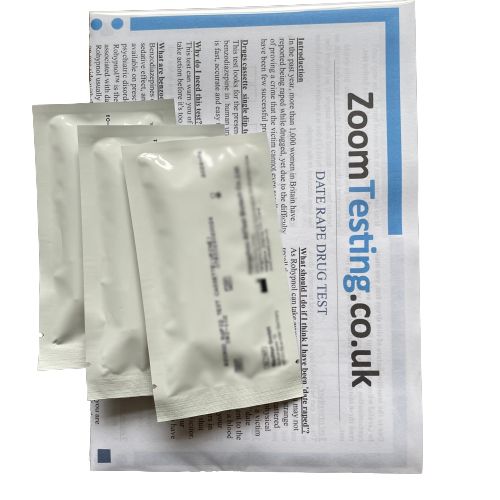
Drink Spike Test Kit – £6.99 (on sale from £7.99) | Detects Rohypnol and other benzodiazepines in drinks and urine | Results in 5 minutes | Compact – fits in a handbag or pocket | Tests both drinks and urine samples
What Drugs Are Used to Spike Drinks?
Several distinct categories of substance are used in drink spiking, and it is important to understand what each one does and why it is used, because they have different detection profiles and call for slightly different responses.
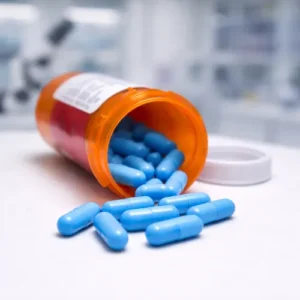
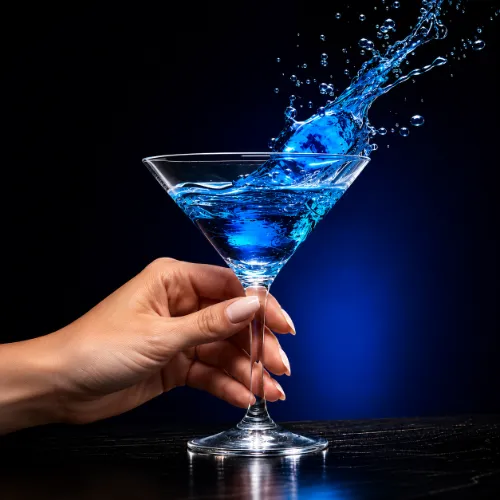
Benzodiazepines are the category most commonly associated with drug-facilitated assault. The most notorious is flunitrazepam, sold under the brand name Rohypnol and widely known as a “roofie.” Benzodiazepines are powerful sedative drugs that cause muscle relaxation, reduced inhibitions, and – critically – anterograde amnesia, meaning they impair the formation of new memories from the point of ingestion onwards. A person given a benzodiazepine in their drink may appear functioning and even ambulatory while having no ability to form memories or give meaningful consent. Effects begin within 15 to 20 minutes of ingestion and intensify dramatically when combined with alcohol. The newer formulations of Rohypnol are blue and cause drinks to turn blue, but older formulations and other benzodiazepines used in spiking are colourless and tasteless.
GHB (gamma-hydroxybutyrate) is another substance commonly associated with spiking, producing sedation, euphoria, and – at higher doses – unconsciousness and respiratory depression. It is naturally colourless, odourless, and nearly tasteless, making it extremely difficult to detect in a drink. It metabolises very quickly, typically clearing from urine within 4 to 8 hours, which creates a very narrow window for urine testing after suspected spiking.
Ketamine in liquid form can be added to drinks and produces a dissociative, sedating effect at lower doses and loss of consciousness at higher ones. As covered in Post 6 of this series, ketamine is increasingly prevalent in UK social settings and is among the substances that police have identified as being used in drink spiking incidents.
Extra alcohol is the most common form of drink spiking numerically – adding spirits or double measures to someone’s drink without their knowledge or consent. This is legally a criminal act under the Licensing Act 2003, even though it does not involve a controlled substance. It is also the hardest to detect because the substance added is the same as what the person was already drinking.
It is worth noting that the landscape of drink spiking has also extended beyond drinks in recent years. Reports of needle spiking – injecting substances directly into victims without their knowledge – emerged particularly during 2021 and have continued. Needles cannot be detected by a drink testing kit; they require medical assessment of injection sites and blood testing.
How to Recognise the Signs of Drink Spiking
The challenge with recognising drink spiking is that many of its symptoms overlap with the effects of alcohol itself. Someone who appears very drunk, is losing coordination, or is becoming confused after a modest number of drinks may have been spiked – or may simply be more affected by alcohol than usual because of tiredness, not eating, or individual variation. There is no single sign that definitively confirms spiking, which is why the context matters as much as the symptoms.
Warning signs worth taking seriously – in yourself or someone with you – include: feeling significantly more intoxicated than the amount you have drunk would explain; sudden onset of dizziness, nausea, or visual disturbance that feels different from normal alcohol effects; unusual drowsiness or difficulty staying awake; confusion or disorientation that seems disproportionate; difficulty speaking or moving normally; and any gaps in memory during or after a period when you were drinking.
If someone with you shows these signs and you are with them, the most important immediate step is to keep them safe and not leave them alone. Get them to a safe place – ideally inside the venue with a member of staff or security – and call for help. Do not put them in a taxi alone, do not assume they will sleep it off, and do not leave them in the care of someone they have only met that evening. If they lose consciousness or you cannot rouse them, call 999 immediately.
The Drink Spike Test Kit: Two Ways to Use It
The Drink Spike Test Kit (£6.99, on sale from £7.99) detects benzodiazepines – the most commonly used category of drink spiking drug, including Rohypnol – and can be used in two distinct ways: to test a drink proactively before or during consumption, or to test a urine sample after suspected spiking has occurred.
For proactive drink testing, the process is straightforward. Remove the test from its foil packet, place it on a flat surface, and add five drops of the drink you want to test. Wait five minutes and read the result: two pink bands – one in the C (control) position and one in the T (test) position – indicate no benzodiazepines detected above the threshold. One pink band in the C position only indicates a positive – benzodiazepines are present. An invalid result (no bands) means the test should be repeated with a fresh kit. The entire process takes five minutes and requires no specialist equipment.
For post-incident urine testing – if you suspect you were spiked during the previous 24 to 48 hours – the same kit can be used with a urine sample rather than a drink sample. The process is identical. This is most valuable if you want to know whether to report to police and want some supporting evidence, or if you are waiting to speak to police and want to document potential exposure while the substance is still detectable. Benzodiazepines remain detectable in urine for 2 to 7 days depending on the specific compound, though at lower concentrations than immediately after ingestion, so testing sooner is better.
The kit is compact enough to fit in a handbag or jacket pocket, individually foil-wrapped, and has a shelf life that makes it practical to carry on nights out rather than needing to be purchased immediately before use.
What the Test Can and Cannot Detect
I want to be clear about the limitations of this test, because being honest about what it can and cannot do is more useful than overstating its capabilities.
The Drink Spike Test detects benzodiazepines. It will reliably identify the presence of Rohypnol and other benzodiazepines in a drink or urine sample. It will not detect GHB, which is another substance commonly used in drink spiking. It will not detect ketamine. It will not detect the addition of extra alcohol. And because it is a screening test rather than a laboratory analysis, a positive result should be confirmed by clinical testing if it is to be used as evidence in a police investigation – which it should be, because the kit documents initial suspicion but the evidential standard for prosecution requires something more robust.
GHB is particularly difficult to test for in a social setting because it clears from the body so quickly. Home GHB test strips exist but they have significant limitations in terms of sensitivity and the speed with which they must be used. If you suspect GHB specifically, the most important step is to get to a hospital or police station as quickly as possible, where a blood test can be taken within the narrow window of detectability.
Despite these limitations, the benzodiazepine test is the most practical and widely applicable drink-spiking tool available in this format. Benzodiazepines are the most commonly identified substance in confirmed UK drink spiking cases, and having a test that can detect them proactively or within 24 to 48 hours after suspected exposure provides meaningful protection and documentation capability.
What to Do If You Think You Have Been Spiked
The steps to take if you believe you or someone with you has been spiked are worth knowing in advance, because if spiking has occurred the victim will often not be in a position to think clearly in the moment.
Tell a member of venue staff or security immediately. Most licensed venues in the UK now have protocols for dealing with suspected spiking incidents, including preserving CCTV footage, keeping the victim safe, and calling for medical assistance. Do not try to leave the venue alone or accept a lift from someone you do not completely trust.
If symptoms are severe – loss of consciousness, difficulty breathing, seizures – call 999 without delay. This is a medical emergency.
If you are well enough to take action in the hours following the incident, report it to the police as soon as possible. The sooner a report is made, the better the chance that CCTV footage can be preserved, the venue’s records obtained, and a urine or blood sample taken within the detection window. Police can arrange a clinical sample collection at a Sexual Assault Referral Centre (SARC) if sexual assault is a concern, or at a hospital if not.
If you have a Drink Spike Test kit available, test your urine as soon as you are able to – this gives you a preliminary result that may be useful when you speak to police, even though it is not sufficient evidence on its own. Keep the used test if possible, sealed in a clean bag, as it may have evidential value.
Organisations that provide support to spiking victims in the UK include Rape Crisis England and Wales (rapecrisis.org.uk), the Survivors Trust (thesurvivorstrust.org), and Victim Support (victimsupport.org.uk). All three can provide confidential support, practical guidance, and referrals to specialist services regardless of whether you report to police.
Practical Prevention: What Actually Works
Beyond testing, there are practical measures that significantly reduce the risk of drink spiking. None of them transfer responsibility from perpetrators to victims – drink spiking is always the sole fault of the person who does it – but they are worth knowing because they work.
Buy your own drinks and watch them being poured. Accept drinks only from the bar, not from people you do not know well. Never leave a drink unattended – if you do leave it, even briefly, do not drink from it when you return. Go out with trusted friends and agree in advance to look out for each other, including having a clear plan for what to do if one of you seems unwell. Trust your instincts: if a drink tastes odd, smells different, or looks like it might have been tampered with, do not drink it.
If you are going to a venue you do not know well, particularly late at night, carrying a drink spike test in your bag takes up almost no space and takes five minutes to use. That five minutes could tell you something important before the substance in the test has time to take effect.
A Note for Festival-Goers
Drink spiking at outdoor festivals has its own specific risk profile. Drinks are often consumed in open cups or from bottles that are carried around and set down in crowded spaces. Lighting is poor, supervision is limited, and the chaos of a festival environment makes it easier for someone to add something to a drink unobserved. Medical services at large festivals are equipped to deal with spiking incidents, and most large events now have designated welfare areas for anyone who feels unwell or unsafe.
Carrying a supply of drink spike tests to a festival is a practical precaution, particularly for groups with younger members. The compact format of the Zoom Health kit – individual foil packets that can be carried in a pocket – is well suited to this kind of use. At £6.99 for a kit, carrying one or two for an evening out or a festival weekend is an affordable precaution.
The Drink Spike Test Kit is currently on sale at £6.99 – compact enough for a handbag, results in 5 minutes, tests both drinks and urine samples.
Featured in this article:
- Drink Spike Test Kit (Rohypnol / Benzodiazepines) – £6.99 (on sale)
- 10 Panel Drug Test with Spice and Nicotine – £8.99 (includes ketamine panel for post-incident urine testing)
- 10 Panel Drug Screen with Ketamine – £7.99
Related Articles
Anthony Cunningham – Health Writer & Editor
Anthony Cunningham, BA (Hons), MA, is a UK-based health writer and editor with over 20 years’ experience running Zoom Health, a trusted source for home health tests, preventive care, and wellness guidance. He creates clear, evidence-based articles using NHS, NICE, and WHO guidance. Where possible, content is reviewed by practising clinicians to enhance accuracy and reliability, helping readers make informed healthcare decisions.