About This Article
Zoom Health has supplied home health tests to UK customers for nearly 20 years. This guide draws on our experience helping thousands of people monitor their urinary health and understand when symptoms need medical attention. Always consult a healthcare professional for medical advice.
Published: October 12, 2025 | Last Updated: January 5, 2026 | By: Anthony Cunningham
Urinary symptoms are common. But they can be worrying. Many people aren’t sure when they should see a doctor.
This guide will help you understand when to seek medical advice. It will also explain which symptoms need urgent attention and when home testing might be appropriate.
Contents
Understanding Urinary Symptoms
Urinary symptoms can vary significantly. Some are mild and resolve quickly. Others are more serious and require prompt medical attention.
Common signs of a urinary tract infection (UTI) include pain or burning when urinating, needing to urinate more frequently than usual, and cloudy or strong-smelling urine. You might also notice discomfort in your lower abdomen or feel generally unwell.
According to the NHS, UTIs are one of the most common infections affecting people in the UK, particularly women. While many cases are straightforward, it’s important to recognise when symptoms indicate something more serious.
Cystitis is a type of UTI that specifically affects the bladder. It causes similar symptoms to other UTIs but often includes more pronounced bladder discomfort and pressure. Many people experience an urgent need to urinate even when their bladder is nearly empty.
Red Flag Symptoms Explained
Certain symptoms indicate a potentially serious infection that may have spread beyond the bladder. Understanding these warning signs can help you seek appropriate care quickly.
Blood in Your Urine
Known medically as haematuria, blood in your urine can appear as pink, red, or brown discolouration. While sometimes caused by a simple bladder infection, it can also indicate more serious conditions. The NHS advises that you should always see a doctor if you notice blood in your urine, even if you have no other symptoms.
Severe Back or Side Pain
Pain in your lower back or sides, particularly on one side, often suggests that an infection has reached your kidneys. This is called pyelonephritis and requires prompt antibiotic treatment. The pain is typically more severe than standard bladder discomfort and may worsen when you move or press on the affected area.
High Fever and Chills
A temperature above 38°C (100.4°F) accompanied by shaking chills indicates that your body is fighting a significant infection. When combined with urinary symptoms, this strongly suggests a kidney infection rather than a simple bladder infection.
Vomiting and Nausea
Feeling sick or being unable to keep fluids down alongside urinary symptoms is another sign that an infection may have spread to your kidneys. This is particularly concerning because it can lead to dehydration, which makes the infection harder to fight.
When to See a Doctor Urgently
Some symptoms need immediate medical attention. Don’t wait if you experience any of the following:
⚠️ Seek Urgent Care If You Have:
- Blood in your urine (visible or detected on a test strip)
- Severe pain in your back, side, or abdomen
- High fever (38°C/100.4°F or higher) with chills
- Persistent vomiting alongside urinary symptoms
- Complete inability to pass urine despite feeling the need
- Confusion or altered mental state (especially in older adults)
These symptoms could signal a serious infection such as pyelonephritis (kidney infection). In some cases, they may indicate urinary retention or sepsis, which require immediate treatment.
Contact your GP immediately for an emergency appointment, call NHS 111 for advice, or visit A&E if you cannot reach your doctor quickly.
When to Book a Routine Appointment
Other symptoms are less urgent but still need checking by a healthcare professional. Book a GP appointment within a few days if:
- Symptoms persist for more than three days despite home remedies and increased fluid intake
- You experience frequent UTIs (defined as three or more episodes per year)
- Symptoms return quickly after treatment, suggesting the infection wasn’t fully cleared
- You notice unusual vaginal or penile discharge alongside urinary symptoms
- You’re pregnant with any urinary symptoms, as UTIs during pregnancy require prompt treatment
- Symptoms are mild but cause concern or affect your daily activities
Certain groups need extra vigilance. UTIs in elderly people can be more serious and may present differently. Older adults might show confusion, increased falls, or changes in behaviour rather than typical urinary symptoms. The NICE guidelines recommend a lower threshold for treatment in older adults due to the risk of complications.
Post-menopausal women face higher UTI risk due to hormonal changes that affect the urinary tract. If you’re in this group, stay alert to symptoms and don’t dismiss them as simply part of ageing.
Risk Factors to Consider
Some factors increase your need for prompt medical advice. These include underlying health conditions or circumstances that make complications more likely:
Higher Risk Groups
- Diabetes: Higher blood sugar levels can impair immune function and create an environment where bacteria thrive
- Weakened immune system: Whether from medication, chemotherapy, or conditions like HIV, this reduces your ability to fight infections
- Kidney problems: Pre-existing kidney disease means infections can cause more serious complications
- Pregnancy: Hormonal and physical changes increase UTI risk, and infections can affect both mother and baby
- Catheter use: Long-term catheter use significantly increases infection risk
- Recent urinary procedures: Surgery or instrumentation of the urinary tract increases vulnerability
If any of these apply to you, see your doctor sooner rather than later. What might be a minor infection in a healthy person could become serious if you have risk factors.
Interestingly, dehydration can contribute to UTIs. When you don’t drink enough fluids, your urine becomes more concentrated, which can irritate the bladder and allow bacteria to multiply. The NHS recommends drinking 6 to 8 glasses of fluid daily to maintain healthy urinary function.
How Home Testing Can Help
You don’t always need to visit the surgery straight away. Home tests for UTIs are now widely available and can help you make informed decisions about whether to seek medical advice.
These tests work by detecting substances in your urine that indicate infection, such as nitrites (produced by bacteria) and leukocytes (white blood cells that fight infection). The results come within minutes, allowing you to decide your next steps quickly.
When Home Testing Is Useful
- Early-stage symptoms: When you first notice discomfort and want to check if it’s likely a UTI
- Recurrent infections: If you experience frequent UTIs and recognise the symptoms
- Before contacting your GP: A positive result gives you confidence that you need to seek treatment
- Weekend or evening symptoms: When you can’t easily reach your doctor but need guidance
- Follow-up after treatment: To verify that an infection has cleared after completing antibiotics
A Urine Infection Test (including Cystitis) UTI can detect signs of infection at home. It’s particularly helpful for people who experience recurrent infections and want to monitor their urinary health proactively.

What Customers Say
★★★★★ Skater Girl – February 2014
“The test was simple to use and I got a positive result, so I went to see my GP who confirmed it and prescribed medication. The test gave me the confidence to talk to my doctor about my problem.”
★★★★★ Sally – July 2019
“My doctor actually recommended this test to me as it’s exactly the same as the one she uses in her surgery. I’ve suffered from recurring UTIs over the last few years. Having a supply of these tests on hand allows me to check my urine for possible UTIs. I now get results in minutes, rather than having to ring the doctor and wait days for an appointment.”
★★★★★ Clare – April 2020
“This was easy to use and because it provided a positive result I felt justified in phoning my GP for antibiotics. A brilliant tool to use in the current pandemic when I’m avoiding going out as much as possible.”
Take Action: If you’re experiencing mild urinary symptoms and want to check whether you might have an infection before contacting your GP, a home test can provide quick results and peace of mind.
Important note: Home testing is useful for mild symptoms and initial assessment. It doesn’t replace professional medical advice when symptoms are severe, persistent, or when you have risk factors that require doctor supervision.
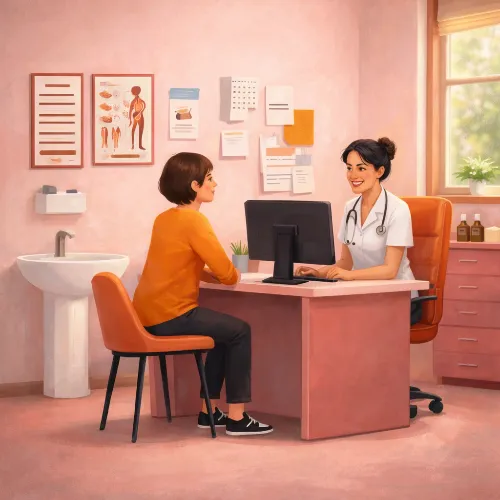
What to Expect at Your Appointment
If you decide to see your GP, knowing what to expect can help you prepare and ensure you get the most appropriate care.
Questions Your Doctor May Ask
- When did your symptoms start?
- Have you had UTIs before?
- What symptoms are you experiencing (pain, frequency, urgency)?
- Are you experiencing fever, back pain, or vomiting?
- Are you sexually active?
- Could you be pregnant?
- Do you have diabetes or any other medical conditions?
The Urine Test
Your doctor will typically ask you to provide a urine sample. This will be tested using a dipstick (similar to home test kits) to check for signs of infection. If the infection appears straightforward, your doctor may prescribe antibiotics immediately.
For recurrent or complicated infections, your sample may be sent to a laboratory for culture. This takes a few days but identifies the specific bacteria causing the infection and which antibiotics will work best.
Treatment Timeline
- Day 1-2: Antibiotics prescribed, usually taken for 3 to 7 days depending on the type and severity
- Day 2-3: Symptoms typically start improving within 48 hours of starting antibiotics
- Day 3-7: Complete the full course of antibiotics even if you feel better
- Week 2: If symptoms persist or return, contact your GP for follow-up
Prevention Tips
Prevention is better than cure. Keeping your bladder healthy becomes increasingly important as you age, but good habits benefit people of all ages.
Simple Daily Habits
- Drink plenty of water: Aim for 6 to 8 glasses (about 1.5 to 2 litres) throughout the day. Adequate hydration helps flush bacteria from your urinary system.
- Don’t hold urine for long periods: Go to the toilet when you need to. Holding urine allows bacteria more time to multiply in your bladder.
- Wipe from front to back: This prevents bacteria from the bowel area reaching the urethra. This is particularly important for women.
- Urinate after sexual activity: This helps flush out any bacteria that may have entered the urethra during intercourse.
- Wear breathable cotton underwear: Cotton allows air circulation and reduces moisture, creating a less favourable environment for bacteria. Avoid tight synthetic materials.
- Avoid irritating products: Perfumed soaps, bubble baths, and feminine hygiene sprays can irritate the urethra and increase infection risk.
- Take showers rather than baths: Particularly if you’re prone to UTIs, showers reduce exposure to soap and bacteria in bath water.
Cranberry Products
Some research suggests that cranberry products may help prevent recurrent UTIs in certain people. Cranberries contain compounds that may prevent bacteria from adhering to the bladder wall. However, evidence is mixed, and cranberry products are not a substitute for medical treatment if you already have an infection.
For Post-Menopausal Women
If you experience frequent UTIs after menopause, speak to your doctor about vaginal oestrogen cream. This can help restore the natural bacteria balance in the vagina and reduce infection risk. It’s available on prescription and is generally safe for most women.
Frequently Asked Questions
Can a UTI go away without antibiotics?
Mild bladder infections sometimes resolve on their own with increased fluid intake and rest. However, antibiotics are usually necessary to fully clear the infection and prevent it from spreading to the kidneys. If symptoms persist beyond 2 to 3 days, see your doctor.
How quickly should symptoms improve after starting antibiotics?
Most people notice improvement within 24 to 48 hours of starting antibiotics. If symptoms haven’t improved after 2 to 3 days, or if they worsen, contact your doctor. You may need a different antibiotic or further investigation.
Why do I keep getting UTIs?
Recurrent UTIs (three or more per year) can have various causes including anatomy, sexual activity, certain contraceptive methods, menopause, or incomplete bladder emptying. Your GP can investigate the cause and may refer you to a urologist for specialist assessment if needed.
Can men get UTIs?
Yes, although less common than in women. Men have a longer urethra, which provides more protection against bacteria. However, UTIs in men are more likely to indicate an underlying problem such as prostate issues or kidney stones, so medical evaluation is particularly important.
Is it safe to have sex with a UTI?
It’s generally advisable to avoid sexual activity until the infection has cleared. Sex can worsen symptoms and potentially spread bacteria. Wait until you’ve completed your antibiotics course and symptoms have resolved before resuming sexual activity.
Should I finish my antibiotics even if I feel better?
Yes, always complete the full course of antibiotics as prescribed, even if symptoms improve quickly. Stopping early can allow the infection to return and may contribute to antibiotic resistance.
Trust Your Instincts
Your body sends you signals. Listen to them carefully. If something feels wrong, it probably is.
Don’t feel embarrassed about urinary symptoms. Doctors see them every day and are there to help. Early treatment is usually simple and effective, often requiring just a short course of antibiotics.
Ignoring symptoms can lead to complications. A simple bladder infection can spread to the kidneys, which is more serious and harder to treat. According to NHS guidance, kidney infections (pyelonephritis) require immediate medical attention and may sometimes need hospital admission for intravenous antibiotics.
The Bottom Line
See a doctor urgently if you have severe symptoms such as blood in your urine, high fever, severe back pain, or persistent vomiting. Book a routine appointment for persistent mild symptoms, frequent UTIs, or if you have risk factors that require medical supervision.
Consider home testing for initial concerns or when you recognise familiar symptoms and want to make an informed decision about seeking treatment. Home tests provide quick results and can give you confidence about your next steps.
Remember, you know your body best. When in doubt, seek medical advice. It’s always better to be safe, and early intervention prevents simple problems from becoming serious complications.
About the Author
Anthony Cunningham – Health Writer & Editor
Anthony Cunningham, BA (Hons), MA, is a UK-based health writer and editor with over 20 years’ experience running Zoom Health, a trusted source for home health tests, preventive care, and wellness guidance. He creates clear, evidence-based articles using NHS, NICE, and WHO guidance. Where possible, content is reviewed by practising clinicians to enhance accuracy and reliability, helping readers make informed healthcare decisions.
You May Also Like
Explore more articles on urinary health and related conditions: