About This Article
Zoom Health has supplied home health tests and medical equipment to UK customers for nearly 20 years. This guide draws on clinical evidence and our experience helping people manage chronic health conditions like multiple sclerosis. Always consult a healthcare professional for medical advice tailored to your condition.
Published: January 29, 2024 | Last Updated: January 11, 2026 | By: Anthony Cunningham
Contents
Multiple sclerosis (MS) is a condition where the immune system attacks the protective myelin coating around nerves, disrupting signals between the brain and body. This can lead to a wide range of symptoms depending on which nerves are affected. These may include numbness, weakness, fatigue, vision changes, and mobility problems.
TENS (transcutaneous electrical nerve stimulation) therapy involves using a small battery-powered device to deliver mild electrical impulses through electrode pads on the skin. Evidence suggests TENS may help manage certain MS symptoms, offering a non-invasive option for people looking to complement their treatment plan.
Overview of Multiple Sclerosis
Multiple sclerosis is an autoimmune condition that impacts the central nervous system in different ways depending on the type of MS:
- Relapsing-remitting MS – This is the most common type, affecting around 85% of patients initially. It involves acute symptom flare-ups (relapses) followed by partial or full recovery periods (remissions).
- Primary progressive MS – Around 15% of patients experience a slow but steady worsening of symptoms from the beginning with no distinct attacks or remissions.
- Secondary progressive MS – Many relapsing-remitting patients eventually transition to this type after several years, where symptoms progressively worsen over time between any relapses.
The NHS explains that MS affects people differently, with symptoms ranging from mild to severe. Common challenges include chronic pain, muscle spasms, altered sensation, and fatigue. Managing these symptoms effectively is crucial for maintaining quality of life.
How TENS Therapy Works
TENS devices deliver electrical impulses through electrodes placed on the skin near affected nerves or areas of pain. Users can control the strength and pattern of impulses with settings like:
- Intensity – How strong the electrical current is, measured in milliamps (mA). A TENS unit typically allows adjusting up to 40-80mA.
- Pulse rate – The frequency of impulses, often between 1-150 pulses per second. Faster rates around 80-120 Hz tend to be better for acute pain relief.
- Pulse width – The duration of each impulse, adjustable from 50 to 400 microseconds. Wider pulse widths above 200 μs are more effective for deeper pain.
- Mode – Some units have modes like burst, modulation, or massage to provide different impulse patterns that prevent your nerves from adapting to the stimulation.
The TENS unit delivers small electrical pulses via electrode pads stuck directly onto the skin near nerves. According to the NHS, this electrical stimulation can modify pain signals to the brain and trigger the release of natural pain-relieving endorphins.
Treatment sessions typically last 15-30 minutes and can be done 1-3 times per day, depending on symptom severity and individual response.
What Customers Say
★★★★★ Thomas Peters – November 2025
“Really excellent product. Comfortable to use and greatly assists with discomfort.”
★★★★☆ Elaine Westcombe – January 2025
“Easy to use.”
Using TENS for MS Symptoms
For people with MS, TENS can be applied to various areas depending on where symptoms occur. Here’s how to get started:
Electrode Placement Guide
- For leg pain or spasms: Place electrodes on either side of the spine in the lower back, or directly on the thigh or calf muscles where pain occurs.
- For arm pain or weakness: Position electrodes along the shoulder blade area or on the upper arm near the affected muscles.
- For back pain: Apply electrodes parallel to the spine where discomfort is most intense, avoiding placement directly on the spine itself.
- For numbness or altered sensation: Place electrodes on the skin near the area of reduced feeling to stimulate nerve response.
Getting Started
Start with low intensity settings and gradually increase until you feel a comfortable tingling sensation. The stimulation should never be painful. Many people with MS find they need to experiment with different settings and placements to find what works best for their specific symptoms.
How TENS May Improve MS Symptoms
Experts believe TENS may improve MS symptoms through several biological mechanisms:
- Blocking pain signal transmission – Electrical impulses can interfere with the way pain sensations travel along nerves to the brain.
- Increasing endorphins – Endorphins are natural pain-relieving chemicals in the body. TENS may boost production for added pain relief.
- Reducing muscle spasm triggers – Electrical stimulation may interrupt abnormal nerve firing patterns that trigger involuntary spasms.
- Improving nerve function – Damaged myelin disrupts nerve signaling. TENS may help temporarily restore conduction along demyelinated nerves.
- Increasing circulation – TENS is thought to boost blood flow and oxygen delivery to treated areas. This may aid recovery from MS nerve damage.
TENS for MS Pain Relief
Chronic pain affects many people with MS. A 2014 analysis found grade 2 evidence overall that TENS can safely and effectively reduce central neuropathic pain in MS. Central pain refers specifically to pain caused by damage to the central nervous system.
More recent 2021 research also highlighted multiple studies where TENS significantly reduced pain intensity from various sources. The evidence indicates TENS may offer a useful option for managing certain pain symptoms associated with MS, particularly when used consistently over several weeks.
Most people report noticing improvements within 1-2 weeks of regular use, though some may experience benefits more quickly. The key is finding the right settings and being consistent with treatment sessions.
TENS to Reduce Muscle Spasms
Spasms are sudden involuntary muscle contractions that can be painful and disruptive for MS patients. These often occur in the legs but can affect any muscle group.
One small 2007 study of 32 MS patients found using TENS for extended periods (either 1 hour or 8 hours daily) appeared helpful for controlling spasms, though it didn’t reduce overall muscle tightness.
A 2018 review suggested TENS may also be considered for managing spasticity (constant muscle stiffness) in MS. The review noted that while Botox injections seem to be the most effective treatment for severe spasticity, TENS offers a non-invasive alternative for mild to moderate symptoms that some patients prefer.
Improving Sensation with TENS
Numbness or reduced sensation is another common MS symptom that can affect daily activities and safety. One interesting study had MS patients use TENS therapy on a nerve supply area for 1 hour daily for 3 weeks.
Patients showed improved skin sensitivity compared to before treatment, with benefits still noticeable 3 weeks after stopping TENS use. This indicates it may temporarily help overcome reduced sensation from MS nerve damage, though the effects are not permanent.
For people experiencing numbness in hands or feet, regular TENS sessions may help maintain better sensory awareness, which is particularly important for preventing injuries.
Safety & Precautions
TENS is generally safe for most people with MS, but there are important precautions to follow:
When NOT to Use TENS
- If you have a pacemaker or other implanted electrical device
- During pregnancy (especially over the abdomen or lower back)
- On broken or irritated skin
- Near your eyes or across your chest
- On your neck or throat area (can affect heart rhythm)
- While driving or operating machinery
- If you have epilepsy (consult your doctor first)
The NHS advises that TENS should be used as directed and that you should always consult with your MS specialist or healthcare provider before starting any new treatment, including TENS therapy.
Tips for Safe TENS Use
- Always start with the lowest setting and gradually increase intensity
- Ensure skin is clean and dry before applying electrodes
- Replace electrode pads when they lose stickiness (typically after 20-30 uses)
- Never share electrode pads with others
- If you develop skin irritation, stop use and consult your healthcare provider
- Keep sessions to 15-30 minutes initially, increasing only if tolerated well
Comparing TENS to Other MS Treatments
TENS is not a replacement for disease-modifying therapies or prescribed medications for MS. Instead, it works as a complementary approach to symptom management. Here’s how it compares to other options:
TENS vs. Other Symptom Management Options
Pain Medications: TENS offers a drug-free alternative that avoids potential side effects like drowsiness or digestive issues. However, medications may provide stronger relief for severe pain.
Physiotherapy: Both TENS and physio can improve muscle function and reduce pain. TENS can be used at home between physio sessions to maintain benefits.
Baclofen (muscle relaxant): While Baclofen is effective for spasticity, it can cause fatigue. TENS offers a non-sedating option for mild to moderate spasms.
Botox Injections: More effective for severe, localized spasticity but requires clinic visits and wears off after 3-4 months. TENS can be used daily at home.
Cost Consideration: TENS devices are a one-time purchase (£20-£80) compared to ongoing medication costs or regular clinic appointments.
Many people with MS find that combining TENS with other treatments provides the best symptom control. For example, using TENS alongside prescribed medications can sometimes allow for lower medication doses, reducing side effects while maintaining relief.
Accessing Support & Resources
Living with MS can be challenging, but extensive support is available. The following organizations provide evidence-based information, practical advice, and community support:
- MS Society – Offers local support groups, helpline services, and comprehensive resources on all aspects of MS management.
- MS-UK – Provides counselling services, information resources, and symptom management guidance.
- Multiple Sclerosis Trust – Focuses on education and support for people living with MS and their families.
- NHS MS Information – Trusted medical information on symptoms, diagnosis, and treatment options.
Explore TENS for MS Symptom Management
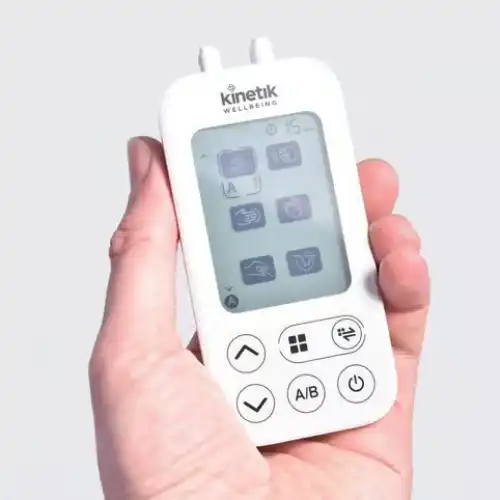
While more research continues, TENS therapy appears a promising option for certain MS-related symptoms. The Kinetik Wellbeing Dual Channel TENS Machine offers adjustable settings ideal for managing various MS symptoms from pain to spasms.
Always discuss TENS therapy with your neurologist or MS specialist to see if it may be beneficial for your specific symptoms and to ensure it won’t interfere with your current treatment plan.
About the Author
Anthony Cunningham – Health Writer & Editor
Anthony Cunningham, BA (Hons), MA, is a UK-based health writer and editor with over 20 years’ experience running Zoom Health, a trusted source for home health tests, preventive care, and wellness guidance. He creates clear, evidence-based articles using NHS, NICE, and WHO guidance. Where possible, content is reviewed by practising clinicians to enhance accuracy and reliability, helping readers make informed healthcare decisions.
You May Also Like
Explore more articles on managing chronic health conditions: