About This Article
Zoom Health has supplied home health products and test kits to UK customers for nearly 20 years. This article is for general information only and does not constitute medical advice. Any abnormal test results should be discussed with your GP promptly. Always consult a qualified healthcare professional before making changes to your diet, medication or lifestyle based on a home test result. Home health tests are screening tools and are not a substitute for clinical testing.
One question I get asked surprisingly often is some version of “how many tests do I actually need?” It’s a sensible question, and the honest answer is that most couples trying to conceive significantly underestimate it. Buying ovulation and pregnancy tests one or two at a time, the way many people instinctively do, tends to be both more expensive and less effective than planning for the volume you’re actually going to use across a full cycle, or several cycles. I want to use this guide to talk through a realistic testing strategy, because getting this right removes one small but real source of stress from what can already be an emotionally demanding process.
How Many Ovulation Tests You Actually Need
If you’re identifying your fertile window through testing rather than calendar tracking alone, most women will use somewhere between 10 and 15 ovulation tests per cycle. This might sound like a lot if you’ve only ever bought one or two tests at a time, but it makes sense once you consider what’s involved: you typically want to start testing several days before you expect to ovulate, since cycles vary in length even for women who consider themselves regular, and you generally want to test daily, sometimes twice daily, once you’re within a few days of your expected fertile window.
Underestimating this is one of the most common ways people end up with an incomplete picture. If you’ve only bought five tests and your cycle runs slightly later than expected that month, you can run out before you’ve actually caught your surge, which means a wasted cycle of effort and money for no useful information at the end of it.
Why Bundling Pregnancy Tests Into the Same Plan Makes Sense
Once you’ve identified ovulation and timed intercourse around it, the natural next step in the cycle is testing for pregnancy roughly two weeks later. Many couples treat this as a separate purchase entirely, buying pregnancy tests later, often under more time pressure or after a missed period, sometimes paying considerably more for a single test from a pharmacy than they would have if they’d planned ahead.
Buying ovulation and pregnancy tests together as part of one plan avoids this. It also means you have pregnancy tests on hand exactly when you need them, without an extra trip or a delay that can add unnecessary anxiety to what’s often already a tense couple of weeks.
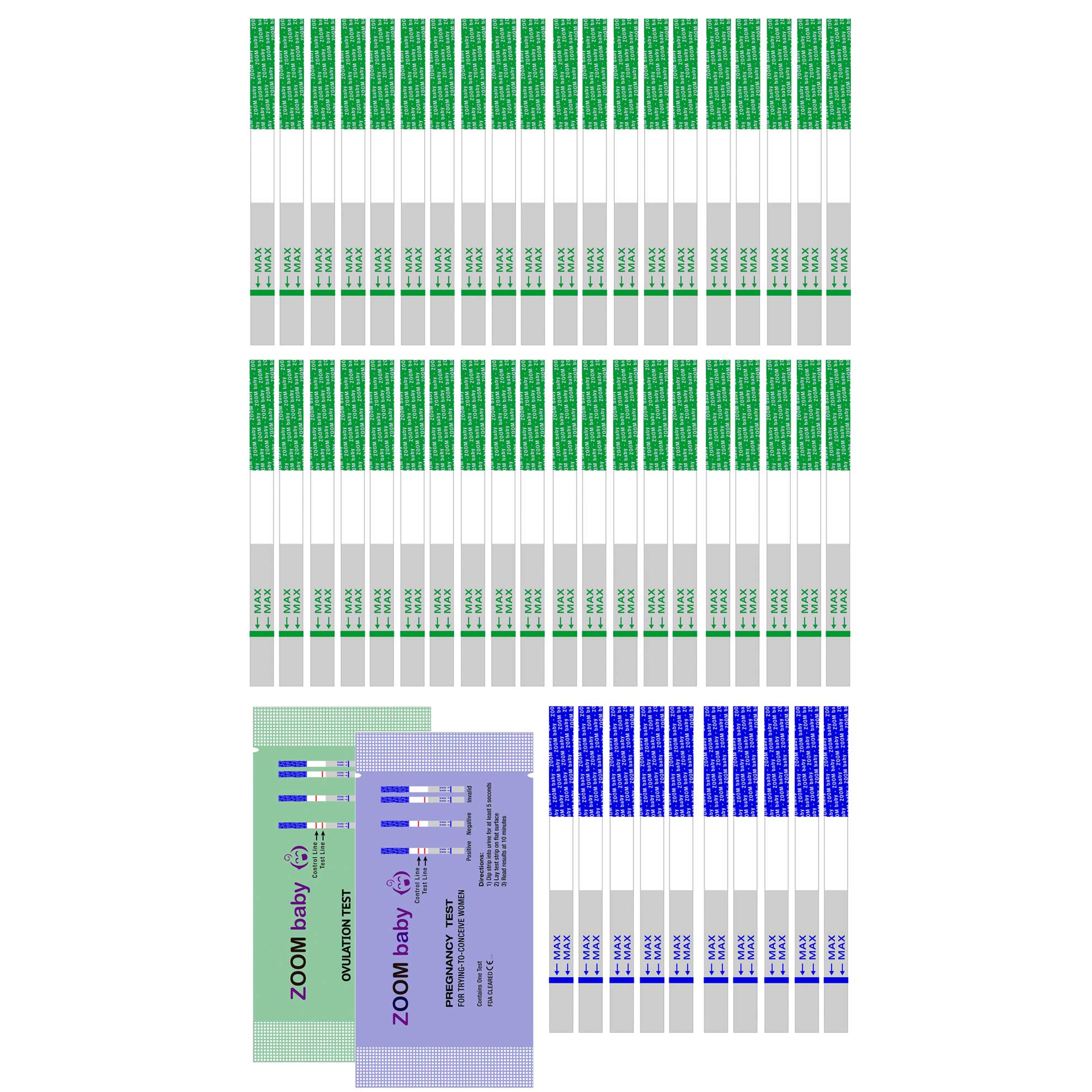
40 Ovulation Tests & 10 Pregnancy Tests Value Pack
This is exactly the gap our 40 Ovulation Tests and 10 Pregnancy Tests pack is designed to fill. It gives you enough ovulation strips to comfortably cover two to three full cycles of daily testing, alongside ten pregnancy tests, so you’re never caught short partway through a cycle and never left scrambling for a pregnancy test at the point you need one most. Both test types are CE and FDA approved, with an accuracy rate of over 99%, and the same testing strips used in clinical and NHS settings, so you’re not sacrificing reliability for the sake of value.
Buying at this scale also works out considerably cheaper per test than purchasing single tests repeatedly, which matters over what can sometimes be a journey of several months.
Strip Tests vs Digital Tests: Choosing the Right Format for Volume Testing
It’s worth being clear about a trade-off here. Strip tests, like the ones included in this value pack, require you to read and interpret lines, which takes a little practice but becomes straightforward after a cycle or two. Digital tests, like the dual-hormone ovulation test I’ve covered in a separate guide, remove the line-reading element entirely and give you a clearer fertility status on a screen, but they cost considerably more per test, which makes them less practical if you’re testing daily across several cycles.
My general advice is that strip tests make the most sense for the bulk of your testing, particularly in the earlier days of your fertile window when you’re casting a wide net, with a digital test reserved for if you want extra confidence around the days you believe are most likely to be your peak fertility. You don’t need to choose exclusively between the two formats. Many couples use strips for routine daily testing and keep a digital test on hand for the days that matter most.
Building a Simple Testing Calendar
A testing calendar doesn’t need to be complicated. Note the first day of your period as day one, then count forward to roughly 17 to 18 days before your next expected period to identify your likely fertile window, adjusting for your own typical cycle length if it differs from 28 days. Begin ovulation testing a few days before that estimated window opens, test at a consistent time each day, ideally late morning or early afternoon having limited fluids beforehand, and continue daily testing until you’ve caught a clear positive or your fertile window has passed.
From the point of ovulation, count forward roughly 14 days to your expected period, and that’s your earliest sensible point to consider a pregnancy test if your period hasn’t arrived. Testing significantly earlier than this is rarely productive and can lead to unclear or negative results even in a genuine pregnancy, simply because hCG hasn’t yet built up to a detectable level.
Tracking Across Multiple Cycles
If conception doesn’t happen in your first cycle of testing, which is entirely normal and expected for the large majority of couples, having a sufficient stock of tests already on hand means you can move straight into the next cycle without a gap. It also means you start to build up a genuinely useful picture of your own cycle over a few months, including whether your fertile window falls reliably around the same point each time or shifts somewhat, which is valuable information in its own right and worth mentioning to your GP if you do eventually need to discuss fertility investigations.
Bringing the Whole Approach Together
A sensible trying-to-conceive testing routine really comes down to three things: testing consistently enough within each cycle to actually catch your fertile window, having pregnancy tests ready for when you need them rather than scrambling at the last minute, and not overspending by buying piecemeal. If you want a deeper look at the science behind ovulation testing itself, I’ve covered that in detail separately, and if you haven’t yet read my guide to fertility-friendly lubricants, it’s worth a look alongside this one, since timing intercourse around a confirmed fertile window only helps if nothing else in the routine is working against conception.
My Recommendation
For most couples just starting to test, I’d recommend buying in volume from the outset rather than testing your way through a few strips at a time. A combined ovulation and pregnancy test pack like this one removes the guesswork around running short mid-cycle, keeps your cost per test sensible, and means you’re never without a pregnancy test at the exact moment you need one.
Stop testing piecemeal. Stock up for your whole cycle, and the next.
Anthony Cunningham – Health Writer & Editor
Anthony Cunningham, BA (Hons), MA, is a UK-based health writer and editor with over 20 years’ experience running Zoom Health, a trusted source for home health tests, preventive care, and wellness guidance. He creates clear, evidence-based articles using NHS, NICE, and WHO guidance. Where possible, content is reviewed by practising clinicians to enhance accuracy and reliability, helping readers make informed healthcare decisions.