About This Article
Zoom Health has supplied home health products and test kits to UK customers for nearly 20 years. This article is for general information only and does not constitute medical advice. Any abnormal test results should be discussed with your GP promptly. Always consult a qualified healthcare professional before making changes to your diet, medication or lifestyle based on a home test result. Home health tests are screening tools and are not a substitute for clinical testing.
I still get customers ringing or emailing to ask whether they should be using an ovulation test or a pregnancy test at a particular point in their cycle, and the confusion is genuinely understandable. Both tests work in broadly the same way, a small amount of urine applied to a strip or device, and both are sold in similar packaging in similar aisles. But they detect entirely different hormones, answer entirely different questions, and are meant to be used at entirely different points in your cycle. Mixing them up, or not fully understanding how they relate to each other, is one of the most common sources of unnecessary confusion I come across. I want to clear this up properly.
Two Different Hormones, Two Different Jobs
An ovulation test detects luteinising hormone, or LH, which surges in the day or two before you ovulate. Its job is to tell you that ovulation is imminent, so that you know when your fertile window has opened. It cannot tell you whether you’re pregnant, and using one to try and answer that question will only produce a confusing or meaningless result, because LH behaves completely differently across the cycle and isn’t a marker of pregnancy at all.
A pregnancy test detects a completely different hormone, human chorionic gonadotropin, or hCG. This hormone is only produced once a fertilised egg has implanted in the uterine lining, which typically happens around six to twelve days after ovulation. hCG isn’t present in any meaningful amount before implantation, which is exactly why pregnancy tests are designed to be used after your missed period, not during your fertile window. Using a pregnancy test to check for ovulation makes no biological sense, since there’s no hCG to detect at that point in your cycle regardless of whether you’ve conceived.
Where the Confusion Usually Comes From
Part of the issue is that both tests are urine-based and visually similar, particularly the strip-style versions. Part of it is that many couples are testing for both things within the same one to two week window, which makes it feel like they’re related steps in a single process rather than entirely separate biological events. They are related in the sense that one typically follows the other if conception has occurred, but they’re not interchangeable tools, and a positive ovulation test tells you nothing whatsoever about whether you’re pregnant from that same cycle.
I’d also flag a specific situation that catches some women out: hCG and LH are structurally similar hormones, and in rare cases an ovulation test can show a faint positive-looking result during early pregnancy due to this cross-reactivity, which is occasionally misread as an indication of a second ovulation or an irregular cycle. If you’ve had a positive ovulation test result at a point in your cycle that doesn’t make sense given your usual pattern, and there’s a chance you could already be pregnant from earlier in the cycle, a pregnancy test is the more appropriate next step to clarify what’s actually going on, rather than continuing with ovulation testing alone.
Choosing a Pregnancy Test Once You Reach That Stage
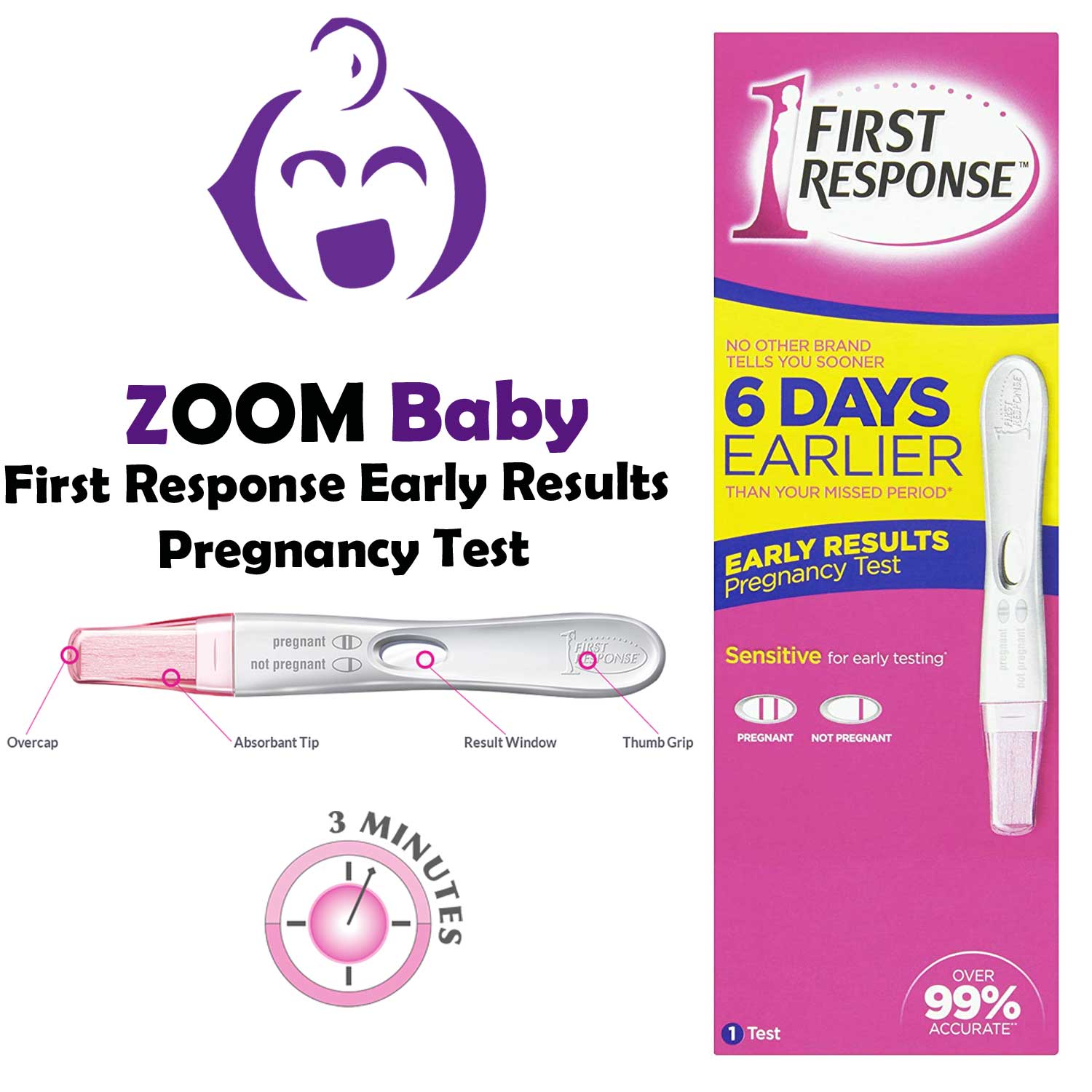
First Response Early Results Pregnancy Test
Once you’ve moved from ovulation testing into the pregnancy testing stage of your cycle, the First Response Early Results test is the one I’d recommend most often. It’s a line-based test, designed to detect pregnancy up to six days before your missed period, and is over 99% accurate from the day your period is actually due. It gives results in three minutes and can be used at any time of day, which makes it a flexible, sensitive option for couples who’ve just come from the more rigid timing requirements of ovulation testing and want something straightforward.
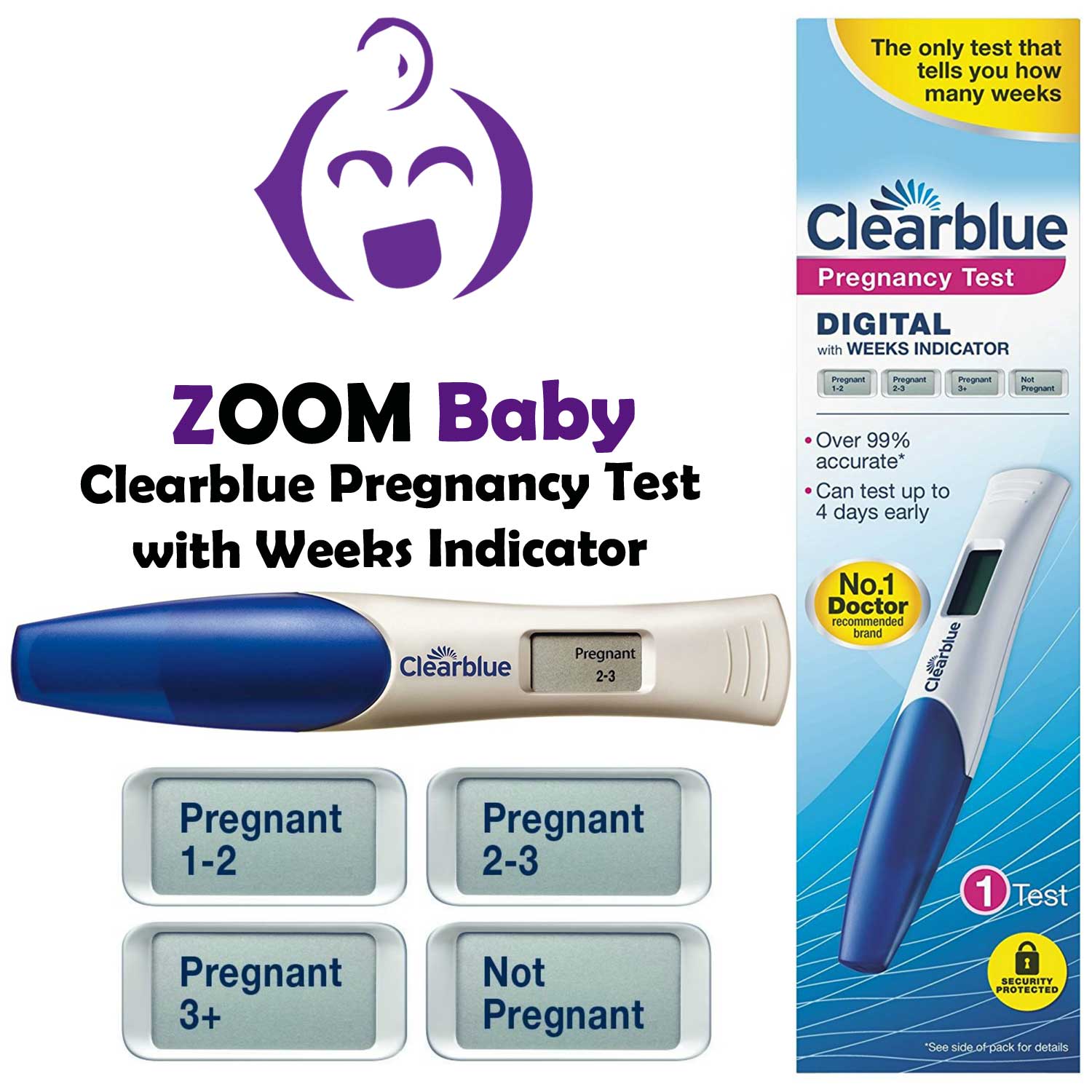
Clearblue Digital Pregnancy Test with Weeks Indicator
If you’d prefer to avoid interpreting lines altogether, which is a particularly understandable preference after weeks of reading faint lines on ovulation strips, the Clearblue Digital Pregnancy Test with Weeks Indicator gives a plain-word result, either “Pregnant” or “Not Pregnant”, directly on a digital screen. If the result is positive, it goes a step further and estimates how many weeks since conception, shown as 1 to 2, 2 to 3, or 3 plus weeks. It’s over 99% accurate from the day your period is due and can be used up to four days earlier than that. Given that this test naturally follows on from a cycle of digital ovulation testing for many couples, the consistency of having a clear digital readout at both stages, rather than switching to line interpretation partway through, is something a lot of our customers specifically tell us they appreciate.
Why It Helps to Think of These as One Continuous Process
Rather than thinking of ovulation testing and pregnancy testing as two separate, unrelated purchases, it’s more useful to think of them as two stages of a single monthly process: first identifying when you’re fertile, then later confirming whether that fertile window resulted in a pregnancy. Approaching it this way tends to reduce a lot of the back-and-forth confusion I see, because each test has a clearly defined job within a sequence, rather than feeling like an isolated, slightly mysterious purchase made in a moment of uncertainty.
It also makes practical sense from a buying perspective, which I’ve written about separately in my guide to building a sensible trying-to-conceive testing routine, where I talk through how to stock both test types together so you’re never caught without the right test at the right stage of your cycle.
A Note on Result Confidence
One thing worth bearing in mind with both test types is that a single result, positive or negative, isn’t always the end of the story. With ovulation tests, a missed surge one cycle doesn’t mean anything is wrong, it may simply mean the testing window started a day or two too late or too early. With pregnancy tests, a negative result taken too early can become positive a few days later as hCG continues to rise, which is why testing again after a few days, rather than treating one early negative as conclusive, is generally the right approach if your period still hasn’t arrived.
My Recommendation
Keep both test types on hand, understand which hormone each one is actually detecting, and resist the temptation to use one in place of the other. For most couples, a line-based test like First Response Early Results is perfectly sufficient and considerably more affordable for routine use, while the Clearblue Digital test is worth having for the moment you actually expect a result, simply for the added clarity and reassurance of seeing it spelled out in words.
Ready to confirm the next stage of your cycle with confidence?
Anthony Cunningham – Health Writer & Editor
Anthony Cunningham, BA (Hons), MA, is a UK-based health writer and editor with over 20 years’ experience running Zoom Health, a trusted source for home health tests, preventive care, and wellness guidance. He creates clear, evidence-based articles using NHS, NICE, and WHO guidance. Where possible, content is reviewed by practising clinicians to enhance accuracy and reliability, helping readers make informed healthcare decisions.