Clearblue Digital Pregnancy Test with Weeks Indicator
£7.99
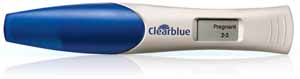
The Clearblue Digital Pregnancy Test with Weeks Indicator gives you a clear digital result in words, not lines, and estimates how many weeks have passed since conception. It’s a good choice for anyone who wants a fast, easy to read test with extra reassurance about timing.
✔ Clear Digital Result: “Pregnant” or “Not Pregnant”
✔ Smart Dual Sensor Technology for Two Answers in One Test
✔ Weeks Indicator Shows Time Since Conception
✔ Can Be Used From 4 Days Before Your Missed Period
✔ Over 99% Accurate From the Day Your Period Is Due
✔ Single Test With Protective Cap for Hygienic Storage
The Clearblue Digital Pregnancy Test with Weeks Indicator gives you a clear digital result in words, not lines, and estimates how many weeks have passed since conception. It’s a good choice for anyone who wants a fast, easy to read test with extra reassurance about timing.
✔ Clear Digital Result: “Pregnant” or “Not Pregnant”
✔ Smart Dual Sensor Technology for Two Answers in One Test
✔ Weeks Indicator Shows Time Since Conception
✔ Can Be Used From 4 Days Before Your Missed Period
✔ Over 99% Accurate From the Day Your Period Is Due
✔ Single Test With Protective Cap for Hygienic Storage
Introduction
The Clearblue Digital Pregnancy Test with Weeks Indicator is a home pregnancy test with a difference. As well as telling you whether you’re pregnant, it estimates how many weeks have passed since conception, so you get more context alongside your result.
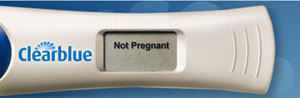
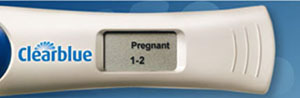
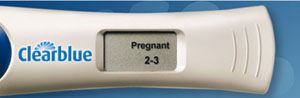
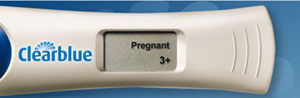
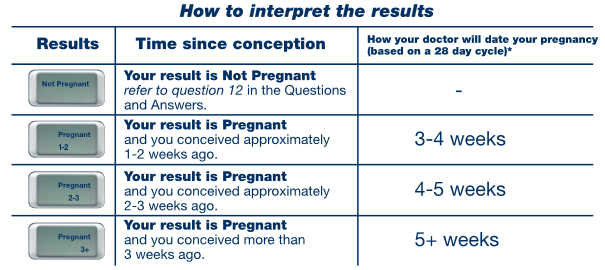
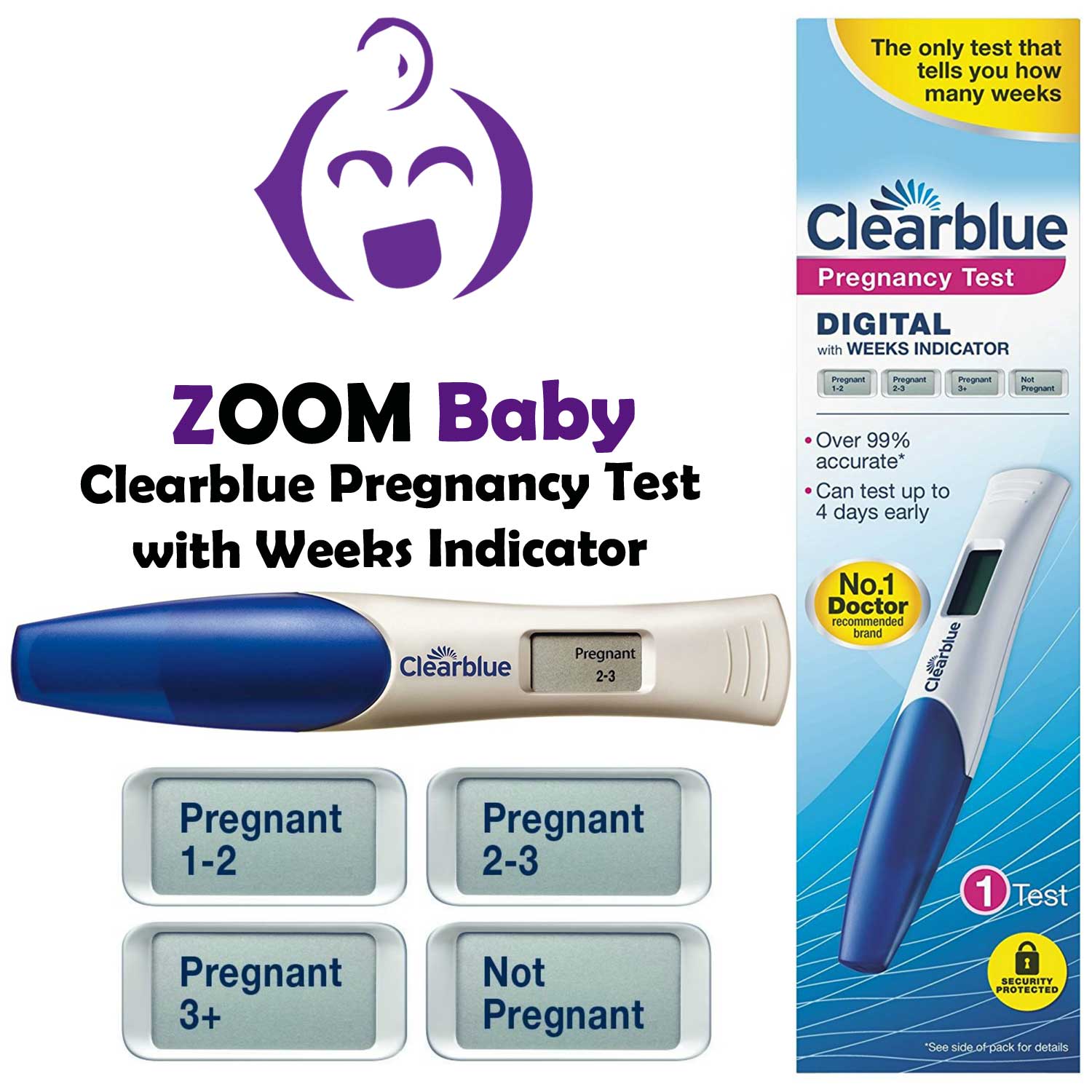
Instead of interpreting lines on a stick, you get a plain word result on a digital display: “Pregnant” or “Not Pregnant”. If the result is positive, the display also shows “1-2”, “2-3” or “3+” to indicate the number of weeks since conception. It’s a straightforward way to test at home with a result that’s easy to read at a glance.
Key Benefits
This test uses Smart Dual Sensor technology to detect the pregnancy hormone hCG in your urine, giving you two pieces of information from a single test: whether you’re pregnant, and roughly how long it’s been since conception.
Because the display shows results in words rather than lines, there’s no need to interpret faint marks or second-guess what you’re seeing. The test is also sensitive enough to be used up to 4 days before your period is due, and it’s over 99% accurate from the day your period is due when used as directed.
Results Explained
When pregnancy begins, your body starts producing hCG (human Chorionic Gonadotrophin), a hormone made by the cells that will go on to form the placenta. It typically appears in urine around 6 to 14 days after conception and roughly doubles every 2 to 3 days in early pregnancy, which is what makes early testing possible.
The weeks indicator estimates time since conception by measuring the concentration of hCG in your sample. It’s worth knowing that this is different from how a GP or midwife will date your pregnancy. Medical professionals count from the first day of your last period, whereas this test counts from conception, which usually happens around 2 weeks later. So a result of “2-3 weeks” on the test broadly corresponds to around 4-5 weeks in medical terms.
A “Pregnant” result means you should book an appointment with your GP or midwife to arrange antenatal care. If you have any concerns about your pregnancy or your result, always seek medical advice.
How To Use
Follow the instructions included in the pack to collect your urine sample and use the test. For the most reliable result, test from the day your period is due. If you’re testing earlier than this, use first-morning urine, when hCG is most concentrated, as testing too early increases the chance of a “Not Pregnant” result even if you are pregnant. Once your period is due, you can test at any time of day.
Your result will appear on the digital display and is most accurate when read within 10 minutes of testing. The display will continue to show your result for around 24 hours, after which it fades and the test cannot be reused or reread.


Safety Information
- For in vitro diagnostic use only
- For single use only, do not reuse the test stick
- Do not use after the expiry date shown on the packaging
- Do not open the foil wrapper until you’re ready to test
- Store at room temperature, between 2 and 30°C
- Keep out of reach of children
Product Information
- Brand: Clearblue
- Product: Digital Pregnancy Test with Weeks Indicator
- Pack Contents: 1 digital pregnancy test, instructions in multiple languages, protective cap
- Pregnancy Accuracy: Over 99% from the day your period is due
- Weeks Indicator Accuracy: 93%
- Use: In vitro diagnostic device, single use
FAQs
How accurate is this test?
The test is over 99% accurate at detecting pregnancy from the day your period is due, when used according to the instructions. The weeks indicator is 93% accurate at estimating time since conception.
Can anything affect my results?
Most medications, including the contraceptive pill, paracetamol and antibiotics, won’t affect your result. Fertility treatments containing hCG can cause a false positive, and drinking a lot of water before testing can dilute your urine and increase the chance of a false negative if you’re testing early. Certain medical conditions can also affect results, so speak to your GP if you’re unsure.
I got a “Not Pregnant” result but my period still hasn’t arrived. What should I do?
You may have miscalculated when your period was due, or tested too early for hCG to be detected. Wait 3 days and test again using a new test and first-morning urine. If you get another negative result but your period still doesn’t start, see your GP, as there are several possible reasons for a missed period besides pregnancy.
Are home pregnancy tests as reliable as tests my GP might use?
Yes. Many GPs and clinics use the same type of pregnancy test available from a pharmacy or online, and both work by detecting hCG in urine. Occasionally a doctor may request a blood test, which looks for the same hormone but can sometimes offer additional information or greater sensitivity.
How long will my result stay on the display?
Your result stays on the display for around 24 hours, though it’s most accurate when read within 10 minutes of testing. After 24 hours the display fades and the test cannot be reused or reread.
Why Buy From Zoom Health?
At Zoom Health, we’ve been helping customers find trusted healthcare and wellbeing products since 2008. We carefully select products from leading brands and offer competitive prices, fast UK dispatch and friendly customer service, making it easy to shop with confidence.
Whether you’re looking for everyday health essentials, specialist wellbeing products or trusted pharmacy brands, we’re committed to providing reliable products backed by helpful advice and excellent service.
Related Products
How to Use Your Clearblue Digital Pregnancy Test
Using this test is straightforward, but following the instructions carefully will give you the most accurate results. Take your time and don’t rush – the test will work, and you’ll have your answer in just 3 minutes.
Before You Start
Choose the right time to test: If testing from the day your period is due, you can test at any time of day. If testing early (up to 4 days before your period), use first-morning urine for the most reliable results.
Avoid drinking lots of fluids: Don’t drink excessive amounts of water or other fluids before testing, as this can dilute your urine and affect the accuracy of the test.
Check the expiry date: Make sure your test hasn’t passed its expiry date. Using an expired test may give inaccurate results.
Read the full instructions: Before you start, read through all the instructions in the pack. This ensures you’re familiar with each step and won’t need to rush.
Gather what you need: You’ll need the test stick and either access to a toilet to test directly in your urine stream, or a clean, dry container if you prefer to collect a sample.
Step-by-Step Instructions
1. Remove the test from its wrapper
Open the foil wrapper only when you’re ready to use the test. Take out the test stick and remove the blue cap to reveal the absorbent sampler (the tip).
2. Take your urine sample
You have two options:
- Direct sampling: Hold the absorbent sampler pointing downwards directly in your urine stream for 5 seconds. Make sure the sampler is completely covered by urine.
- Collection method: Collect your urine in a clean, dry container, then dip the absorbent sampler into the urine for 20 seconds only.
Top tip: Don’t wee on the digital display! Keep the display pointing away from your urine stream. Only the absorbent tip should get wet.
3. Wait for the hourglass symbol
After sampling, you may replace the blue cap and lay the test stick flat. Within a few seconds, a flashing hourglass symbol will appear on the display. This means the test is working properly. Keep the stick flat whilst you wait.
4. Wait 3 minutes
Don’t peek too early! It takes 3 minutes for the test to analyse your urine and display your result. The flashing hourglass will disappear once the result is ready.
5. Read your result
After 3 minutes (but within 10 minutes for most accurate reading), check the display. The result will stay visible for up to 24 hours, but it’s best to read it as soon as it appears.
How to Read Your Results
Not Pregnant
If you’re not pregnant, the display will simply show “Not Pregnant”. This means no hCG has been detected in your urine, or the level is too low to indicate pregnancy.
If you tested early and your period still doesn’t arrive, test again in a few days using a new test with first-morning urine. hCG levels might not have been high enough to detect yet.
Pregnant
If you’re pregnant, the display will show “Pregnant” along with a weeks indicator showing how long ago you conceived:
- 1-2 weeks: You conceived 1-2 weeks ago
- 2-3 weeks: You conceived 2-3 weeks ago
- 3+ weeks: You conceived more than 3 weeks ago
Remember: Your GP or midwife will date your pregnancy from the first day of your last period, not from conception. The weeks shown on the test are approximately 2 weeks less than your medical gestational age. For example, if the test shows “2-3 weeks since conception”, you’d be around 4-5 weeks pregnant in medical terms.
Error or No Result
If you see an error message or no result appears, the test may not have been used correctly. Common causes include:
- Not enough urine on the absorbent sampler
- Too much or too little urine applied
- The test stick was not kept flat during the waiting period
- Reading the test too late (after 10 minutes)
If you get an error, you’ll need to use a new test. Follow the instructions carefully, and make sure you apply urine to the absorbent sampler for the full 5 seconds (or 20 seconds if dipping).
Tips for Best Results
- Use first-morning urine if testing early: Your first wee of the day has the highest concentration of hCG
- Don’t dilute your urine: Avoid drinking lots of fluids before testing
- Keep the test at room temperature: Don’t store it in the bathroom where it might get damp
- Don’t reuse the test: Once used, the test cannot provide another result
- Read the result within the time frame: Results are most accurate when read between 3 and 10 minutes
- Use a new test if unsure: If you’re uncertain about your result, take another test in a few days
When to Contact Your GP
Contact your GP or healthcare provider if:
- You get a positive result – you’ll need to arrange antenatal care
- You get repeated negative results but your period still doesn’t arrive
- You have symptoms of pregnancy but keep getting negative results
- You experience pain, bleeding, or unusual symptoms alongside a positive result
- You have any concerns about your result or your health
- You’ve recently had a miscarriage, termination, or given birth (hCG can remain in your system for several weeks)
- You’re taking fertility medications containing hCG
- You’re uncertain about when your period was due and need help calculating your cycle
Seek immediate medical attention if you experience:
- Severe abdominal pain (could indicate ectopic pregnancy)
- Heavy bleeding or passing clots
- Dizziness or fainting
- Shoulder tip pain (this can be a sign of internal bleeding)
Remember, getting a positive pregnancy test is just the first step. Your GP or midwife will provide the medical care and support you need throughout your pregnancy journey.
Pregnancy Testing: Everything You Need to Know
Understanding how pregnancy tests work, when to take them, and what your results mean can help you feel more confident during this important time. We’ve gathered helpful information on common topics related to pregnancy testing.
When Is the Earliest a Pregnancy Test Can Be Taken?
Knowing the optimal time to test can save you money and reduce the disappointment of testing too early. Whilst some tests can detect pregnancy before your missed period, timing matters for accuracy. Learn about hCG levels, when implantation occurs, and why waiting a few extra days can make all the difference in getting a reliable result.
Read more: When Is the Earliest a Pregnancy Test Can Be Taken? →
Understanding hCG Levels in Early Pregnancy
Human Chorionic Gonadotrophin (hCG) is the hormone that pregnancy tests detect. After conception, hCG levels double every 48-72 hours in the first weeks of pregnancy. Understanding how these levels rise – and what’s considered normal – can help you interpret your test results and know what to expect at different stages of early pregnancy.
How to Read Pregnancy Test Results Correctly
Digital tests like this one remove the guesswork by displaying results in words, but it’s still important to understand what you’re seeing and when to read the test. Learn about the difference between evaporation lines and positive results, why timing matters, and what to do if you’re unsure about your result.
Common Early Signs of Pregnancy (Before Your Missed Period)
Some women experience symptoms of pregnancy even before a test can confirm it. From tender breasts and mild cramping to feeling unusually tired or emotional, early pregnancy signs vary from person to person. Discover what might indicate pregnancy and which symptoms are worth paying attention to when you’re trying to conceive.
False Positive Pregnancy Tests: What Causes Them?
Whilst rare, false positive results can occur. Certain medications, medical conditions, and timing issues can all affect test accuracy. Understanding what might cause a false positive – from fertility treatments to chemical pregnancies – can help you know when to retest or seek medical advice.
Read more: False Positive Pregnancy Tests: What Causes Them? →
What to Do After a Positive Pregnancy Test
Getting a positive result is exciting – and perhaps a bit overwhelming! From booking your first appointment with your GP or midwife to starting prenatal vitamins and making lifestyle changes, there’s a lot to think about. Find out the essential first steps to take when you discover you’re pregnant.
Understanding the Weeks Indicator on Pregnancy Tests
The conception indicator is a unique feature that shows how many weeks have passed since conception occurred. But what do these numbers really mean, and how do they relate to your actual pregnancy dating? Learn how to interpret the weeks indicator and why it differs from the gestational age your midwife will use.
Article coming soon – decode your conception indicator results
How Accurate Are Home Pregnancy Tests?
Modern pregnancy tests are highly reliable when used correctly, but accuracy depends on several factors including when you test, how you use the test, and individual hormone levels. Explore the science behind test accuracy, understand what “99% accurate” really means, and learn how to maximise the reliability of your results.
Article coming soon – the facts about pregnancy test accuracy
More Articles About Pregnancy and Fertility
Need personalised advice? Whilst this information is designed to be helpful, it’s not a substitute for professional medical advice. If you have specific concerns about pregnancy testing, conception, or your reproductive health, please speak to your GP or a qualified healthcare professional.


Reviews
There are no reviews yet