About This Article
Zoom Health has more than 20 years’ experience providing health products and practical health information to UK customers. This article looks at what glucomannan is, how it works and what current evidence says about its possible role in weight management.
Published: 23 April 2024 | Last Updated: 17 August 2026 | By: Anthony Cunningham
Losing weight can be challenging, and lasting results usually depend on sustainable changes to diet, physical activity and other lifestyle habits. Some people also consider fibre supplements such as glucomannan as part of an energy-restricted diet.
Glucomannan is a soluble dietary fibre derived from the konjac plant. Because it absorbs water and expands, it can increase feelings of fullness. However, research into its effect on body weight has produced mixed results, so it should not be regarded as a stand-alone solution for weight loss.
Contents
- What Is Glucomannan?
- How Does Glucomannan Work?
- Glucomannan and Weight Loss
- What Does the Research Say?
- Other Potential Effects
- How to Take Glucomannan Safely
- Conclusion
What Is Glucomannan?
Glucomannan is a water-soluble dietary fibre obtained from the root of the konjac plant, Amorphophallus konjac. Konjac has traditionally been used in Asian foods, where its ability to absorb water and form a gel makes it useful as a thickener and source of dietary fibre.
Glucomannan is particularly absorbent. When mixed with water it increases substantially in volume, which is one reason it is used in fibre supplements and foods designed to increase feelings of fullness.
How Does Glucomannan Work?
Glucomannan is a viscous soluble fibre. After it is consumed with sufficient water, it absorbs fluid and forms a gel-like material in the digestive system. This can slow the movement of food through the stomach and may help increase feelings of fullness after eating.
Like other soluble fibres, glucomannan has also been studied for possible effects on cholesterol and blood glucose. Results vary between studies, and supplements should not be used as a substitute for a balanced diet, prescribed medication or professional medical advice.
Glucomannan and Weight Loss
In Great Britain, an authorised health claim states that glucomannan, when taken in the context of an energy-restricted diet, contributes to weight loss. The conditions attached to this claim are important: the beneficial effect is associated with a daily intake of 3 g of glucomannan, taken as three 1 g doses with water before meals.
You can read the authorised wording in the Great Britain Nutrition and Health Claims Register.
This does not mean that taking glucomannan on its own will necessarily lead to significant weight loss. The authorised claim specifically refers to its use alongside an energy-restricted diet.
What Does the Research Say?
Research into glucomannan and weight loss has produced mixed results. A systematic review and meta-analysis of randomised controlled trials published in 2014 found no statistically significant difference in weight loss between glucomannan and placebo overall.
More recent research looking at a range of nutritional supplements has suggested that glucomannan may produce a small reduction in body weight in adults with overweight or obesity, but the certainty of the evidence was rated as low. This means it is sensible to be cautious about claims that glucomannan produces substantial weight loss.
For anyone trying to lose weight, the most important factors remain a sustainable dietary approach, appropriate physical activity and healthy long-term habits. Glucomannan can be considered as an additional source of soluble fibre rather than a replacement for these measures.
Other Potential Effects of Glucomannan
Researchers have also investigated glucomannan for effects beyond weight management. Areas that have been studied include:
- LDL and total cholesterol levels
- blood glucose control
- bowel regularity and digestive health
- feelings of fullness after meals
Some systematic reviews have reported reductions in LDL cholesterol with konjac glucomannan, although results are not identical across all studies or populations. Evidence for other outcomes is less consistent.
Glucomannan should therefore be viewed primarily as a source of soluble dietary fibre rather than as a treatment for high cholesterol, diabetes, high blood pressure or another medical condition. If you have one of these conditions, follow the advice of your GP or healthcare professional.
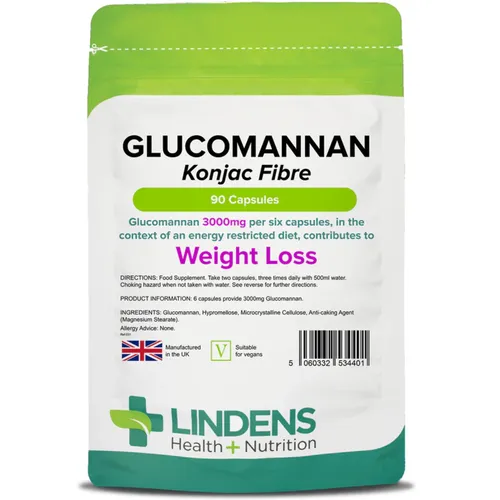
Featured Product: Glucomannan (Konjac Fibre) 500mg Capsules
Zoom Health stocks Glucomannan (Konjac Fibre) 500mg Capsules, with each capsule providing 500 mg of glucomannan. The product is intended for use alongside an energy-restricted diet and should always be taken with the recommended amount of water.
How to Take Glucomannan Safely
The Zoom Health Glucomannan (Konjac Fibre) 500mg Capsules contain 500 mg of glucomannan per capsule. The product directions are to take two capsules three times per day, with each dose taken 30 minutes before a meal and with 0.5 litres of water. This provides a total daily intake of 3 g of glucomannan.
Taking glucomannan with plenty of fluid is particularly important because the fibre expands when it absorbs water. There is a choking risk if glucomannan is swallowed without sufficient liquid.
Always follow the directions supplied with the product. Food supplements should not be used as a substitute for a varied, balanced diet and healthy lifestyle.
If you take regular medication, have difficulty swallowing, have a gastrointestinal condition, are pregnant or breastfeeding, or are unsure whether a fibre supplement is suitable for you, speak to a pharmacist, GP or other healthcare professional before using it.
Conclusion
Glucomannan is a highly absorbent soluble fibre derived from the konjac plant. In Great Britain it has an authorised health claim for contributing to weight loss when 3 g per day is taken in three doses as part of an energy-restricted diet.
That claim needs to be kept in perspective. Research into actual weight loss has produced mixed results, with some reviews finding little or no meaningful effect and others suggesting a small benefit. Glucomannan may therefore have a place as part of a wider approach to weight management, but it is not a substitute for a balanced diet, physical activity or appropriate medical advice.
About the Author
Anthony Cunningham, BA (Hons), MA, is a UK-based health writer and editor with over 20 years’ experience running Zoom Health, a trusted source for home health tests, preventive care, and wellness guidance. He creates clear, evidence-based articles using NHS, NICE, and WHO guidance. Where possible, content is reviewed by practising clinicians to enhance accuracy and reliability, helping readers make informed healthcare decisions.