About This Article
About This Article: Zoom Health has supplied home health products and hearing protection to UK customers for nearly 20 years. This guide draws on our experience helping thousands of people improve their sleep, protect their hearing, and find the right earplug for their needs. Always consult a healthcare professional if you experience ear pain, hearing loss, or recurring ear problems.
Published: 26 April 2026 | By: Anthony Cunningham
Swimming is one of the most beneficial forms of exercise available – low-impact, full-body, and accessible across a wide age range. It also carries a specific and entirely preventable risk to ear health that many regular swimmers only discover after their first bout of otitis externa. Swimmer’s ear is not a minor inconvenience: the infection causes genuine pain, can temporarily impair hearing, and in repeated cases can lead to lasting changes in the ear canal. The simple and reliable way to prevent it is to stop water entering the canal in the first place – and that means swimming earplugs. In this guide I will explain what causes swimmer’s ear, why not all earplugs are suitable for swimming, and which products from the Zoom Health range I recommend for different types of swimmer.
Why Swimmer’s Ear Happens – and Why Earplugs Prevent It
Otitis externa – swimmer’s ear – occurs when water is trapped in the outer ear canal after swimming. The warm, dark, damp environment this creates is ideal for bacterial and fungal growth, and the infection that results causes pain, itching, redness and swelling of the canal. In more severe cases it causes temporary hearing reduction as the swollen canal narrows. People with narrow ear canals, those who swim frequently, and those who swim in natural water sources rather than chlorinated pools are at higher risk – but any swimmer can develop otitis externa, and it recurs once the ear canal skin has been sensitised.
The mechanism of prevention is straightforward: if water cannot enter the canal, the bacterial growth conditions cannot develop. A well-fitted swimming earplug creates a waterproof seal at the canal entrance, preventing water ingress regardless of how long or how deeply you swim. This is categorically different from the mechanism of a noise-reduction foam earplug, which creates an acoustic seal inside the canal but is made from porous foam that absorbs water immediately on contact. Standard foam earplugs are not suitable for swimming and should never be used as swimming earplugs.
Worth noting: if you have a perforated eardrum, swimming without ear protection is particularly important to avoid. Water entering a perforated eardrum can cause middle ear infections that are significantly more serious than otitis externa. If you have a perforated eardrum and swim regularly, consult your GP or audiologist about the appropriate level of ear protection.
What to Look for in a Swimming Earplug
The most important quality in a swimming earplug is the waterproof seal it creates. Silicone is the dominant material for swimming earplugs because it is non-porous, flexible enough to conform to the individual ear canal shape, and sufficiently durable for repeated use and washing. Most quality swimming earplugs are made from medical or food-grade silicone and will last many sessions if cleaned and stored correctly. A carrying case is a practical essential – a swimming bag without one usually means earplugs collecting debris at the bottom of the bag between sessions.
Beyond waterproofing, consider fit security. An earplug that creates a good initial seal but works loose after a few lengths provides false reassurance. Look for designs with ergonomic flanges or body shapes that sit securely in the ear canal under the movement of swimming rather than relying solely on friction. Some designs include cords to prevent loss if a plug does dislodge – a sensible feature for open water swimming where retrieval from the water is not practical.
Our Top Picks for Swimming Earplugs
Top Pick: Speedo Biofuse Aquatic Earplugs
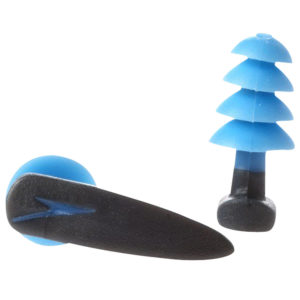
For regular pool swimmers who prioritise comfort and secure fit above all else, the Speedo Biofuse Aquatic Earplugs are my first recommendation. Speedo’s BioFUSE technology uses a soft, body-adaptive material that moulds to the specific contours of the individual ear under the warmth of body temperature – creating a seal that improves as you wear them rather than relying solely on a standardised shape. The ergonomic design sits securely in the canal under swimming movement, and the comfortable fit means you genuinely forget you are wearing them mid-session – which is the mark of a well-designed swimming earplug. Supplied with a carry case for storage between sessions.
BioFUSE adaptive material | Pool and open water | Carry case | Buy from Zoom Health – £7.99
Runner-Up: Zoggs Aqua-Plugz Swimming Earplugs
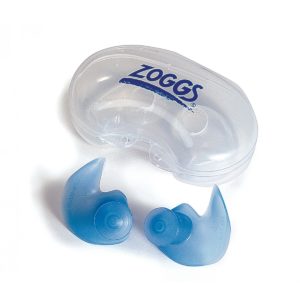
The Zoggs Aqua-Plugz are a well-established name in competitive and leisure swimming circles. The soft silicone sits comfortably over the ear and creates a reliable waterproof seal that protects against both bacterial infections and the discomfort of water pressure in the canal during turns and diving. Zoggs is a brand with strong swimmer credibility – their products are used across club and competitive swimming environments – which translates into a level of real-world performance testing that consumer products do not always receive. Easy to clean and supplied with a carry case, they are a durable and reliable long-term investment for regular swimmers.
Soft silicone | Competitive swimming tested | Carry case | Buy from Zoom Health – £6.99
Best Budget Option: Quies Silicone Earplugs for Swimmers
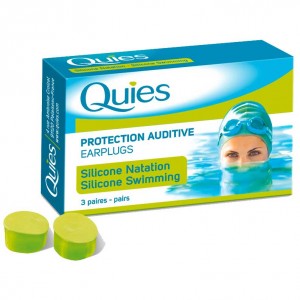
The Quies Silicone Earplugs for Swimmers are the most accessible option in our swimming range at £5.99 for three pairs. The malleable silicone forms a completely waterproof seal and the slightly adherent texture helps maintain that seal through swimming movement. Hypoallergenic materials make them suitable for people with sensitive ear canal skin, and the slight sound attenuation they provide – without blocking sound entirely – allows you to remain aware of what is happening in and around the pool. For occasional swimmers, holiday use, or anyone wanting to try swimming earplugs for the first time without committing to a higher price point, the Quies are a very practical starting choice.
Hypoallergenic silicone | 3 pairs | Pool, sea and shower use | Buy from Zoom Health – £5.99
Best with Cord: Swim Plugz Adult Swim Earplugs
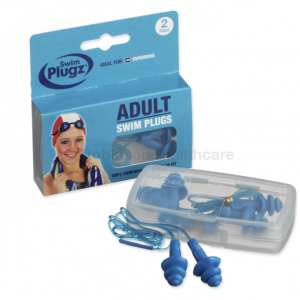
For open water swimmers, triathletes and anyone who swims in environments where retrieving a dropped earplug is not possible, the Swim Plugz Adult Swim Earplugs include a safety cord that keeps both earplugs together and prevents loss if one dislodges during swimming. Suitable for ear canals between 9 and 14mm in diameter – which covers the vast majority of adult swimmers – the soft silicone design reduces water pressure and infection risk at an excellent price for a two-pair pack. The cord is also a practical feature for swimmers who wear their earplugs between the changing room and the pool, reducing the chance of dropping one on a wet changing room floor.
Safety cord included | 2 pairs | Open water suitable | 9-14mm canal | Buy from Zoom Health – £3.99
Post-Swim Essential: ClearEars Water Absorbing Earplugs
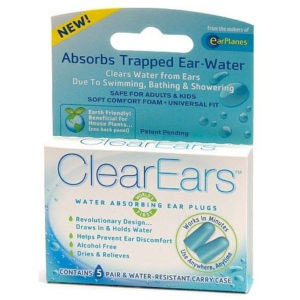
The ClearEars Water Absorbing Earplugs are categorically different from the other products in this guide – they are not worn during swimming but inserted after getting out of the water. If water has already entered the ear canal, the ClearEars’ FDA-approved polymer absorbs it within five to ten minutes, removing the trapped moisture that creates the conditions for otitis externa before the bacterial growth process can begin. For swimmers who have experienced swimmer’s ear before and know their canals are susceptible, keeping a set of ClearEars in the swimming bag alongside conventional swimming earplugs is a practical two-stage protection strategy. They are also useful for anyone who has experienced water trapped in the ear after showering, surfing or any other water-based activity.
Post-swim use | FDA-approved polymer | Absorbs trapped water | Adults and children | Buy from Zoom Health – £8.99
Caring for Your Swimming Earplugs
Silicone swimming earplugs are reusable and durable but require basic maintenance to perform consistently. Rinse them in clean water after each use to remove chlorine, salt or organic matter from the pool or sea. Every few uses, wash them gently in warm soapy water and allow them to dry completely before storing. Store them in their carry case rather than loose in a swimming bag, where they will collect debris and potentially degrade faster. Inspect them regularly for signs of cracking or hardening in the silicone – both indicate the material is degrading and the earplug is no longer creating a reliable seal. Well-maintained silicone swimming earplugs should last many months of regular use.
A Note on Foam Earplugs for Swimming
It is worth being direct about this: standard foam earplugs should not be used for swimming. Foam is a porous material that absorbs water immediately on contact, becoming saturated and ineffective within seconds of submersion. A wet foam earplug sitting against the ear canal skin can also introduce additional bacteria and create exactly the warm, damp conditions that cause otitis externa. If you use foam earplugs for sleeping or noise reduction and are tempted to use them at the pool, invest in a dedicated swimming earplug instead – the Quies at £5.99 for three pairs is the most accessible entry point in our range.
Protect your ears in the water
Browse our full range of swimming earplugs at Zoom Health. Also looking for everyday noise protection? Our Women’s and Men’s Earplugs Sample Packs include silicone options alongside foam and wax alternatives.
About the Author
Anthony Cunningham – Health Writer & Editor
Anthony Cunningham, BA (Hons), MA, is a UK-based health writer and editor with over 20 years’ experience running Zoom Health, a trusted source for home health tests, preventive care, and wellness guidance. He creates clear, evidence-based articles using NHS, NICE, and WHO guidance. Where possible, content is reviewed by practising clinicians to enhance accuracy and reliability, helping readers make informed healthcare decisions.