About This Article
Zoom Health has supplied home health tests and hearing protection products to UK customers for nearly 20 years. This guide draws on our experience helping thousands of people protect their hearing and use earplugs safely. Always consult a healthcare professional for medical advice about hearing concerns.
Published: 2022-01-15 | Last Updated: 2025-11-27 | By: Anthony Cunningham
Contents
Whether you’re attending loud concerts, working in noisy environments, or trying to get a peaceful night’s sleep, earplugs become essential for protecting your hearing. But you might be wondering – can earplugs themselves cause damage? Let’s separate fact from fiction and explore how to use earplugs safely.
Understanding Earplug Safety
The short answer is no – earplugs themselves aren’t inherently bad for your ears. When used correctly, they’re an effective tool for preventing noise-induced hearing damage. However, improper use, poor hygiene, or wearing them for extended periods can lead to problems.
When Earplugs Protect Your Hearing
According to NHS guidance on hearing loss, exposure to sounds above 85 decibels can damage your hearing over time. Earplugs provide crucial protection in these situations by reducing the sound level reaching your inner ear.
The World Health Organization estimates that 1.1 billion young people worldwide are at risk of hearing loss due to unsafe listening practices. Proper earplug use can significantly reduce this risk.
When Earplugs Can Cause Problems
Problems arise from three main causes:
- Poor hygiene: Reusing dirty earplugs or not cleaning your ears can lead to infections and earwax buildup
- Incorrect insertion: Forcing earplugs too deep can damage the ear canal or eardrum
- Extended wear: Wearing earplugs for more than 8 hours continuously increases infection risk and can push earwax deeper into the canal
Research published in medical journals indicates that the most common earplug-related issues are earwax impaction and external ear infections (otitis externa), both of which are preventable with proper use and hygiene.
How to Use Earplugs Properly
Getting the insertion technique right is crucial for both protection and safety. Here’s the proper method recommended by hearing specialists:
Step-by-Step Insertion Technique
- Prepare the earplug: For foam earplugs, roll them into a tight cylinder between your fingers. Keep them compressed while inserting.
- Open your ear canal: Reach over your head with your opposite hand and gently pull your outer ear upwards and outwards. This straightens the ear canal and makes insertion easier.
- Insert carefully: Gently twist the earplug as you guide it into the ear canal. Don’t force it. You should feel slight pressure initially as it expands, but this should quickly become comfortable.
- Check the seal: Hold the earplug in place for 20-30 seconds while foam earplugs expand. When properly fitted, your voice will sound slightly muffled.
For detailed guidance on foam earplug insertion, see our step-by-step insertion guide.
Hygiene Best Practices
Essential Hygiene Rules
- Clean your ears first: Use a damp cloth to clean the outer ear before inserting earplugs. Never use cotton swabs deep in the ear canal.
- Wash your hands: Always handle earplugs with clean hands to prevent introducing bacteria.
- Clean reusable earplugs: Wash silicone or wax earplugs with mild soap and warm water after each use. Allow them to dry completely before storing.
- Replace disposable earplugs: Foam earplugs are designed for single use. If you must reuse them, inspect for dirt or damage first and limit reuse to 2-3 times maximum.
- Store properly: Keep earplugs in a clean, dry case. Never leave them loose in pockets or bags where they’ll collect dirt.
The Royal National Institute for Deaf People (RNID) emphasizes that good earplug hygiene is just as important as proper insertion for maintaining ear health.
What Customers Say
★★★★★ Ruby – April 2025
“Absolutely love these! I’ve ordered the 50 pack at least 3 times now. They’re so comfortable and block out the perfect amount of noise to sleep with. The delivery is also super quick.”
★★★★★ C M Roberts – April 2025
“Great product, great price, speedy delivery!”
★★★★★ Anonymous – March 2025
“Excellent service and product quality. Exactly what I needed for better sleep.”
Not Sure Which Earplugs Suit Your Needs?
Our sample packs let you try multiple earplug types and sizes risk-free. Find your perfect fit for sleep, work, concerts, or travel.
Types of Earplugs Explained
Different earplug types suit different purposes. Understanding your options helps you choose the safest and most effective protection for your needs.
Foam Earplugs
Best for: Single-use situations, sleep, general noise blocking
Foam earplugs are the most common type. You compress them before insertion, then they expand to fill your ear canal. They offer excellent noise reduction (typically 29-33 NRR) and are very affordable.
Advantages: High noise reduction, comfortable when properly fitted, inexpensive
Disadvantages: Designed for single use, can push earwax deeper if reused frequently, require proper compression technique
Silicone Earplugs
Best for: Swimming, repeated use, people sensitive to foam
Silicone earplugs come in two main types: mouldable putty that you shape to cover the ear opening, and pre-formed plugs that insert into the canal. Both are reusable and washable.
Advantages: Reusable, easy to clean, waterproof, hypoallergenic
Disadvantages: Lower noise reduction than foam (typically 22-27 NRR), can be less comfortable for extended wear
Wax Earplugs
Best for: Sleep, comfortable all-night wear
Wax earplugs (usually a wax-cotton blend) are mouldable and sit in the outer ear rather than deep in the canal. They warm to body temperature and conform to your unique ear shape.
Advantages: Very comfortable, custom fit to your ear shape, good for sensitive ears
Disadvantages: Single use, moderate noise reduction, can leave residue
Custom-Moulded Earplugs
Best for: Musicians, frequent flyers, industrial workers, people who need earplugs daily
These are made from impressions of your ear canals, typically by an audiologist. They offer the best fit and can include filters for different noise reduction levels.
Advantages: Perfect fit, long-lasting (2-5 years), maximum comfort, interchangeable filters
Disadvantages: Higher upfront cost (£100-200), require professional fitting
Earplug Habits to Avoid
Certain practices significantly increase your risk of ear problems. Avoid these common mistakes:
Common Mistakes That Damage Ears
- Reusing dirty earplugs: This introduces bacteria directly into your ear canal. Foam earplugs are particularly prone to bacterial growth.
- Wearing earplugs for over 8 hours continuously: Extended wear prevents natural ear ventilation and increases moisture buildup, creating conditions for infection.
- Forcing earplugs too deep: The ear canal is sensitive. Aggressive insertion can cause abrasions, push earwax against the eardrum, or even rupture the eardrum.
- Using earplugs with ear infections: If you have an active ear infection, discharge, or pain, stop using earplugs and see a doctor.
- Sharing earplugs: This transfers bacteria between people and can spread infections.
- Inserting earplugs with dirty hands: Your hands carry bacteria that can cause outer ear infections.
If you experience pain, itching, discharge, or hearing changes while using earplugs, stop immediately and consult a healthcare professional. These symptoms may indicate an infection or injury that requires treatment.
When Should You Use Earplugs?
Understanding when you need hearing protection helps you use earplugs appropriately without overusing them.
Decibel Guide: When Protection is Essential
| Decibel Level | Examples | Protection Needed? |
|---|---|---|
| 0-60 dB | Normal conversation, quiet office | No |
| 70-85 dB | Vacuum cleaner, heavy traffic, alarm clock | Not immediately, but limit exposure |
| 85-100 dB | Lawnmower, motorcycle, nightclub | Yes – after 2 hours |
| 100-120 dB | Chainsaw, rock concert, car horn | Yes – immediately |
| 120+ dB | Jet engine, gunfire, fireworks | Yes – risk of immediate damage |
According to UK Health and Safety Executive regulations, employers must provide hearing protection when noise levels reach 85 decibels. This is a good benchmark for personal use as well.
Specific Situations Requiring Earplugs
- Music venues and concerts: Sound levels typically exceed 100 dB. Musician-grade earplugs preserve sound quality while protecting hearing.
- Industrial and construction sites: Jackhammers, power tools, and heavy machinery regularly exceed safe limits.
- Shooting ranges: Gunfire can reach 140-170 dB – use both earplugs and earmuffs for maximum protection.
- Air travel: Reduces engine noise and pressure changes, making flights more comfortable.
- Sleep: For blocking snoring, traffic, or noisy neighbours. Use softer, more comfortable types designed for extended wear.
- Studying or concentration: Reduces distracting background noise in shared spaces.
For relatively quieter activities like sleeping or studying, standard foam earplugs provide adequate noise reduction without the high NRR needed for industrial protection.
Finding the Right Fit with Sample Packs
No two ear canals are identical. What works perfectly for one person might be uncomfortable or ineffective for another. This is why trying different earplug types is essential for finding your ideal match.
Why Fit Matters
Properly fitted earplugs should:
- Create a complete seal without pressure or pain
- Stay in place during normal movement and sleep
- Reduce noise noticeably but not cause a “blocked” feeling
- Be comfortable enough to wear for the intended duration
If earplugs fall out, hurt, or don’t seem to reduce noise effectively, the fit isn’t right. Rather than persisting with ill-fitting earplugs (which increases risk of improper insertion and ear problems), try a different style or size.
Sample Packs: Try Before You Commit
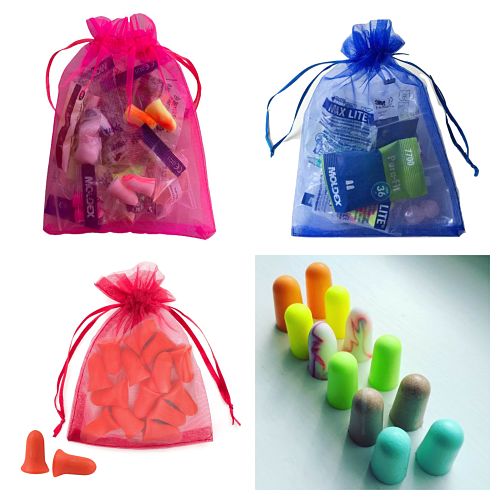
Zoom Health’s earplug sample packs offer a practical solution to the fit challenge. Instead of buying a large box of earplugs that might not suit you, sample packs let you test multiple brands, styles, and sizes.
The Men’s Sample Pack includes 13 pairs from leading brands like Mack’s, Moldex, and 3M. You’ll find standard cylindrical options like the 3M EARsoft and 1100 earplugs, tapered designs like Laser Lite and Max, plus Moldex Contours in regular and small sizes.
The Women’s Sample Pack contains 15 pairs curated for smaller ear canals. Alongside favourites like 3M EARsoft and Mack’s Slim Fit, you’ll find softer options like Moldex Mellows and Pura Fit designed for comfortable all-night wear.
Both packs also include silicone and wax options – Hush Plugz silicone earplugs and Noise-x wax earplugs – so you can compare different materials as well as different foam shapes.
Each sample pack includes easy-to-follow fitting instructions to help you achieve the best seal and maximum noise reduction. This approach eliminates guesswork and helps you find earplugs you’ll actually want to use correctly.
When to See a Doctor
While earplugs are generally safe when used properly, certain symptoms require medical attention:
See a GP or Hearing Specialist If You Experience:
- Ear pain that persists after removing earplugs
- Discharge from the ear (clear, yellow, or bloody)
- Reduced hearing that doesn’t improve when earplugs are removed
- Ringing in the ears (tinnitus) that continues beyond temporary post-concert effects
- Persistent itching or feeling of fullness in the ear
- Dizziness or balance problems
- Visible earwax impaction or feeling that your ear is blocked
The NHS advises seeing a GP if earache doesn’t improve within a few days, or immediately if you have discharge or hearing loss alongside pain.
For ongoing hearing protection needs in noisy work environments, consider a hearing assessment from an occupational health professional or audiologist. They can recommend the most appropriate protection and check for any existing hearing damage.
The Bottom Line on Earplug Safety
Earplugs are not inherently bad for your ears. They’re essential tools for protecting hearing in loud environments and improving sleep quality. Problems only arise from improper use, poor hygiene, or extended wear.
Follow these key principles for safe earplug use:
✓ DO: Insert earplugs correctly using proper technique
✓ DO: Keep your ears and hands clean before insertion
✓ DO: Choose the right type and size for your ears and purpose
✓ DO: Clean reusable earplugs after each use
✗ DON’T: Reuse dirty foam earplugs repeatedly
✗ DON’T: Wear earplugs for more than 8 hours continuously
✗ DON’T: Force earplugs deep into the ear canal
✗ DON’T: Continue using earplugs if you experience pain or discomfort
When used responsibly, earplugs protect your hearing at concerts, work sites, and other high-noise environments whilst helping you sleep better in noisy surroundings. Your future self will thank you for taking care of your hearing today.
About the Author
Anthony Cunningham – Health Writer & Editor
Anthony Cunningham, BA (Hons), MA, is a UK-based health writer and editor with over 20 years’ experience running Zoom Health, a trusted source for home health tests, preventive care, and wellness guidance. He creates clear, evidence-based articles using NHS, NICE, and WHO guidance. Where possible, content is reviewed by practising clinicians to enhance accuracy and reliability, helping readers make informed healthcare decisions.
You May Also Like
Explore more articles on hearing health and sleep quality: