
About This Article
About This Article: Zoom Health has supplied home health products and hearing protection to UK customers for nearly 20 years. This guide draws on our experience helping thousands of people improve their sleep, protect their hearing, and find the right earplug for their needs. Always consult a healthcare professional if you experience ear pain, hearing loss, or recurring ear problems.
Published: 27 April 2026 | By: Anthony Cunningham
Wind noise is the most underestimated hearing hazard in motorcycling. At speeds above 120km/h, the noise level inside a full-face helmet can reach 98dB or higher – a level at which unprotected exposure causes measurable hearing damage within minutes. Engine noise adds to this, as does traffic noise at motorway speeds. Over a riding career of even moderate length, the cumulative cochlear damage from unprotected riding is significant and permanent. Yet surveys consistently show that a large proportion of regular riders do not use any form of hearing protection, often on the mistaken belief that a helmet provides sufficient attenuation. It does not. A full-face helmet reduces wind noise by around 5 to 10dB – meaningful, but nowhere near enough to bring sustained motorway noise within safe exposure limits. Earplugs are not optional equipment for serious riders. They are as much a part of safe motorcycling as a good helmet and protective clothing.
Why Motorcycling Makes Specific Demands on Earplugs
Not all earplugs are equally suited to motorcycling, and understanding why helps in choosing the right one. A motorcycling earplug needs to satisfy several requirements simultaneously that other use cases do not combine in the same way.
First, it must fit securely under a helmet without creating pressure points. A full-face helmet applies compressive force around the head, and an earplug that protrudes from the ear canal can create a painful pressure point between the earplug and the helmet padding during extended rides. Low-profile designs that sit flush with or slightly recessed into the canal are significantly more comfortable under helmet compression than designs that protrude.
Second, it must stay in position for the duration of a long ride without constant adjustment. Stopping at the roadside to reseat an earplug is not practical at motorway speeds, and an earplug that migrates outward during a ride is providing progressively less protection as the journey continues. Tapered designs that anchor within the canal tend to perform better in this regard than cylindrical alternatives.
Third, it should reduce wind and engine noise without blocking the situational awareness sounds that matter for safety – sirens, horns, and engine sounds that signal mechanical issues. Earplugs attenuate rather than eliminate sound, and at the right SNR rating they can bring motorway noise to a manageable level while preserving the acoustic cues a rider needs.
Our Top Picks for Motorcycling Earplugs
Top Pick: Haspro Moto Earplugs
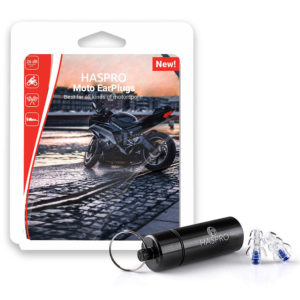
The Haspro Moto Earplugs are the only earplug in our range designed specifically for motorcycle riding, and that specificity shows in the design. Haspro has engineered these earplugs around the demands of the riding environment – the compressive force of a helmet, the need to stay in position through long journeys, and the requirement to attenuate wind noise effectively while preserving the situational awareness a rider needs. Professional grade construction means they are built for the sustained use patterns of a serious rider rather than occasional wear. At £17.95 they represent a meaningful investment compared to disposable foam, but for riders who use earplugs on every outing the cost per use quickly becomes negligible. The combination of purpose-built design and Haspro’s strong brand reputation in hearing protection makes these my first recommendation for dedicated bikers.
Motorcycle-specific design | Professional grade | Long-ride comfort | Buy from Zoom Health – £17.95
Best Foam Option: Max Lite Foam Earplugs
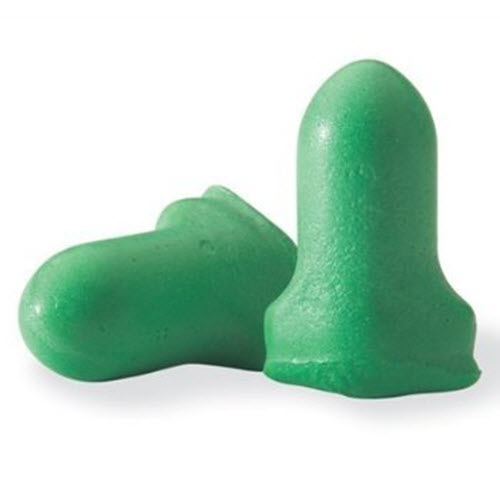
If you prefer a disposable foam earplug for motorcycling – whether for cost, convenience or because you want something you can discard rather than maintain – the Max Lite Foam Earplugs from Howard Leight are the strongest choice in our range specifically for biking. In a product test by Ride magazine, the Max Lite was rated the highest of all earplugs tested – a credible and demanding endorsement from a publication whose readers understand motorcycle hearing protection needs precisely. The T-shape design sits comfortably under a helmet without protruding, the low-pressure foam does not cause pressure point discomfort during long rides, and the SNR 34dB rating reduces motorway wind noise to manageable levels. The T-shape stem also makes insertion manageable with gloves nearby – you do not need completely dexterous fingers to use them.
SNR 34dB | Ride magazine top-rated | T-shape | Low-profile under helmet | Buy from Zoom Health – from £1.99
Cult Favourite: 3M EARsoft Yellow Neons

The 3M EARsoft Yellow Neons have developed a genuine cult following among UK bikers – partly because they have historically been difficult to source outside the US, and partly because they perform exceptionally well for motorcycling use. One customer wrote to us: they use these earplugs when motorcycling and describe them as the best they have found over many years of trying alternatives. The smooth tapered design sits comfortably under a helmet, the hypoallergenic foam is suitable for extended wear, and the SNR 33dB rating provides effective wind noise attenuation without cutting off road awareness. We are one of the few UK stockists that keeps these reliably in stock – worth noting if you have previously had difficulty sourcing them.
SNR 33dB | Hypoallergenic | UK biker favourite | Hard to find elsewhere | Buy from Zoom Health – from £2.99
Best Reusable Option: 3M Ultrafit Tracer Corded Earplugs
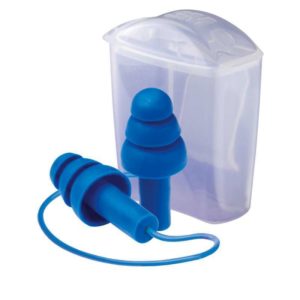
The 3M Ultrafit Tracer Corded Earplugs are the reusable option for bikers who want a washable earplug they can use repeatedly rather than disposing of after each ride. The cord is a practical advantage in a motorcycling context – it keeps both earplugs together when not in use, prevents loss if one works loose during a ride, and makes the earplugs easy to hang around the neck during fuel stops without risk of dropping. At SNR 32dB they provide effective protection for most motorcycling noise environments, and the reusable design means the cost per use is extremely low over time. 3M’s quality manufacturing credentials provide reassurance that the rated attenuation is consistently delivered.
SNR 32dB | Reusable and washable | Corded | 3M quality | Buy from Zoom Health – £2.99
Budget Disposable: Moldex Pura Fit Earplugs
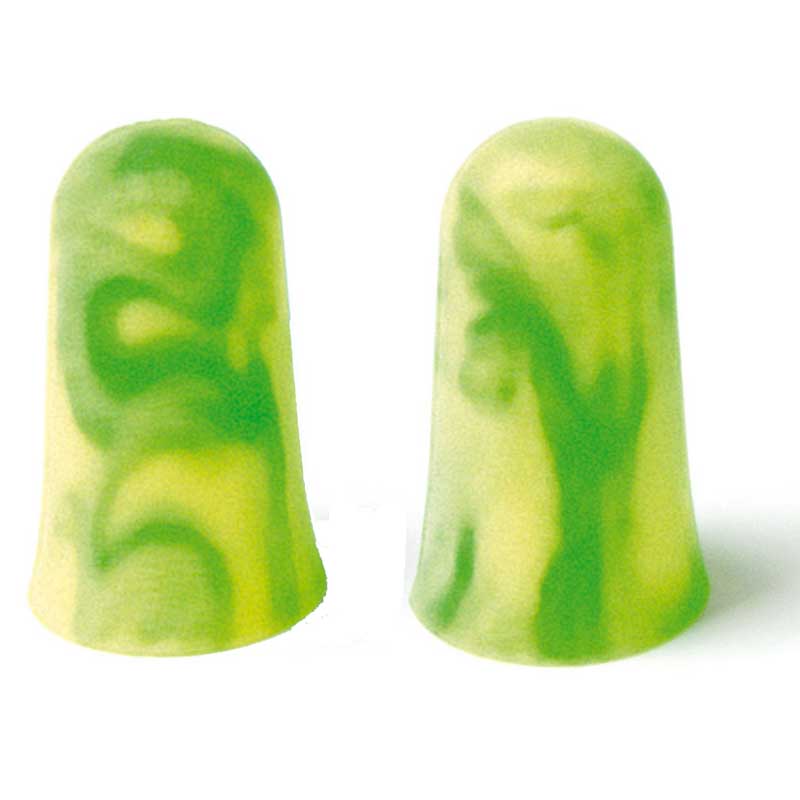
The Moldex Pura Fit Earplugs are not specifically marketed as a motorcycling earplug but have built a strong reputation among bikers who have discovered them through our range. The longer tapered body sits comfortably under a helmet without the protruding profile that causes pressure points, the super-soft low-pressure foam does not cause ear fatigue during long rides, and multiple bikers have reported them easy to wear under a crash helmet for extended periods without discomfort. At SNR 33dB they provide strong wind noise attenuation, and the biodegradable paper pouch packaging is the most environmentally considered disposable option in our range. A compelling choice for riders who prioritise comfort on long journeys.
SNR 33dB | Super-soft foam | Long-ride comfort | Biodegradable packaging | Buy from Zoom Health – from £2.99
Addressing the Common Objection: “Won’t Earplugs Block Important Sounds?”
This is the most common reason riders give for not using ear protection, and it is worth addressing directly. Earplugs attenuate sound – they reduce its volume – but they do not eliminate it. At the SNR ratings of the products in this guide (32 to 34dB), a siren at 110dB is reduced to approximately 76 to 78dB at the ear – still clearly audible and identifiable as a siren. A horn at 90dB becomes 56 to 58dB – equivalent to normal conversation volume. What earplugs remove is the sustained wind noise roar that sits at 90 to 100dB and masks those important sounds while simultaneously damaging hearing. Wearing earplugs does not make you less aware of your riding environment – it allows you to hear important sounds more clearly because the masking effect of wind noise is reduced. Many riders report improved situational awareness after switching to earplugs, not reduced awareness.
Not Sure Which to Try First?
Our Men’s Earplugs Sample Pack includes several of the foam options recommended above alongside 12 other earplugs – an excellent way to try different designs under your helmet before committing to a product you use every ride.
Protect your hearing on every ride
Browse our full range of motorcycling earplugs, or try multiple options with our Men’s Earplugs Sample Pack and Women’s Earplugs Sample Pack.
About the Author
Anthony Cunningham – Health Writer & Editor
Anthony Cunningham, BA (Hons), MA, is a UK-based health writer and editor with over 20 years’ experience running Zoom Health, a trusted source for home health tests, preventive care, and wellness guidance. He creates clear, evidence-based articles using NHS, NICE, and WHO guidance. Where possible, content is reviewed by practising clinicians to enhance accuracy and reliability, helping readers make informed healthcare decisions.