About This Article: Zoom Health has supplied home health tests to UK customers for nearly 20 years. This guide draws on our experience helping thousands of people understand blood types and their health implications. Always consult a healthcare professional for medical advice.
Published: April 2022 | Last Updated: January 2026 | By: Anthony Cunningham
Contents
What Is O Positive Blood?
Type O positive blood is one of the most common blood types across the world. This is the universal donor blood type since it can be given to everybody who has a compatible blood type, so it becomes very valuable in times of emergency or when transfusions have to be conducted quickly.
This makes O positive the most common blood type in the UK, accounting for about 35% of the population falling into this blood group—1 in every 3 Brits. The blood type is similarly very common in many other countries all over the world.
Among the major advantages of having O positive blood, very few cases of blood type incompatibility reactions after transfusions are experienced by individuals. However, this blood type shows higher chances of developing ulcers and other digestive tract-related disorders.
Understanding the Rh Factor
The “positive” in O positive refers to the Rhesus (Rh) factor, a protein found on the surface of red blood cells. If you have this protein, you’re Rh positive. If you don’t have it, you’re Rh negative.
The Rh factor is inherited from your parents and remains the same throughout your life. It becomes particularly important during pregnancy and blood transfusions. According to NHS Blood and Transplant, approximately 85% of people in the UK are Rh positive, making it the dominant Rh type.
People with O positive blood can receive transfusions from O positive and O negative donors. They can donate to anyone with a positive blood type (A+, B+, AB+, and O+), which represents about 76% of the UK population.
Health Implications of O Positive Blood
Cardiovascular Health
Studies show that people with O positive blood type may have a lower risk for heart diseases than the remaining blood groups. This is because people with this blood type have lower levels of von Willebrand factor, a protein that can facilitate blood clotting and raise the risk of heart diseases.
Research published in medical journals suggests that cardiovascular disease risk varies by blood type. Those with type O blood may have a reduced risk of heart attack and stroke compared to other blood groups.
Immune System Function
Those with O positive blood could have a stronger immune system than most. It has been concluded that they have higher IgG antibodies, which recognise and act on foreign material in the body. This may be the reason why people with O positive blood have less of a chance at catching certain infections, like hepatitis B.
Digestive Health Considerations
On the contrary, persons having O positive blood are susceptible to some diseases like malaria and cholera. The individuals may also be highly exposed to pancreatic cancer and stomach ulcers.
According to the NHS guidance on stomach ulcers, people with type O blood have a higher prevalence of peptic ulcers. This is thought to be related to how the body responds to H. pylori bacteria, which is a common cause of ulcers.
Key Point
O positive blood is the most common blood type in the world and is highly valued in emergency cases since it can be given to any person with a compatible positive blood type. While there are some health risks related to having O positive blood, there are also potential health advantages that one should consider. Knowing one’s blood type is very essential, so that in times of emergencies, a person can let the concerned medical personnel know.
Recent Events Highlight Importance of O Positive Blood
The important role played by O positive blood was highlighted in June 2024 when major hospitals in London were under cyber-attack. A ransomware assault—purportedly by a Russian cybercriminal group—affected the standard process of matching blood in a number of health institutions. This prompted the NHS Blood and Transplant to make an urgent appeal for blood-type O donors, specifically O positive and O negative.
The cyber-attack brought to light the importance of O-type blood in emergency situations. Since O positive blood can be safely administered to any patient with a positive blood type, this would account for some 76% of the population, so it became a key factor that facilitated the hospitals in continuing surgery and care throughout the disruption of their usual systems of blood typing.
This event stands as a reminder that blood donations are needed on a continual basis, particularly from those with O blood types. According to Dr. Gail Miflin, Chief Medical Officer at NHS Blood and Transplant, the need now is more imperative than ever for O type blood donors to come forward to support patient care throughout this crisis.
This is just one of those incidents that show what O positive blood carriers can do to save others. Regular donations ensure a stable supply of blood in the system—critical for day-to-day medical interventions, but also necessary to respond to sudden emergencies or system disruptions.
As we continue in this increasingly digital landscape of healthcare, the security of medical systems and the resilience of our blood supply are inextricably linked. Understanding your blood type and, if you are O positive, taking time to consider making a regular donation can play a critical role in supporting the health-care system’s ability to respond to routine and extraordinary circumstances alike.
Want to Donate Blood? If you have O positive blood, you can help save lives. Visit NHS Blood and Transplant to find your nearest donation centre and book an appointment.
Knowing Your Blood Type
There are a few ways to learn your blood type. Knowing your blood type is very important because it avoids the risk of getting an incompatible blood group at the time of transfusion. If blood types are mismatched, blood cell clumping occurs, which may be dangerous.
Options for Finding Out Your Blood Type
If you don’t know your blood type, you can contact your local doctor or the blood donation people in your area to ask and see if they can tell you. Note that your doctor might refuse to take some of your blood if there is no medical reason to do so.
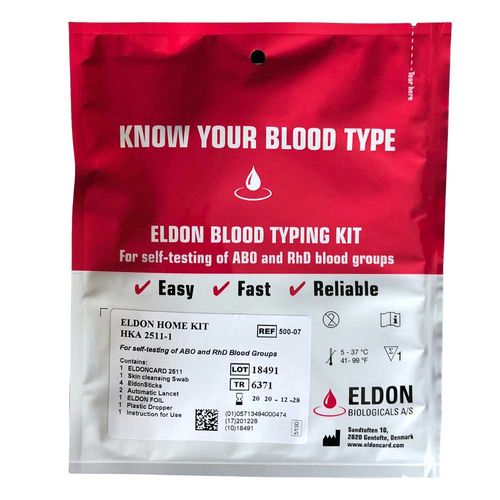
Most easily, you can know your blood type by doing an at-home test. Home blood typing kits provide results in minutes and can be taken at home as soon as they arrive in the post, not days or even weeks after waiting on a doctor’s appointment.
What Customers Say
★★★★★ Sophie – July 2015
“I decided to get one of these for every member of my family; knowing your blood group is so important. It’s foolproof, it comes with everything you need, and the information that you get could be lifesaving for you or another person.”
★★★★★ Rose – February 2016
“Easy to use and very clear! Pin prick doesn’t hurt at all, so well worth doing if you want to find out your blood type.”
★★★★★ Melissa – April 2020
“I bought two of these tests, just so I could double check the results. They both showed the same result so I can attest to the quality and reliability of the tests! Easy to use, convenient and the delivery service was great.”
How Home Blood Typing Works
Home blood typing kits work by testing a small blood sample against reagents that identify your ABO blood group and Rh factor. The process is straightforward:
- Use the provided lancet to collect a small blood sample from your fingertip
- Apply drops of blood to the testing card
- Add the reagents as instructed
- Read your results within minutes by comparing against the chart provided
The Home Blood Group Test Kit from Zoom Health is a low-cost, reliable option that gives results in minutes. It’s ideal for anyone who wants to know their blood type quickly and conveniently.
Find Out Your Blood Type Today
Quick, easy, and affordable home blood typing. Know your type in minutes.
About the Author
Anthony Cunningham – Health Writer & Editor
Anthony Cunningham, BA (Hons), MA, is a UK-based health writer and editor with over 20 years’ experience running Zoom Health, a trusted source for home health tests, preventive care, and wellness guidance. He creates clear, evidence-based articles using NHS, NICE, and WHO guidance. Where possible, content is reviewed by practising clinicians to enhance accuracy and reliability, helping readers make informed healthcare decisions.
You May Also Like
Explore more articles on blood types and health testing: