About This Article
About This Article: Zoom Health has supplied home health products and hearing protection to UK customers for nearly 20 years. This guide draws on our experience helping thousands of people improve their sleep, protect their hearing, and find the right earplug for their needs. Always consult a healthcare professional if you experience ear pain, hearing loss, or recurring ear problems.
Published: 20 April 2026 | By: Anthony Cunningham
The first two earplugs in this series – the Mack’s Ultra Soft and the Mack’s Original – are both rated at NRR 32dB and both prioritise comfort and wearability as their primary selling point. Today on Day 3 the Snore Blocking Soft Foam Sleeping Earplugs Pack steps up in attenuation with the 3M EARsoft Yellow Neons at SNR 33dB. One decibel higher does not sound significant, but in the context of snoring – where decibels operate on a logarithmic scale and snoring levels are already pushing the upper range of what comfort-oriented earplugs comfortably manage – that step up brings meaningful additional protection for people dealing with heavier snoring. I have covered the Yellow Neons from a comfort angle in the women’s series and an occupational angle in the men’s series – today I want to focus specifically on why they earn their place in a snore-blocking collection.
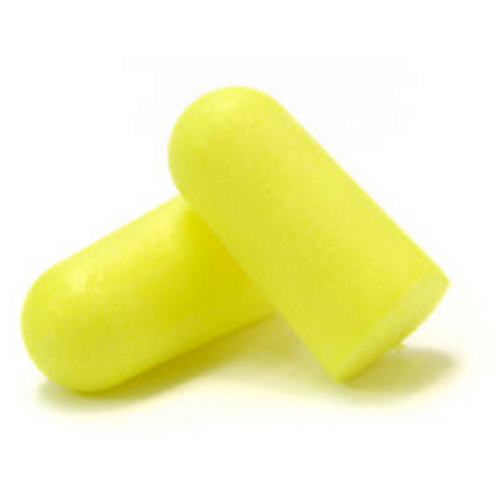
3M EARsoft Yellow Neons Earplugs – available from Zoom Health
Buy 3M EARsoft Yellow Neons Earplugs
Available individually from Zoom Health: 3M EARsoft Yellow Neons Earplugs. Or try them alongside 5 other snore-blocking earplugs in our Snore Blocking Soft Foam Sleeping Earplugs Pack.
When 32dB Is Not Quite Enough
The majority of snoring falls in the 60 to 75dB range – well within what the Mack’s Ultra Soft and Original at 32dB handle comfortably. But snoring is not always moderate. Clinical studies measuring habitual snorers have recorded peak levels above 80dB – equivalent to a busy main road or a loud restaurant – and for the partners of heavy snorers, 32dB of attenuation reduces that 80dB to around 48dB, which is noticeably quieter but still audible enough to interrupt lighter stages of sleep.
The Yellow Neons at SNR 33dB reduce that same 80dB environment to approximately 47dB – a marginal improvement that may seem negligible on paper. In practice, on a logarithmic decibel scale, the difference between 48 and 47dB at the ear when the noise is already close to the threshold of sleep disruption can tip the balance between a disturbed night and an uninterrupted one. For partners of consistently heavy snorers who have tried 32dB earplugs and found them almost but not quite sufficient, the Yellow Neons are the natural next step before moving to the higher-attenuation options later in this series.
The Tapered Shape and Side Sleeping
The majority of people who wear earplugs to block snoring sleep on their side – often turning away from a snoring partner in an unconscious attempt to reduce the noise exposure. Side sleeping creates a specific challenge for cylindrical earplugs: the pressure of a pillow against the ear compresses the earplug from the outside, which can push it inward or create discomfort that builds during the night and wakes the sleeper. Cylindrical earplugs, which have a uniform diameter along their length, transmit this pillow pressure evenly along the full contact surface of the earplug against the canal wall.
The Yellow Neons’ tapered shape distributes this pressure differently. Because the earplug narrows towards the tip, the contact force between the pillow-compressed earplug and the canal wall is spread across a graduated profile rather than a uniform surface – which reduces localised pressure at any single point and makes the earplug noticeably more comfortable to sleep on than cylindrical alternatives. For dedicated side sleepers, this tapered geometry is a meaningful practical advantage that the NRR rating alone does not capture.
Hypoallergenic Foam for Nightly Use
An earplug worn every night for weeks or months is in far more sustained contact with ear canal skin than one used occasionally for noise protection during the day. Skin sensitisation reactions that are imperceptible with weekly use can develop with nightly use, particularly in the warm, slightly humid environment of an ear canal during sleep. The Yellow Neons’ hypoallergenic foam formulation is specifically tested to minimise sensitisation risk – making them a more appropriate choice for habitual nightly use than earplugs that do not specify their material’s hypoallergenic status.
For anyone who has previously experienced itching, redness or soreness around the ear canal after sustained earplug use, the Yellow Neons’ hypoallergenic materials are worth trying specifically for this reason. The smooth textured surface also reduces friction during insertion and removal, which minimises the mechanical irritation that repeated daily handling can cause to ear canal skin over time.
All-Night Wearability: The 3M Design Philosophy
3M specifically designed the Yellow Neons for long or continuous exposure – which in an industrial context means a full working shift, but translates directly to a full night’s sleep for snore-blocking use. The advanced foam formulation and low-pressure expansion mean the Yellow Neons are designed to remain comfortable across the duration of extended wear, not just for the first hour. The even pressure distribution of the tapered design compounds this: rather than creating a tight seal at one point that progressively fatigues the surrounding tissue, the Yellow Neons spread their contact load across a longer contact surface, reducing the accumulated pressure effect that causes overnight ear soreness.
For people who have found earplugs comfortable at bedtime but uncomfortable by 3am – and who have reluctantly removed them mid-sleep as a result – this sustained comfort design is the Yellow Neons’ most practically significant characteristic for snoring use.
How the Yellow Neons Compare to the Mack’s Options
The Yellow Neons sit in an interesting middle ground within the Snore Blocking pack. They are slightly higher in attenuation than the Ultra Soft and Original at 32dB, and they bring a different design philosophy – tapered rather than cylindrical or tapered-skinned Mack’s style, hypoallergenic foam, 3M’s engineering precision. Where the Mack’s earplugs are comfort-first designs refined specifically around sleep and snoring use, the Yellow Neons are a world-class hearing protection earplug whose characteristics happen to make it equally excellent for snoring – a distinction that gives them a broader engineering pedigree behind the same comfortable wearing experience.
My Verdict
The 3M EARsoft Yellow Neons earn their place in the Snore Blocking pack by offering a slightly higher attenuation ceiling than the Mack’s options alongside design features – hypoallergenic foam, tapered side-sleeping comfort, all-night wearability engineering – that address specific snoring challenges the NRR rating alone does not convey. If the Mack’s earplugs have not quite done the job, or if ear canal irritation from nightly use has been a problem with other products, the Yellow Neons are the next earplug to try. They are also available as part of our Women’s Earplugs Sample Pack and Men’s Earplugs Sample Pack for anyone who wants to explore the broader earplug range.
Tomorrow on Day 4 I cover the Moldex Spark Plugs – one of our most proven anti-snoring earplugs with the highest independently tested SNR in the Moldex range, and a design that has been trusted for snore-blocking sleep for many years.
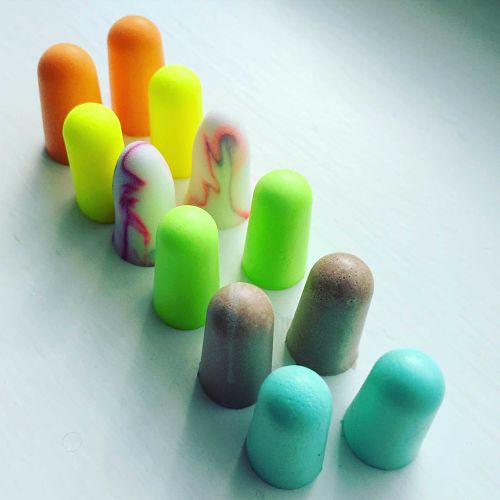
The Snore Blocking Soft Foam Sleeping Earplugs Pack – 6 carefully chosen earplugs for snore-blocking sleep
Struggling to sleep next to a snorer?
Try all 6 earplugs in our Snore Blocking Soft Foam Sleeping Earplugs Pack and find your perfect match. Want a bigger selection? Our Women’s Earplugs Sample Pack and Men’s Earplugs Sample Pack each contain 15 pairs.
This is Day 3 of our 6-day series reviewing every earplug in the Snore Blocking Soft Foam Sleeping Earplugs Pack.
About the Author
Anthony Cunningham – Health Writer & Editor
Anthony Cunningham, BA (Hons), MA, is a UK-based health writer and editor with over 20 years’ experience running Zoom Health, a trusted source for home health tests, preventive care, and wellness guidance. He creates clear, evidence-based articles using NHS, NICE, and WHO guidance. Where possible, content is reviewed by practising clinicians to enhance accuracy and reliability, helping readers make informed healthcare decisions.