
About This Article
About This Article: Zoom Health has supplied home health products and hearing protection to UK customers for nearly 20 years. This guide draws on our experience helping thousands of people improve their sleep, protect their hearing, and find the right earplug for their needs. Always consult a healthcare professional if you experience ear pain, hearing loss, or recurring ear problems.
Published: 24 April 2026 | By: Anthony Cunningham
Finding the right earplug for sleeping is one of the most common questions I am asked at Zoom Health – and one of the most personal. Sleep is uniquely demanding on an earplug. It needs to be comfortable enough to wear for seven or eight hours without causing soreness. It needs to stay in position through movement and position changes. It needs to attenuate the specific noise disrupting your sleep – whether that is a snoring partner, traffic, neighbours or general urban noise – without creating complete isolation that feels uncomfortable or prevents you hearing important sounds. And ideally it needs to be something you stop noticing within minutes of insertion. No single earplug does all of these things perfectly for every person – which is why understanding what makes a good sleeping earplug, and trying a few options, is the only reliable path to finding yours.
What Makes a Good Sleeping Earplug?
The qualities that matter most for sleep are different from those that matter in an industrial or concert context. In a factory, maximum attenuation is the priority and short-term discomfort is acceptable. In bed, you need a combination of four things working together: sufficient noise reduction for your specific sleep problem, low-pressure foam that does not cause soreness over many hours, a design that stays in position through movement, and materials that are safe for prolonged nightly skin contact. An earplug that scores highly on attenuation but fails on any of the other three will ultimately be abandoned – often at 3am when it is causing enough discomfort to wake you.
The SNR or NRR rating tells you the maximum attenuation available from a correctly fitted earplug. For most sleep noise problems – including moderate snoring, typical urban traffic and general neighbourhood noise – anything above 28 to 30dB is more than adequate. The instinct to reach for the highest-rated earplug is understandable but not always correct: a 37dB earplug that is uncomfortable after three hours is worth less than a 30dB earplug that you sleep in comfortably all night.
Types of Sleeping Earplugs
Sleeping earplugs fall into three main material categories, each with distinct characteristics worth understanding before choosing.
Foam earplugs are the most widely used for sleep. They compress for insertion, then expand to fill the ear canal, creating an acoustic seal. The key variables are foam density (which determines pressure and comfort), taper profile (which affects how evenly pressure is distributed and how well the earplug stays in position) and foam softness (which determines how noticeable the earplug is during extended wear). The best foam sleeping earplugs use super-soft, low-pressure foam that seals without pushing hard against the canal wall.
Wax earplugs are mouldable and shaped by hand to cover the canal entrance rather than being inserted inside it. They warm to body temperature and conform to the individual ear, creating a custom seal without any expansion pressure. They are particularly comfortable for side sleepers because the shallow seating position creates less pillow pressure discomfort than a deeply inserted foam earplug.
Silicone earplugs work similarly to wax – pressed over the canal opening and moulded to the ear – but use medical grade silicone rather than wax. They are more durable than wax and water-resistant, making them a good choice for people who swim as well as wanting a sleep solution.
Our Top Picks for Sleeping Earplugs
Top Pick: Mack’s Ultra Soft Foam Earplugs
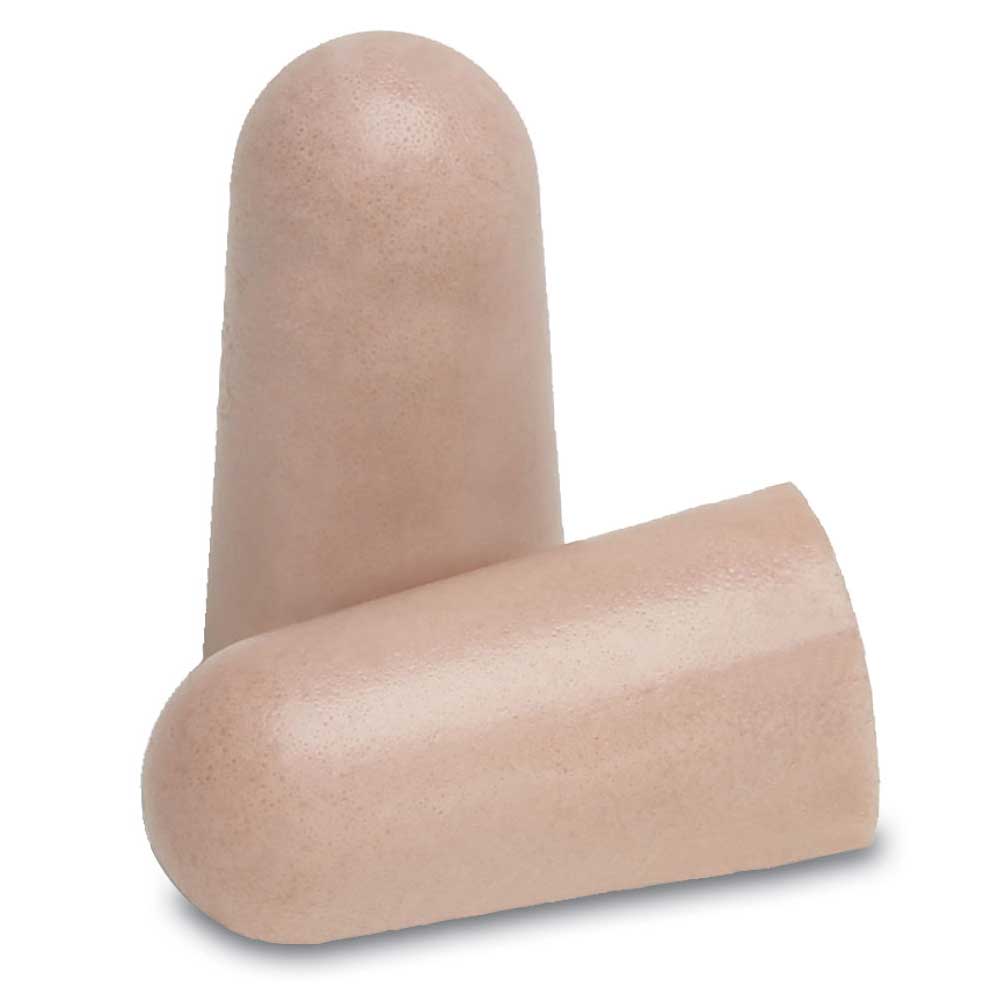
The Mack’s Ultra Soft Foam Earplugs are my first recommendation for most people starting out with sleep earplugs. They use Mack’s proprietary Ultra Soft Comfort Foam – a material that exerts significantly less outward pressure than standard polyurethane foam – and come in a discreet skin tone colour that feels appropriately unobtrusive in a bedroom context. At NRR 32dB they provide more than sufficient attenuation for most sleep noise problems, and the tapered design makes them manageable to insert even at 2am when you are half-asleep. Mack’s is the number one doctor-recommended earplug brand in the United States, and customers who find their way to the Ultra Soft tend to reorder in volume – which is the most reliable indicator that an earplug is genuinely working for sleep.
NRR 32dB | Foam | Tapered | Skin tone | Buy from Zoom Health
Runner-Up: Moldex Pura Fit Earplugs
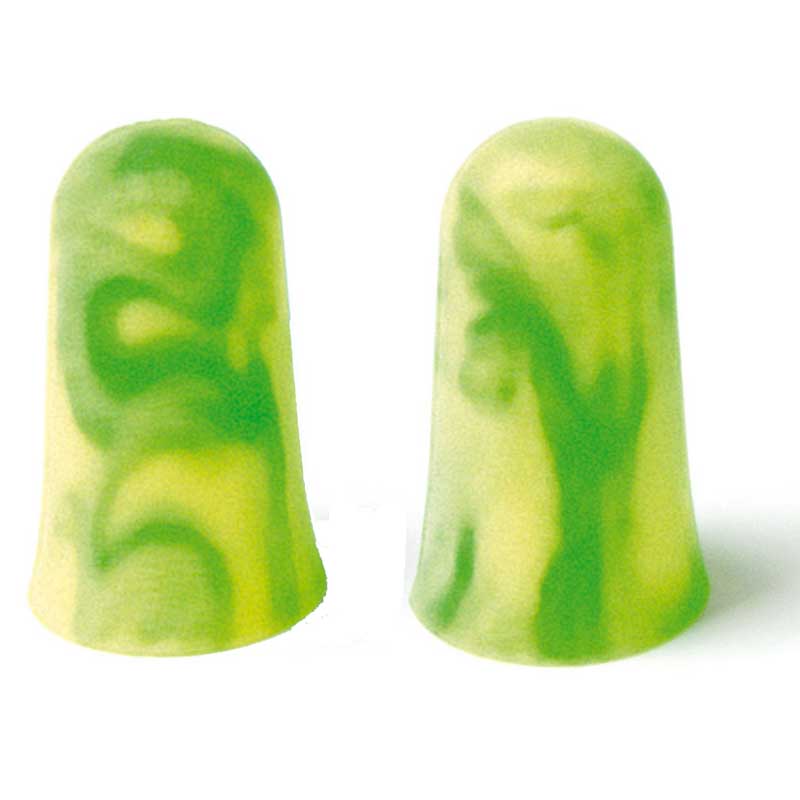
The Moldex Pura Fit Earplugs are the sleeping earplug I recommend when comfort over the full duration of the night is the priority. The super-soft, extra-light foam seals gently without pressure, and the tapered shape anchors the earplug within the canal – resisting the tendency of earplugs to migrate outward during sleep. For people who have previously found earplugs working loose during the night, this anchoring characteristic is the Pura Fit’s most valuable quality. The longer body also makes it easier to insert correctly in the dark, and the biodegradable paper pouch packaging is the most environmentally considered option in our range for regular nightly users. Rated at SNR 33dB.
SNR 33dB | Foam | Tapered | Biodegradable packaging | Buy from Zoom Health
Best Wax Option: Noise-x Natural Wax Earplugs
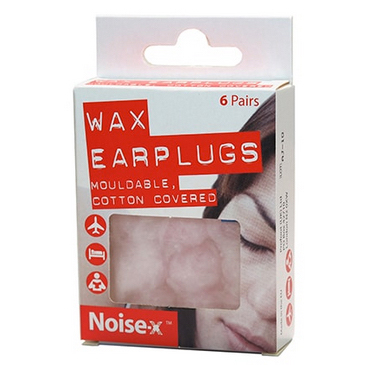
For side sleepers, or anyone who finds foam earplugs uncomfortable regardless of which brand they try, the Noise-x Natural Wax Earplugs offer a fundamentally different experience. Made from mouldable cotton-covered natural wax, they are pressed over the canal entrance and shaped to the individual ear – no insertion, no expansion pressure, no sensation of something sitting in the canal. The wax warms to body temperature and creates a custom seal that is particularly comfortable when a pillow is pressing against the ear. At SNR 20dB they are not the highest-rated option in our range, but for most bedroom noise environments that level of attenuation is entirely adequate – and an earplug you actually keep in all night at 20dB outperforms one you remove at 2am that was rated at 35dB. Supplied with a carry case.
SNR 20dB | Natural wax | Mouldable | Carry case included | Buy from Zoom Health
Best for Heavy Snoring: Moldex Spark Plugs
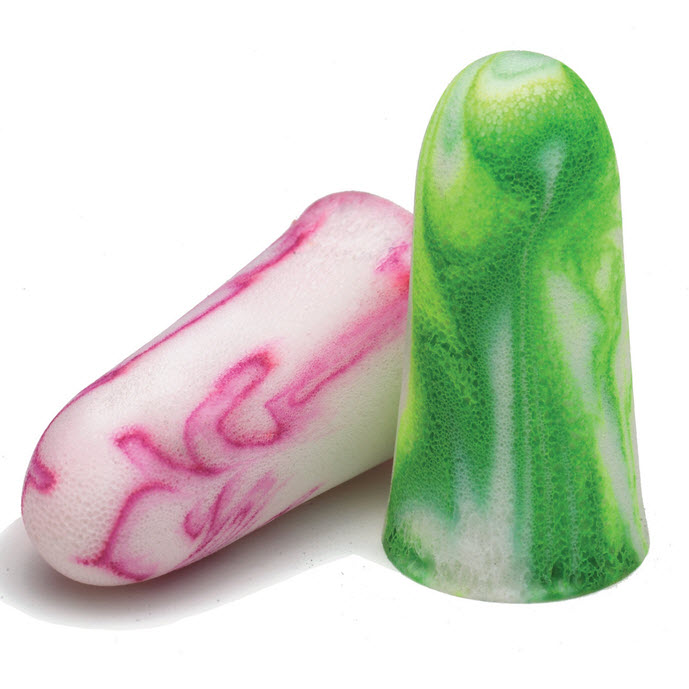
When the noise source is a heavy snorer rather than general ambient noise, the Moldex Spark Plugs are my consistent recommendation. They carry the highest independently tested SNR in the Moldex range at 35dB, they have been one of our most popular anti-snoring earplugs for many years, and the extra-soft low-pressure foam achieves that high attenuation without the pressure build-up that causes overnight discomfort. The 100% PVC-free certification also makes them the most skin-considerate high-attenuation option for nightly use. The distinctive coloured streaks make them easy to locate on a bedside table in the dark.
SNR 35dB | Foam | PVC-free | Anti-snoring | Buy from Zoom Health
How to Get the Best Results from Sleeping Earplugs
The single biggest variable in earplug performance is insertion technique, not the product itself. For foam earplugs: roll the earplug firmly between thumb and forefinger until it forms the thinnest, smoothest cylinder possible. With your opposite hand, reach over the top of your head and pull your ear gently upward and backward to straighten the canal. Insert the compressed earplug and hold it in place for 20 to 30 seconds while the foam expands. A properly sealed earplug creates a noticeable muffling of ambient sound as the seal forms. If the earplug springs back out before sealing, roll it more firmly and try again.
For side sleepers: position your ear slightly higher than the pillow surface if possible, which reduces the compressive force on the earplug. Low-pressure foam options – the Pura Fit, the Ultra Soft, the Spark Plugs – are all more comfortable than high-pressure alternatives when pillow contact is involved. Wax earplugs eliminate this issue entirely by sitting at the canal entrance rather than inside it.
Not Sure Which to Try First?
If you are new to sleeping earplugs and not sure where to start, our earplug sample packs give you the most efficient path to finding the right one. Rather than committing to a full pack of a single product and discovering after two nights that it is not quite right for you, the sample packs let you try multiple options back to back and identify your preference through direct comparison.
Our Women’s Earplugs Sample Pack contains 15 pairs including several of the options recommended above. Our Men’s Earplugs Sample Pack contains 15 pairs chosen with a different set of use cases and ear canal sizes in mind. And if snoring is your specific problem, our Snore Blocking Soft Foam Sleeping Earplugs Pack contains six earplugs specifically chosen for snore-blocking performance.
Find your perfect sleeping earplug
Try before you commit with our earplug sample packs: Women’s Pack | Men’s Pack | Snore Blocking Pack
About the Author
Anthony Cunningham – Health Writer & Editor
Anthony Cunningham, BA (Hons), MA, is a UK-based health writer and editor with over 20 years’ experience running Zoom Health, a trusted source for home health tests, preventive care, and wellness guidance. He creates clear, evidence-based articles using NHS, NICE, and WHO guidance. Where possible, content is reviewed by practising clinicians to enhance accuracy and reliability, helping readers make informed healthcare decisions.