
About This Article
Zoom Health has supplied home health tests to UK customers for nearly 20 years. This guide draws on our experience helping thousands of people monitor their health and understand the connection between vitamin D levels and neurological health. Always consult a healthcare professional for medical advice.
Published: 2022 | Last Updated: December 2025 | By: Anthony Cunningham
Contents
Researchers from Finland have found that a person’s risk of developing Parkinson’s disease as they grow older may increase if they have low levels of vitamin D. The study was published in the Archives of Neurology and it examined 3,000 people. The researchers found that those with the lowest vitamin D levels had a threefold risk of developing the disease.
Experts concluded that vitamin D could help to safeguard the nerve cells which are slowly lost by people who are suffering from the disease. Parkinson’s Disease results in symptoms such as slow movements and tremor, and it impacts upon many areas of the brain.
The charity Parkinson’s UK stated that further research was necessary to establish a firm link between Vitamin D and Parkinson’s disease.
The Finnish Study: 30-Year Research
The study was carried out over thirty years by Finland’s National Institute for Health and Welfare. Vitamin D levels were measured using blood samples taken from study participants between 1978 and 1980. These participants were then followed for thirty years to find out whether they went on to develop Parkinson’s Disease.
Results showed that members of the study with the lowest vitamin D levels were three times more likely to fall ill with Parkinson’s Disease when compared with those study members who had high vitamin D levels.
Key Research Finding
In a 30-year longitudinal study of 3,000 participants, those with the lowest vitamin D levels showed a threefold increased risk of developing Parkinson’s disease compared to those with adequate levels.
Vitamin D and Brain Health
Recent studies have shed light on vitamin D’s broader role in brain health, beyond its potential link to Parkinson’s disease. Research suggests that adequate vitamin D levels may support cognitive function and protect against age-related cognitive decline.
Some key findings include:
- Vitamin D receptors are found throughout the brain, particularly in areas involved in memory and learning.
- Low vitamin D levels have been associated with increased risk of dementia and Alzheimer’s disease.
- Vitamin D may help reduce inflammation and oxidative stress in the brain, two factors linked to neurodegenerative diseases.
While more research is needed to fully understand the relationship between vitamin D and brain health, these findings highlight the importance of maintaining optimal vitamin D levels throughout life. Regular blood tests can help you monitor your vitamin D status and work with your healthcare provider to address any deficiencies.
Remember, vitamin D isn’t just crucial for bone health – it may play a vital role in keeping your brain sharp and healthy as you age.
How Vitamin D Production Changes With Age
The majority of vitamin D is made by our bodies when our skin is exposed to sunlight. However, as we grow older our skin loses the ability to produce vitamin D in this way.
Vitamin D has long been recognised as an aid to calcium uptake and the formation of strong bones. However, recent research has shown that it also plays an important part in the development of the nervous system, and in the regulation of the immune system.
According to NHS guidance, everyone over the age of one year needs 10 micrograms of vitamin D daily, with particular attention needed during autumn and winter months when sunlight exposure is limited.
How to Test Your Vitamin D Levels
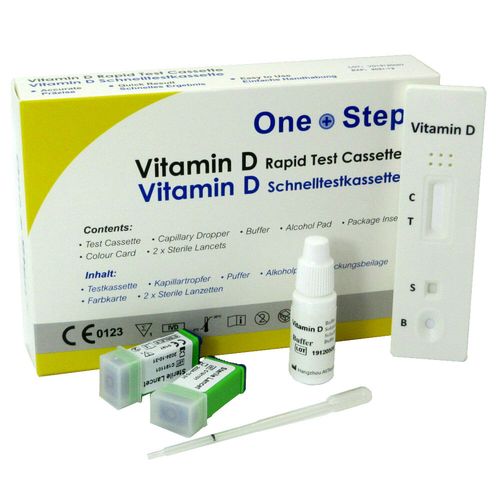
A home test kit for Vitamin D deficiency is a quick and convenient way of finding out if you should be concerned about your Vitamin D levels.
Understanding Your Test Results
Home vitamin D tests measure the level of 25-hydroxyvitamin D in your blood, which is the most accurate indicator of your vitamin D status. Results typically show:
- Deficient: Below 25 nmol/L – requires supplementation
- Insufficient: 25-50 nmol/L – may benefit from supplements
- Adequate: 50-125 nmol/L – healthy range
- High: Above 125 nmol/L – discuss with your GP
Take Action: Testing your vitamin D levels at home gives you the information you need to make informed decisions about supplementation and speak confidently with your GP about your results.
What Customers Say
★★★★★ Sam J – October 2015
“Test kit arrived within 24 hours of ordering. Instructions for the test were easy to follow and clear. Test gave me a positive result, verifying what I had expected. Now going to book an appointment with my GP to follow up.”
★★★★★ L J B – July 2015
“Test kit arrived quickly and everything needed was in the package. Instructions are fairly straightforward. Results of the test were later confirmed after a blood test at my local GP. Would buy this kit again.”
★★★★★ Paul – April 2018
“Very easy to use and a small price to pay for peace of mind. I think I’ll do it once a year from now on.”
Maintaining Healthy Vitamin D
Although sunlight is the main source of vitamin D it can also be found in foods such as milk, cereals and oily fish. In addition, if you wish to boost your intake of vitamin D there are also a number of supplements available on the market. We recommend Vitamin D3 as an excellent choice of supplement. Vitabiotics Ultra Vitamin D is also a good choice.
Natural Sources of Vitamin D
Food Sources Rich in Vitamin D
- Oily fish – salmon, mackerel, sardines, herring
- Fortified foods – breakfast cereals, spreads, milk alternatives
- Egg yolks – particularly from hens fed vitamin D-enriched feed
- Red meat – beef, lamb (in moderation)
- Mushrooms – especially those exposed to UV light
Safe Sun Exposure
In the UK, most people can make sufficient vitamin D from sunlight exposure between late March and September. According to NHS advice, short periods of sun exposure during the middle of the day are most effective, but it’s important to cover up or use sunscreen before your skin begins to redden or burn.
During autumn and winter months, the sun isn’t strong enough in the UK for our bodies to make vitamin D, which is why supplementation becomes particularly important during these months.
Who Should Get Tested
While vitamin D deficiency can affect anyone, certain groups are at higher risk and should consider regular testing:
Higher Risk Groups
- Adults over 65: Reduced skin production of vitamin D and often less time outdoors
- People with limited sun exposure: Those who work indoors, cover their skin, or stay inside frequently
- Darker skin tones: Higher melanin levels reduce vitamin D production from sunlight
- People with malabsorption conditions: Crohn’s disease, coeliac disease, or those who have had gastric surgery
- Those with family history: Family history of Parkinson’s disease or osteoporosis
- Pregnant or breastfeeding women: Increased vitamin D requirements during these periods
The NICE guidance on vitamin D recommends that these groups should consider year-round supplementation and periodic testing to ensure adequate levels.
Sleep Problems, Depression and Falls
For those who have already been diagnosed with Parkinson’s Disease, the risk of being deficient in Vitamin D is a cause for concern still. A study published in 2019 suggested that a lack of this vitamin could lead to a greater tendency to fall over, disturbed sleep problems, anxiety, as well as depression in people. Because of these risks, those with the disease should consider ways to avoid a Vitamin D deficiency.
When to See Your GP
Contact your healthcare provider if:
- Your home test shows vitamin D deficiency
- You experience symptoms such as bone pain, muscle weakness, or frequent falls
- You have a family history of Parkinson’s disease or other neurological conditions
- You’re considering high-dose supplementation (always consult a doctor first)
About the Author
Anthony Cunningham – Health Writer & Editor
Anthony Cunningham, BA (Hons), MA, is a UK-based health writer and editor with over 20 years’ experience running Zoom Health, a trusted source for home health tests, preventive care, and wellness guidance. He creates clear, evidence-based articles using NHS, NICE, and WHO guidance. Where possible, content is reviewed by practising clinicians to enhance accuracy and reliability, helping readers make informed healthcare decisions.
You May Also Like
Explore more articles on vitamin health and neurological wellbeing: