About This Article
Zoom Health has supplied home health tests and monitoring equipment to UK customers for nearly 20 years. This guide draws on our experience helping thousands of people monitor their blood pressure and understand cardiovascular health. Always consult a healthcare professional for medical advice.
Published: October 2024 | Last Updated: November 2025 | By: Anthony Cunningham
Contents
Measuring your blood pressure at home can provide you and your doctor with valuable information about your health. Home monitoring helps track day-to-day blood pressure fluctuations and measure the effects of medications and lifestyle changes. This allows for more personalised treatment plans.
When used correctly alongside professional care, home monitoring enables patients to take control of managing their blood pressure. However, for home monitoring to be useful, it’s vital to choose an accurate, easy-to-use monitor and measure blood pressure correctly.
This guide explains who can benefit from home monitoring, how to select the right equipment, and tips for reliable at-home readings.
Who Can Benefit from Home Blood Pressure Monitoring?
Home monitoring provides a more complete picture of someone’s true blood pressure than occasional clinic readings. Research shows home readings are often lower than at the doctor’s office due to reduced stress.
This “white coat effect” means clinic tests alone may overestimate blood pressure in some patients. Conversely, some people have normal readings at the clinic but elevated pressure at home—a condition called “masked hypertension” that home monitoring can help detect.
Home monitoring also allows patients to check blood pressure more frequently. This helps identify trends over time and assess health interventions.
Patients Who Could Benefit
- Those diagnosed with hypertension needing regular monitoring
- Individuals with suspected “white coat syndrome”
- People with fluctuating blood pressure readings
- Those starting new blood pressure medications
- Patients making intensive lifestyle changes like diet and exercise
- People at higher risk (family history, diabetes, kidney disease)
However, home monitoring may cause anxiety for some people. Discuss with your doctor if it’s right for you. There are also some health conditions where home monitoring is not recommended, such as arrhythmias or pregnancy, where specialist assessment is needed.
Choosing the Right Home Blood Pressure Monitor
Several types of blood pressure monitors are available for home use. To get accurate, reliable results, follow these essential guidelines:
Opt for a Clinically Validated Monitor
Check your monitor is independently tested and approved for accuracy. The British and Irish Hypertension Society provides lists of validated arm-cuff monitors and professional office monitors. Using a clinically validated device ensures your results are trustworthy.
Select an Automatic Upper Arm Monitor
Fully automatic arm cuff monitors are the easiest to use accurately at home. They inflate the cuff and use sensors to detect blood flow. Avoid wrist or finger monitors as they are less reliable and more prone to positioning errors.
Use the Correct Cuff Size
Most monitors come with a medium cuff, but you may need a different size for accurate readings. Measure your arm circumference midway between shoulder and elbow to see if you need a small, medium, or large cuff. Using the wrong size can significantly impact results—an oversized cuff may give falsely low readings, whilst an undersized cuff may read too high.
Consider Budget but Don’t Skimp on Quality
Simple but validated monitors start around £20. More expensive machines typically include extra features like data storage, Bluetooth connectivity, or multi-user memory—useful but not essential. Focus on finding a clinically approved monitor within your budget.
Learn Proper Technique
Carefully read the instructions and have your doctor or nurse check your process for the first use. Learning proper positioning and use is vital for accurate readings at home.
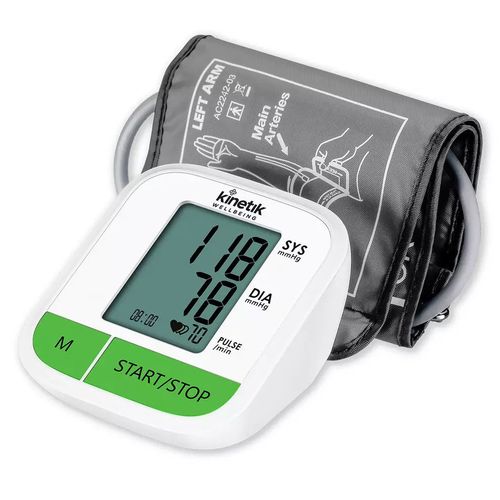
Take Action: Monitor your blood pressure at home with a clinically validated device. The Kinetik Wellbeing Automatic Blood Pressure Monitor provides accurate, easy-to-read results with a simple one-touch operation—ideal for regular home monitoring.
Tips for Reliable At-Home Blood Pressure Measurement
With the right validated monitor and proper technique, you can reliably measure your blood pressure at home. The NHS recommends following these guidelines for accurate readings:
Before Taking a Reading
- Sit quietly for 5 minutes before starting
- Avoid caffeine, smoking, exercise, and big meals 30 minutes prior
- Empty your bladder—a full bladder can raise readings
- Remove tight clothing from your upper arm
During the Reading
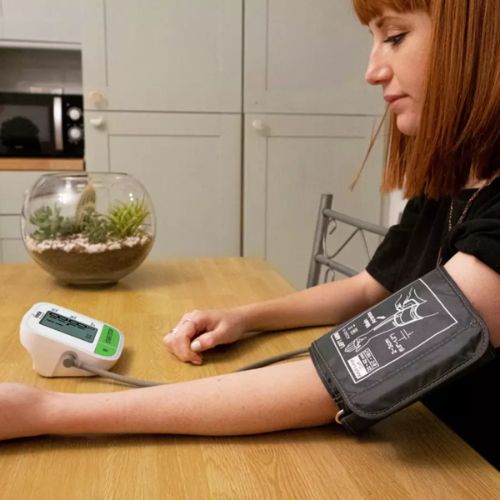
- Sit with back straight and feet flat on the floor
- Rest your arm on a table at heart level
- Keep your arm and the cuff completely still during measurement
- Don’t talk or move during the reading
- Take 2-3 readings per session, waiting 1-2 minutes between each
- Record the average of the readings
For Best Results
- Take readings at the same time each day for consistency
- Measure both morning and evening for a complete daily view
- Keep a written log or use your monitor’s memory function
- Compare your figures to your target blood pressure range
- Flag unusually high or low results for your doctor
- Calibrate your monitor every 1-2 years as recommended
Accurately monitoring at home allows you to spot trends and provide your doctor with helpful data. However, remember to still attend regular clinic check-ups as well. Home monitoring supplements, rather than replaces, professional medical care.
Common Mistakes to Avoid
Even with a quality monitor, poor technique can lead to inaccurate readings. Here are the most common errors to watch out for:
⚠️ Positioning Errors
- Arm too low or too high: Your arm should be at heart level. Every 2cm difference can affect readings by approximately 2mmHg.
- Unsupported arm: Holding your arm up without support can increase readings by 10% or more.
- Legs crossed: This can raise systolic pressure by 2-8mmHg.
- Back unsupported: Slouching or leaning forward can affect accuracy.
⚠️ Timing and Preparation Errors
- Measuring immediately after activity: Wait at least 30 minutes after exercise.
- Taking only one reading: Single readings can be misleading. Always take 2-3 and average them.
- Measuring at different times daily: Blood pressure naturally fluctuates throughout the day.
- Not resting beforehand: Skip the 5-minute rest period and readings will be artificially high.
⚠️ Equipment Errors
- Wrong cuff size: This is one of the most common causes of inaccurate readings.
- Cuff over clothing: Always place the cuff on bare skin or very thin fabric.
- Using an uncalibrated monitor: Monitors can drift over time and need checking.
- Low batteries: Replace batteries regularly to ensure consistent performance.
Interpreting Your At-Home Blood Pressure Readings
Use a blood pressure log to record your at-home results chronologically. This helps you and your doctor assess progress over time and identify patterns.
Blood pressure is measured in millimetres of mercury (mmHg) and recorded as two numbers:
- Systolic pressure (first number): Pressure when your heart beats
- Diastolic pressure (second number): Pressure when your heart rests between beats
Blood Pressure Categories (NHS Guidelines)
Optimal: Less than 120/80mmHg
This is considered ideal for adults. Maintain healthy lifestyle habits to keep your blood pressure in this range.
Elevated: 120-129/80-84mmHg
Still within normal range but moving upward. A good time to focus on prevention through diet, exercise, and stress management.
Stage 1 Hypertension: 130-139/85-89mmHg
Lifestyle changes are strongly recommended. Your doctor may suggest medication depending on other risk factors (age, diabetes, family history).
Stage 2 Hypertension: 140/90mmHg or higher
Medication is typically needed alongside lifestyle changes. Untreated high blood pressure significantly increases risk of heart attack, stroke, and kidney disease.
Hypertensive Crisis: 180/120mmHg or higher
This is a medical emergency. If you get this reading twice in a row, 5 minutes apart, contact emergency services immediately (dial 999).
However, target ranges can vary by individual based on age, other health conditions, and medications. Always discuss your specific results with your doctor rather than self-diagnosing. Sudden spikes or dips may indicate problems requiring professional assessment.
Some monitors come with built-in colour indicators for different blood pressure zones. Whilst these can be helpful, don’t overly rely on them—check your readings against your doctor’s personalised advice instead.
When to Contact Your Doctor
Home monitoring is a valuable tool, but it’s important to know when to seek professional advice. Contact your doctor or healthcare provider if:
Seek Immediate Medical Attention If:
- Your reading is 180/120mmHg or higher on two occasions 5 minutes apart
- You experience severe headache, chest pain, or shortness of breath with high readings
- You have visual disturbances, dizziness, or confusion alongside elevated pressure
- You notice blood in your urine or severe nosebleeds
Contact Your Doctor Soon If:
- Your readings are consistently higher than your target range
- You notice a sudden change in your usual blood pressure pattern
- Your readings are unusually low (below 90/60mmHg) with symptoms like dizziness
- You’re experiencing side effects from blood pressure medication
- Your home readings differ significantly from clinic readings
- You’re uncertain how to interpret your results
Remember, home monitoring should complement, not replace, regular medical check-ups. Most people with hypertension should see their GP or practice nurse at least annually, or more frequently if adjusting medications.
Benefits and Limitations of Home Blood Pressure Monitoring
When used correctly alongside professional care, home monitoring provides many advantages for managing hypertension:
Benefits
- Identifies white coat syndrome: Detects artificially high clinic readings caused by anxiety
- Detects masked hypertension: Reveals elevated pressure that appears normal at the clinic
- Allows frequent, regular measurement: Provides more data points than occasional clinic visits
- Monitors effects of interventions: See how medications, diet, and exercise impact your pressure
- Empowers patients in self-care: Increases engagement with your health management
- Reduces clinical workload: Fewer unnecessary appointments whilst maintaining oversight
- Minimises treatment costs: Early detection and better control reduce long-term complications
- Improves medication adherence: Seeing the impact of tablets encourages consistent use
Limitations
- Can increase anxiety in some: Frequent monitoring may cause stress for worried individuals
- Requires proper technique: Inaccurate readings from poor method undermine the benefits
- Needs regular calibration: Monitors can drift over time without professional checking
- May miss night-time rises: Nocturnal hypertension requires 24-hour ambulatory monitoring
- Oversimplifies complex issues: Blood pressure is just one cardiovascular risk factor
- Can foster self-diagnosis: Professional interpretation remains essential
- Not suitable for everyone: Certain conditions require specialist monitoring only
Overall, home monitoring enhances blood pressure control when used to complement regular check-ups. The NICE guidelines recommend home monitoring for confirming hypertension diagnosis and ongoing management. Discuss incorporating home measurement into your hypertension management plan with your healthcare provider.
Helpful Resources for Home Monitoring
Home monitoring places diagnostic power in patients’ hands. Make the most of this opportunity with these trusted resources:
- Blood Pressure UK’s blood pressure log template to track and record your results
- NHS blood pressure information and guidance
- Instructional videos on proper measuring technique (check your monitor manufacturer’s website)
- Lifestyle change guides to lower your blood pressure through diet, exercise, sleep, and stress management
Monitoring at home is most effective as part of a holistic approach to controlling your blood pressure. Access these resources to make it a valuable addition to your treatment plan.
In Summary:
Home blood pressure monitoring provides patients and doctors greater insight when done properly. Select a suitable validated monitor, learn correct technique, and integrate readings into your overall care. Used correctly alongside medical advice, home monitoring enables you to take charge of your cardiovascular health.
About the Author
Anthony Cunningham – Health Writer & Editor
Anthony Cunningham, BA (Hons), MA, is a UK-based health writer and editor with over 20 years’ experience running Zoom Health, a trusted source for home health tests, preventive care, and wellness guidance. He creates clear, evidence-based articles using NHS, NICE, and WHO guidance. Where possible, content is reviewed by practising clinicians to enhance accuracy and reliability, helping readers make informed healthcare decisions.
You May Also Like
Explore more articles on cardiovascular health and home monitoring: