About This Article
About This Article: Zoom Health has supplied home health products and hearing protection to UK customers for nearly 20 years. This guide draws on our experience helping thousands of people improve their sleep, protect their hearing, and find the right earplug for their needs. Always consult a healthcare professional if you experience ear pain, hearing loss, or recurring ear problems.
Published: 21 March 2026 | By: Anthony Cunningham
For thirteen days this series has been about foam. Thirteen different earplugs, thirteen variations on the same fundamental material – each with its own shape, density, size and design philosophy, but all working on the same basic principle of compressed foam expanding inside the ear canal to create a seal. Today on Day 14 that changes completely. The Hush Plugz Silicone Earplugs are made from medical grade silicone – a fundamentally different material that behaves differently, feels different, and suits a different set of use cases from anything else in the Women’s Earplugs Sample Pack. Understanding those differences is the key to knowing whether silicone might be the earplug material you have been looking for all along. The Hush Plugz are also included in our Men’s Earplugs Sample Pack.
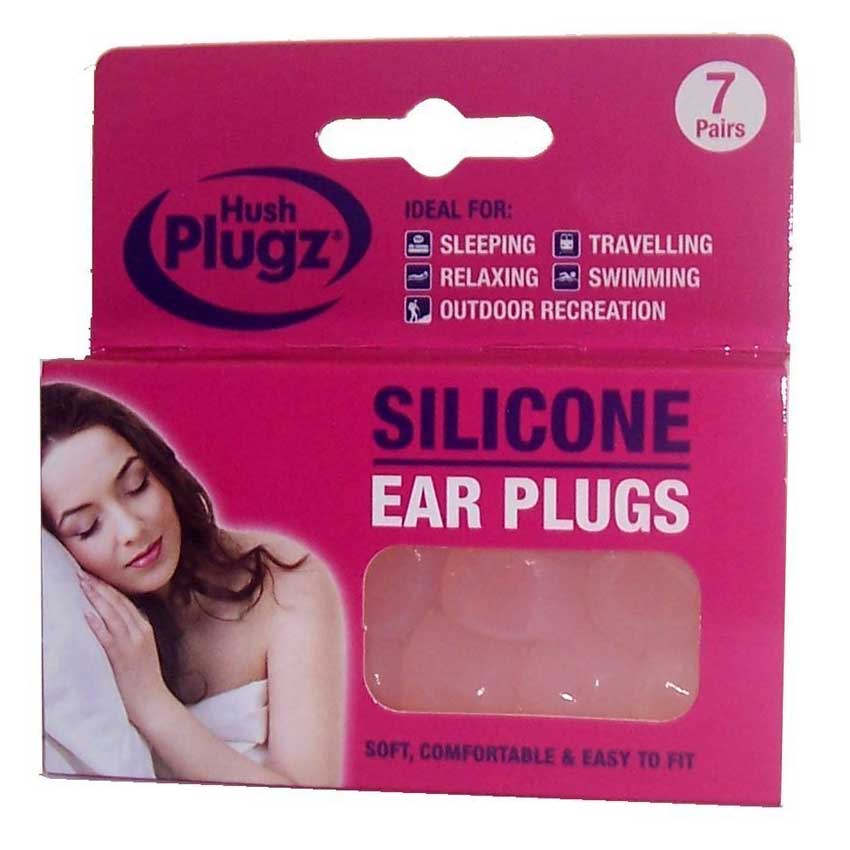
Hush Plugz Silicone Earplugs – available from Zoom Health
Buy Hush Plugz Silicone Earplugs
Available individually from Zoom Health: Hush Plugz Silicone Earplugs – 7 Pairs. Or try them alongside 14 other pairs in our Women’s Earplugs Sample Pack.
Silicone vs Foam: The Fundamental Differences
Foam earplugs work by compression and expansion – you roll them down, insert them, and the foam gradually fills the space around it. Silicone earplugs work differently. Rather than expanding to fill the canal, they are moulded into a shape that creates a seal by conforming to the outer ear canal opening. The Hush Plugz are pressed gently into the entrance of the ear canal and shaped to cover it, rather than being pushed deep inside.
This difference in mechanism has several practical consequences. First, insertion is significantly easier for many people – there is no rolling technique to master, no timing the insertion before expansion begins, no need to pull the ear upward and backward to straighten the canal. You simply warm the silicone slightly between your fingers, press it gently over the ear canal opening, and mould it into a comfortable shape. Second, because the earplug sits at the canal entrance rather than deep inside it, many people find silicone earplugs more comfortable during sleep – there is no sensation of something sitting deep in the canal when pressure is applied, which makes them particularly suitable for side sleepers who find foam earplugs uncomfortable against a pillow. Third, removal is straightforward and gradual, with no risk of the sudden pressure release that can occasionally occur when removing a deeply-seated foam earplug.
Medical Grade Silicone: What That Means
The Hush Plugz are manufactured from pure medical grade silicone – the same classification of material used in medical devices and implants. Medical grade silicone is rigorously tested for biocompatibility, meaning it is confirmed to be non-toxic, non-irritating and safe for extended contact with skin and mucous membranes. For anyone who has experienced irritation, redness or soreness from foam earplugs – whether from the foam material itself or from chemical residues on the surface – medical grade silicone is one of the most skin-friendly alternatives available. The non-sticky formula of the Hush Plugz also means they do not pull at the delicate skin around the ear canal during removal, which foam earplugs can occasionally do.
An Unexpected Use Case: Swimming
One advantage silicone earplugs have over foam that none of the first thirteen days in this series could offer is water resistance. The Hush Plugz are suitable for swimming and can help reduce the risk of ear infection – commonly known as swimmer’s ear – by preventing water entering the ear canal. Foam earplugs absorb water and become ineffective almost immediately when submerged, making them unsuitable for any water-based activity. If you swim regularly and have been looking for an earplug that works both in and out of the pool, the Hush Plugz offer something genuinely unique in the sample pack.
They are also noted as helpful for reducing ear discomfort during hiking and cycling – activities where wind or air pressure changes can cause mild ear discomfort – which further broadens their practical range beyond what any foam earplug in the collection can match.
Reusability and Durability
Silicone earplugs are inherently more durable than foam. Where foam earplugs degrade with repeated compression and should be replaced every few days with regular use, silicone earplugs can be cleaned and reused many more times before needing replacement. The Hush Plugz come with a durable pocket-sized carry case that makes keeping them clean and protected between uses straightforward – a practical detail that foam earplug packaging rarely offers. For frequent travellers or anyone who wants a longer-lasting earplug solution rather than a continually replenishing supply of disposables, this durability is a meaningful advantage.
Insertion: A Different Technique to Learn
Because the silicone insertion technique is so different from foam, it is worth walking through it clearly. Warm the earplug briefly between your fingers to soften the silicone slightly – this makes it more pliable and easier to mould. Do not roll it into a cylinder as you would a foam earplug. Instead, flatten it slightly and press it gently over the opening of the ear canal, then use your fingertip to press the edges around the canal rim to create a seal. The earplug should sit flush against the ear rather than protruding. A gentle press and hold for a few seconds allows the silicone to conform to the shape of your ear. The included fitting instructions with the Hush Plugz walk through this process with diagrams, and I would encourage anyone new to silicone earplugs to follow them carefully – the technique feels unfamiliar at first but becomes second nature quickly.
Who Are the Hush Plugz Best Suited To?
The Hush Plugz are the earplug I recommend most readily to three groups of people. First, those who have tried multiple foam earplugs and found them all uncomfortable – the fundamentally different insertion mechanism and in-ear feel of silicone resolves many of the discomfort sources that foam creates. Second, side sleepers who find that earplug pressure against a pillow disrupts their sleep – the shallow seating position of silicone earplugs makes them significantly more pillow-friendly than foam alternatives. Third, anyone who swims or wants a single earplug solution that works across both water and non-water environments.
Where foam still has the advantage is in raw attenuation ratings – the highest SNR foam earplugs in this pack, such as the Howard Leight MAX and the 3M 1100, deliver higher measured noise reduction than most silicone earplugs. If maximum attenuation in the loudest environments is the priority, foam remains the stronger performer. For sleep, travel, studying and general noise reduction, the difference is rarely significant in practice.
My Verdict
The Hush Plugz Silicone Earplugs bring something genuinely different to the sample pack – a material change that opens up new possibilities for people who have not found their ideal earplug among the foam options. Medical grade silicone, easy insertion, pillow-friendly shallow seating, water resistance and exceptional durability make them a compelling alternative to everything covered in Days 1 to 13. If you have worked through thirteen foam earplugs without finding one that feels truly right, Day 14 may well be the one that changes things. Both our Women’s Earplugs Sample Pack and our Men’s Earplugs Sample Pack include the Hush Plugz to ensure that silicone gets a fair trial alongside the foam options.
Tomorrow on Day 15 – the final post in the series – I will be covering the Noise-x Natural Wax Earplugs: the third and final material in the pack, and one that has been used for noise reduction for centuries. A fitting way to close out fifteen days of earplug reviews.
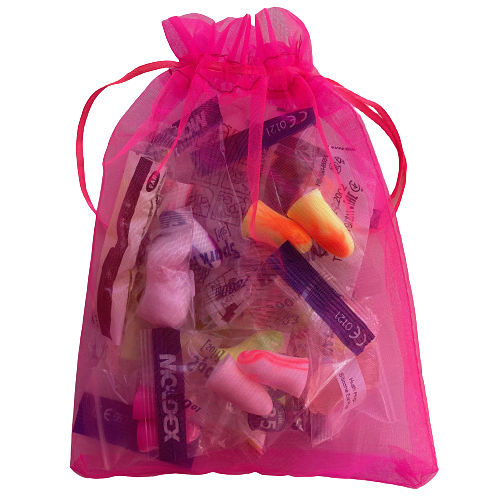
The Women’s Earplugs Sample Pack – 15 different pairs to help you find your perfect match
Not sure which earplug is right for you?
Try all 15 pairs in our Women’s Earplugs Sample Pack and find your perfect match.
This is Day 14 of our 15-day series reviewing every earplug in the Women’s Earplugs Sample Pack.
About the Author
Anthony Cunningham – Health Writer & Editor
Anthony Cunningham, BA (Hons), MA, is a UK-based health writer and editor with over 20 years’ experience running Zoom Health, a trusted source for home health tests, preventive care, and wellness guidance. He creates clear, evidence-based articles using NHS, NICE, and WHO guidance. Where possible, content is reviewed by practising clinicians to enhance accuracy and reliability, helping readers make informed healthcare decisions.