About This Article
About This Article: Zoom Health has supplied home health products and hearing protection to UK customers for nearly 20 years. This guide draws on our experience helping thousands of people improve their sleep, protect their hearing, and find the right earplug for their needs. Always consult a healthcare professional if you experience ear pain, hearing loss, or recurring ear problems.
Published: 23 March 2026 | By: Anthony Cunningham
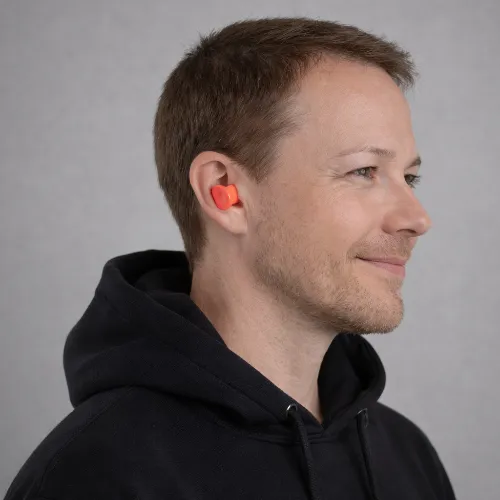
Day 6 brings us to what Howard Leight describes as the world’s most-used polyurethane foam earplug: the Howard Leight MAX Foam Earplugs. That is a significant claim, but the MAX has earned it through decades of deployment in workplaces, hearing conservation programmes and everyday use across the globe. At SNR 37dB it matches the 3M 1100 as the joint highest-rated earplug in the Men’s Earplugs Sample Pack, but with a softer foam and a unique bell shape that sets it apart from everything else we have covered so far. I explored the bell shape and sleep use in detail in Day 7 of the women’s series – today I want to focus on a use case that comes up constantly among men: loud live music, concerts and festivals, where hearing damage accumulates faster than almost anywhere else outside a factory floor.
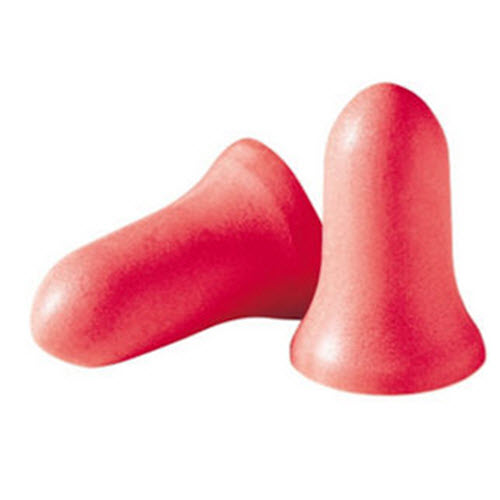
Howard Leight MAX Foam Earplugs – available from Zoom Health
Buy Howard Leight MAX Foam Earplugs
Available individually from Zoom Health: Howard Leight MAX Foam Earplugs. Or try them alongside 14 other pairs in our Men’s Earplugs Sample Pack.
Concert Noise: The Hearing Risk Most Men Ignore
A typical rock or pop concert front-of-house mixing position runs at around 100 to 105dB. Festival main stages can exceed 110dB during peak passages. Nightclub environments regularly sustain 95 to 100dB across a full evening. These are not borderline noise levels – they are levels at which the UK’s Control of Noise at Work Regulations would mandate hearing protection for any employee in that environment, and at which unprotected exposure causes measurable cochlear damage within minutes.
The challenge for concertgoers is that hearing damage from music exposure feels different from industrial noise damage. There is no pain signal, no obvious warning. The ringing in the ears after a loud gig – temporary tinnitus – is itself a sign of short-term cochlear stress, and repeated episodes of that stress accumulate into permanent hearing loss over years. By the time the damage becomes noticeable as reduced high-frequency hearing or persistent tinnitus, a significant proportion of it is irreversible. Hearing protection at live music events is not overcaution – it is the same rational response as wearing ear defenders in a workshop.
Why the MAX Is Particularly Well Suited to Live Music
At SNR 37dB, the MAX reduces a 105dB concert environment to approximately 68dB at the ear – a level at which you can listen for hours without cochlear stress while still hearing the music clearly. This is the critical point about using high-attenuation earplugs at live music events that surprises most people: reducing volume by 37dB does not make the music inaudible or muffled in the way that muffling a sound source does. The music remains full and present – it is simply quieter, in the same way that turning a volume knob down preserves the quality of what you are hearing. The MAX’s softer polyurethane foam also attenuates more evenly across frequencies than some harder foam alternatives, which helps preserve the balance of the music rather than simply cutting the top end.
The bell shape’s resistance to backing out of the ear canal is also specifically useful in a live music context. A crowded venue, physical movement, dancing, sweating – these are conditions that dislodge loosely seated earplugs more readily than a static office environment. The MAX’s contoured bell profile anchors itself against the ear canal entrance in a way that cylindrical earplugs do not, which means it stays put when conditions are lively rather than working loose at the moments it matters most.
SNR 37dB: Joint Highest in the Pack
The MAX shares the SNR 37dB top rating in the men’s pack with the 3M 1100, but the two achieve it very differently. The 1100 uses firmer foam that inserts easily in working conditions but feels more pressurised during extended wear. The MAX uses softer polyurethane foam that is more comfortable over long periods but requires more careful insertion technique to seat correctly – a detail one of our customers noted honestly, describing the MAX as occasionally difficult to place accurately in the canal. That feedback is fair and worth acknowledging. The MAX rewards correct technique more than the 1100 does – but the comfort payoff for getting it right is considerable, particularly for overnight or multi-hour use.
The Bell Shape: How It Differs from Everything Else in the Pack
Every other foam earplug in this series so far has been cylindrical, tapered or T-shaped. The MAX is bell-shaped – wider at the outer end than the tip. This means it sits differently in the ear canal from the moment of insertion, with the wider flange resting against the canal entrance rather than being pushed past it. The practical effect is twofold: insertion is guided more naturally by the flare finding the canal rim, and once seated the wider outer diameter creates a mechanical resistance to the earplug being pushed out by the ear canal’s natural tendency to expel foreign objects. For men who regularly wake up with a foam earplug on the pillow rather than in their ear, the bell shape is worth trying specifically for this reason.
The Howard Leight Range in the Men’s Pack: A Summary
With the MAX covered today, we have now reviewed all three Howard Leight earplugs in the pack. The Laser Lite is the handling specialist – T-shaped, easier to insert, ideal for men who have struggled with standard earplugs. The Max Lite is the motorcycling and narrower-canal specialist – smaller diameter, low-pressure, highest-rated in its category. The MAX is the maximum attenuation all-rounder – bell-shaped, softer foam, joint highest SNR in the pack, resistant to backing out, suited to concerts, industrial environments and heavy sleep use. Three earplugs from one brand, each solving a different problem. That breadth is part of why Howard Leight dominates the professional hearing protection market as comprehensively as it does.
My Verdict
The Howard Leight MAX is the earplug I reach for when someone tells me they attend live music regularly and have not yet started protecting their hearing. The combination of SNR 37dB attenuation, bell-shape stability, softer long-wear foam and a track record stretching across decades of industrial deployment makes it one of the most dependable earplugs in the entire Men’s Earplugs Sample Pack. Take the time to insert it correctly – the seal makes all the difference – and it will not disappoint. It is also included in our Women’s Earplugs Sample Pack.
Tomorrow on Day 7 the series moves into Moldex territory for the first time, with the Moldex Contours Small – an anatomically shaped earplug that takes a completely different approach to fit from anything covered so far.
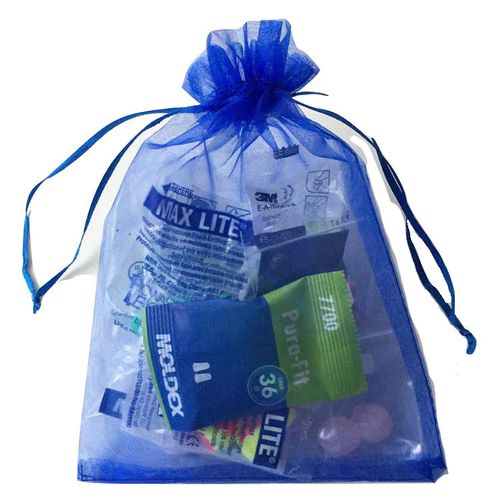
The Men’s Earplugs Sample Pack – 15 different pairs to help you find your perfect match
Not sure which earplug is right for you?
Try all 15 pairs in our Men’s Earplugs Sample Pack and find your perfect match.
This is Day 6 of our 15-day series reviewing every earplug in the Men’s Earplugs Sample Pack.
About the Author
Anthony Cunningham – Health Writer & Editor
Anthony Cunningham, BA (Hons), MA, is a UK-based health writer and editor with over 20 years’ experience running Zoom Health, a trusted source for home health tests, preventive care, and wellness guidance. He creates clear, evidence-based articles using NHS, NICE, and WHO guidance. Where possible, content is reviewed by practising clinicians to enhance accuracy and reliability, helping readers make informed healthcare decisions.