About This Article: Zoom Health has supplied home health tests to UK customers for nearly 20 years. This guide draws on our experience helping thousands of people understand their blood type and its medical significance. Always consult a healthcare professional for medical advice.
Published: January 2015 | Last Updated: January 30, 2026 | By: Anthony Cunningham
Contents
There are four major blood types: A, B, AB and O. Knowing your blood type can help you understand the foods you should eat and the medicines you should take.
What is AB+ Blood Type?
The ABO system is a classification of blood determined by the presence (or absence) of certain antigens on the surface of red blood cells.
People with type A have A antigens on their red blood cells, people with type B have B antigens, people with type AB have both A and B antigens, and people with type O have neither A nor B antigens.
This blood type contains both A and B antigens on the red blood cells, as well as the RhD antigen which is the “positive” factor. People with AB+ blood are considered universal recipients – they can receive red blood cells from any blood group in an emergency situation.
Why is AB+ Blood So Rare?
The rarity of AB+ blood arises because inheriting the A and B genes from both parents is quite uncommon. Worldwide, the AB+ blood type is the rarest, occurring in just about 3.4% of the population.
According to NHS Blood and Transplant, just 2% of UK blood donors have AB positive blood type. This makes it one of the rarest blood types in the country.
20 Key Facts About AB+ Blood
Here’s our list of 20(ish) things you may or may not know about this particular blood type:
- Worldwide, the AB+ blood type is the rarest, occurring in just about 3.4% of the population.
- Just 2% of UK blood donors have AB positive blood type. This makes it one of the rarest blood types in the country.
- This blood type contains both A and B antigens on the red blood cells, as well as the RhD antigen which is the “positive” factor.
- People with AB+ blood are considered universal recipients – they can receive red blood cells from any blood group in an emergency situation.
- Individuals with AB+ can only donate red blood cells to other AB+ individuals, making them universal plasma donors.
- The rarity of AB+ blood arises because inheriting the A and B genes from both parents is quite uncommon.
- The demand for AB+ blood often exceeds supply, so donations are always welcomed. Find out more about donating blood in the UK.
- AB+ shares the universal recipient ability with just one other type – AB-. However, AB- is even rarer at under 1%.
- Unlike other more common types, AB+ individuals don’t typically experience many blood donation shortages for transfusions.
- Interestingly, scientists theorise the AB blood type may be an evolutionary adaptation in populations with a higher risk of severe cholera exposure.
- You may find this trivia fun: in some Asian countries like Korea and Japan, the AB blood group is associated with certain personality traits like being critical thinkers or unpredictable!
- For pregnant women with AB+, doctors take extra care as cases of haemolytic disease are higher due to potential antigen incompatibilities with the foetus.
- AB+ red blood cells cannot be used to make products that are administered to a large population like inoculations or medications.
- People with AB+ blood sometimes have lower risks for heart disease and deep vein thrombosis compared to other blood groups.
- Unlike someone with the universal donor O- type, an AB+ person cannot donate organs to anyone – it must be an accurate tissue match.
- While very rare, it is possible for someone to lack the A or B antigens entirely, giving them the extremely rare Bombay phenotype blood.
- Got AB+? You’re in good company – celebs like John Travolta, Mila Kunis and Jackie Chan share this unique blood makeup!
- Be cautious when travelling, as AB+ blood can be trickier to access in some developing nations due to its scarcity worldwide.
- Fun fact: one theory for the rarity of AB+ stems from potential genetic disadvantages and lower reproductive fitness levels centuries ago.
- Care must be taken when handling AB+ blood samples to avoid mixing with other incompatible types – vigorous handling can actually cause clumping!
Medical Importance of Knowing Your Blood Type
Knowing your blood type is important because it can determine your susceptibility to certain diseases and conditions. It is important to know what your blood type is, but it is also important to know the differences between the different types of blood.
Type A has a higher risk for developing stomach ulcers and kidney stones than other types. Type B has a higher risk for developing chronic diarrhoea or gallstones than other types. Type AB has a higher risk for developing severe allergic reactions than other types. Type O has a higher risk for developing heart disease or high cholesterol levels than other types.
Knowing your blood type is crucial for various medical situations, including emergencies and blood transfusions. The NHS advises that knowing your blood group can be lifesaving in emergencies, as it helps medical professionals quickly identify compatible blood products for transfusions.
The Eight Main Blood Types
Among the eight primary blood groups, AB positive stands out with its unique universal recipient status. Your blood type is determined by the combination of ABO grouping (A, B, AB, or O) and the presence or absence of the RhD protein. The complete range of blood types includes:
- A RhD positive (A+)
- A RhD negative (A-)
- B RhD positive (B+)
- B RhD negative (B-)
- O RhD positive (O+)
- O RhD negative (O-)
- AB RhD positive (AB+)
- AB RhD negative (AB-)
As the rarest of all blood types, knowing if you have AB positive blood is particularly important for medical planning and potential donations.
AB+ and Blood Donation
Despite AB positive blood being relatively rare, it is important for individuals of this blood type to consider donating regularly to help ensure that there is an adequate supply of their blood type available for those in need. Donating blood can help save lives and make a significant impact on the health of others.
While AB+ individuals can only donate red blood cells to other AB+ recipients, their plasma is extremely valuable. AB plasma can be given to anyone, making AB+ donors universal plasma donors. NHS Blood and Transplant particularly encourages AB donors to give plasma donations.
How to Test Your Blood Type at Home
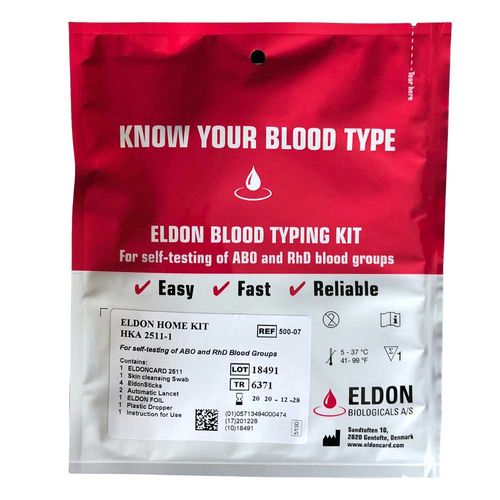
A Home Blood Group Test Kit can help you identify your blood group easily and accurately.
Zoom Health’s Home Blood Group Test Kit can help you identify if you have Type AB Positive Blood, or any other common blood type. Here’s how it works in simple steps:
- Open the foil pouch containing the test card and lay out the necessary items.
- Add a drop of water to each coloured reagent spot on the test card.
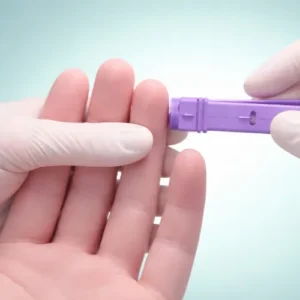
- Use the provided lancet to prick your fingertip and collect a small blood sample.
- Transfer the blood sample to each circle on the test card, stirring it gently with the applicators.
- Tilt the card in different directions to allow the blood to spread evenly.
- Read and record the results immediately, referring to the provided interpretation guide.
This simple at-home test can provide you with valuable information about your blood type, allowing you to be better prepared for potential medical situations.
What Customers Say
★★★★★ Sophie – July 2015
“Not only was it fairly painless and easy to do this test, but this company provides very detailed instructions so that it is almost impossible to mess up. I think that everyone should get one of these tests. The information that you get could be lifesaving.”
★★★★★ Ash L – April 2015
“This home blood test kit was really simple to use. The little blood pricking tool that comes with the kit is fairly painless to administer and makes a tiny hole. Great kit for the money and came next day.”
★★★★★ Anonymous – November 2024
“Efficient delivery, and process as described. Very pleased. Would definitely recommend this service if you want to know your blood group.”
Take Action: At Zoom Health, we understand the importance of having this knowledge readily available. That’s why we keep our Home Blood Group Test Kits in stock, ensuring quick delivery to your doorstep. Whenever possible, we ship the same day using Royal Mail 24.
Don’t wait until an emergency arises – take control of your health today by ordering this essential kit from Zoom Health. With our commitment to quality and swift delivery, you can have peace of mind knowing your blood type is just a simple test away.
About the Author
Anthony Cunningham – Health Writer & Editor
Anthony Cunningham, BA (Hons), MA, is a UK-based health writer and editor with over 20 years’ experience running Zoom Health, a trusted source for home health tests, preventive care, and wellness guidance. He creates clear, evidence-based articles using NHS, NICE, and WHO guidance. Where possible, content is reviewed by practising clinicians to enhance accuracy and reliability, helping readers make informed healthcare decisions.
You May Also Like
Explore more articles on blood types and health testing: