About This Article
Zoom Health has supplied home health tests to UK customers for nearly 20 years. This guide draws on our experience helping thousands of people understand their blood type and its significance for transfusions and health. Always consult a healthcare professional for medical advice.
Published: May 29, 2023 | Last Updated: January 25, 2026 | By: Anthony Cunningham
Contents
What Is B Positive Blood Type?
Your blood type is inherited. Like eye colour, blood type is passed genetically from your parents. Your blood group, whether it is type A, B, AB or O is based on the blood types of your mother and father. The B Positive Blood Type is comparatively rare. In the UK, 1 in 13 of blood donors has the B Positive Blood Type. As a percentage of the population, 8% in the UK will have this blood type.
Having B positive blood means that your red blood cells have B antigens and your plasma has anti-A antibodies. This makes it important to ensure that if you ever need a blood transfusion, you receive blood that is compatible with your blood type.
Blood types are determined by specific proteins called antigens that sit on the surface of red blood cells. According to NHS guidance on blood transfusions, understanding your blood type is essential for safe medical care, as receiving incompatible blood can trigger serious immune reactions.
B Positive Blood Compatibility
If you are a blood donor with this type of blood, your blood can be received by people with B positive and AB positive blood. This means that approximately 16% of the UK population can safely receive your donated blood.
Who Can Receive B Positive Blood?
People with B positive blood can donate to:
- B positive recipients
- AB positive recipients
Who Can Donate to B Positive Patients?
If you have B positive blood, you can receive blood transfusions from:
- B positive donors
- B negative donors
- O positive donors
- O negative donors (universal donors)
This compatibility is based on the presence or absence of A and B antigens on red blood cells. The NHS Blood and Transplant service carefully matches donor blood to recipients to ensure compatibility and prevent potentially life-threatening transfusion reactions.
Understanding the Rh Factor
The “positive” in B positive refers to the Rh factor, also known as the RhD antigen. This is a specific protein found on the surface of red blood cells. If you have this protein, you are Rh positive. If you lack it, you are Rh negative.
Being RhD positive is more common than being RhD negative. The Rh factor becomes particularly important during pregnancy, as Rh incompatibility between mother and baby can lead to complications. For this reason, pregnant women routinely have their blood type checked early in pregnancy to identify any potential risks.
If you receive blood from a donor whose blood cells contain antigens your body doesn’t recognise, your immune system may attack the donated red blood cells. The results could be life-threatening, which is why blood type matching is so carefully controlled in medical settings.
Health Implications of B+ Blood
While being B positive may seem like a disadvantage due to its rarity, it also has some advantages. Studies have shown that people with this blood type are less susceptible to certain infections, such as cholera and E.coli. However, they may be more prone to developing autoimmune disorders, such as multiple sclerosis.
Research published in medical journals has revealed interesting connections between blood types and various health conditions. A comprehensive study examining over five million people found that blood type can influence susceptibility to different diseases, though researchers emphasise that blood type is just one of many factors affecting health.
Disease Susceptibility and Blood Type
According to research, people with B blood type may have different disease susceptibilities compared to other blood groups. Studies suggest that type B individuals may have protective factors against certain conditions, whilst facing slightly elevated risks for others. However, it’s important to understand that many factors beyond blood type influence your overall health risk, including age, lifestyle, family history, and environmental factors.
The relationship between blood groups and disease is an active area of medical research. Scientists continue to investigate how blood type antigens may interact with various pathogens and influence immune responses, though most associations remain modest and should not cause undue concern.
Finding Out Your Blood Type
There are lots of ways to find out your blood type. The importance of knowing your blood type is to stop the risk of receiving an incompatible blood type if a transfusion is needed. If the wrong blood types are mixed, it can cause a clumping of blood cells that can be potentially fatal.
If you do not know your blood group, you can contact your local doctor’s surgery or blood donation group to make an appointment and try to find out. (Note: Your doctor may not be willing to give you a blood test when there is no medical need to carry one out.)
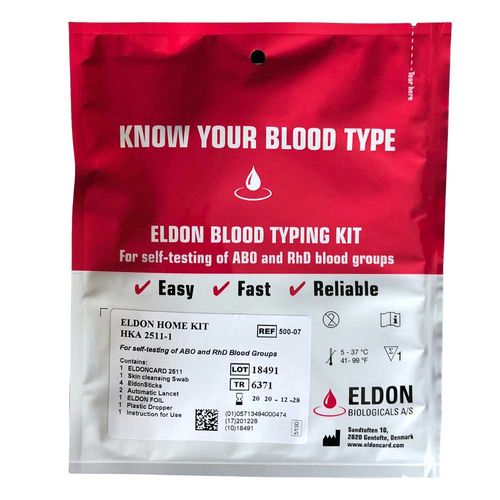
The easiest way to find out your blood group is by taking a test at home. We suggest the home blood group test for this purpose. As well as being an inexpensive kit, this product also produces results within minutes. Also, you can test at home as soon as the packet from Zoom Health pops through your letterbox, no waiting for days or weeks for a surgery appointment!
What Customers Say
★★★★★ Sophie – July 2015
“I decided to get one of these for every member of my family; knowing your blood group is so important. It’s foolproof, it comes with everything you need, and the information that you get could be lifesaving for you or another person.”
★★★★★ Rose – February 2016
“Easy to use and very clear! Pin prick doesn’t hurt at all, so well worth doing if you want to find out your blood type.”
★★★★★ Steve Sylvester – July 2020
“I found the home blood group testing Kit straight forward and easy to use. The results were amazing and would have no reservations in recommending this to those looking to find out what their blood group is.”
Take Action: Discover your blood type today with our simple home test kit. Results in minutes, no GP appointment needed.
Why Knowing Your Blood Type Matters
Understanding your blood type is valuable for several important reasons beyond emergency transfusions. It helps healthcare providers make informed decisions about your medical care, assists in family planning discussions, and enables you to be a more informed blood donor if you choose to donate.
Medical Emergencies
In emergency situations where immediate blood transfusion is required, knowing your blood type in advance can save precious time. While hospitals will always verify your blood type before transfusion, having this information readily available can streamline emergency care procedures.
Pregnancy Planning
For women planning pregnancy or currently pregnant, blood type information is essential. Rh incompatibility between mother and baby can be managed effectively when identified early, preventing complications through appropriate medical interventions.
Blood Donation
Knowing you have B positive blood means you can contribute to helping patients with B+ or AB+ blood types. Blood donation services are always in need of donors from all blood groups to maintain adequate supplies for patients requiring transfusions.
Key Takeaways
- B positive blood type occurs in approximately 8% of the UK population
- B+ individuals can receive blood from B+, B-, O+, and O- donors
- B+ blood can be donated to B+ and AB+ recipients
- The Rh factor (positive) is a protein on red blood cells that affects compatibility
- Home blood typing kits provide a quick, affordable way to learn your blood type
- Knowing your blood type is important for medical emergencies, pregnancy, and blood donation
About the Author
Anthony Cunningham – Health Writer & Editor
Anthony Cunningham, BA (Hons), MA, is a UK-based health writer and editor with over 20 years’ experience running Zoom Health, a trusted source for home health tests, preventive care, and wellness guidance. He creates clear, evidence-based articles using NHS, NICE, and WHO guidance. Where possible, content is reviewed by practising clinicians to enhance accuracy and reliability, helping readers make informed healthcare decisions.
You May Also Like
Explore more articles on blood types and health testing: