About This Article
About This Article: Zoom Health has supplied home health products and hearing protection to UK customers for nearly 20 years. This guide draws on our experience helping thousands of people improve their sleep, protect their hearing, and find the right earplug for their needs. Always consult a healthcare professional if you experience ear pain, hearing loss, or recurring ear problems.
Published: 29 April 2026 | By: Anthony Cunningham
Background noise is one of the most consistent enemies of sustained concentration. Research into cognitive performance consistently finds that irrelevant speech – conversations happening nearby – is particularly disruptive to reading comprehension, writing and memory tasks, because the brain allocates processing resources to monitoring language even when it is not relevant to the task at hand. For students, remote workers, writers and anyone else who needs to sustain focus for extended periods in a shared or noisy environment, earplugs are a practical and inexpensive tool for creating a more productive acoustic environment. But choosing the right earplug for studying is more nuanced than it might seem – and the instinct to reach for the highest-rated option is often the wrong one.
Why Maximum Attenuation Is Not Always the Right Choice for Studying
When people think about blocking noise for concentration they often assume they want the most powerful earplug available. In practice, maximum attenuation creates its own problems in a study context. An earplug rated at SNR 37dB in a typical library or quiet café environment registering around 50 to 55dB reduces effective noise exposure to 13 to 18dB – approaching the threshold of hearing for normal conversation. The result is a level of isolation that many people find disorienting, anxiety-inducing, or simply too disconnected from their environment for sustained comfortable work.
There is also a practical dimension. In a library, university common room or café, you may need to hear your name called, respond to a colleague, or be aware of your surroundings for personal safety. A 37dB earplug makes all of these significantly more difficult. An earplug of 20 to 25dB reduces the same 55dB environment to around 30 to 35dB – noticeably quieter, distractions meaningfully reduced, but still allowing you to function normally in a shared space. That is the right level of attenuation for most study environments.
The exception is studying at home in a genuinely noisy environment – construction nearby, loud neighbours, a noisy household – where higher attenuation is genuinely warranted. In those situations, 30dB or above is appropriate. Understanding which scenario you are in before choosing an earplug is the most important step in the selection process.
Earplugs vs Noise-Cancelling Headphones for Studying
Noise-cancelling headphones are the most common alternative to earplugs for study focus, and they are worth comparing directly. Headphones have advantages: active noise cancellation is effective against low-frequency constant noise (air conditioning, traffic hum), and they can play music or white noise if that helps concentration. Their disadvantages are equally real: they are expensive, require charging, are bulky to carry, signal unavailability conspicuously in shared spaces, and cause ear fatigue over extended sessions from the pressure of the earcup and the active noise cancellation itself.
Earplugs are inexpensive, require no power, are discreet enough to be barely noticeable, and create no ear fatigue from active electronics. For passive attenuation of speech and mid-frequency noise – the primary source of study disruption – a well-chosen foam earplug is as effective as noise-cancelling headphones at a fraction of the cost. Many serious students and academics use both: earplugs for pure focus sessions, headphones for longer sessions where they want audio alongside attenuation. The two are complementary rather than mutually exclusive.
Our Top Picks for Studying Earplugs
Top Pick for Libraries and Cafés: Moldex Mellows Earplugs
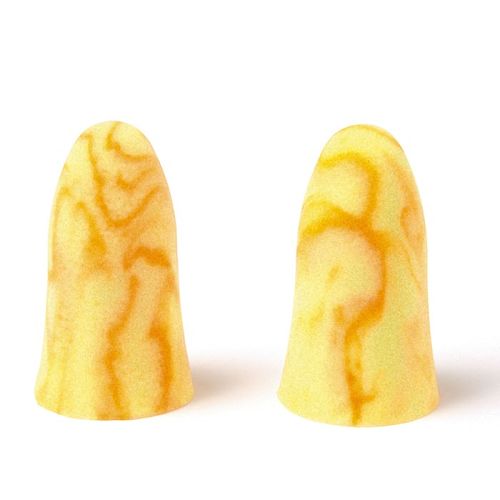
The Moldex Mellows are the earplug I recommend most consistently for studying in shared public environments – libraries, university spaces, cafés and co-working spaces. At SNR 22dB they sit at exactly the right attenuation level for these environments: enough to reduce the irrelevant speech and ambient noise that disrupts concentration, not so much that you are isolated from your surroundings. Moldex specifically designed the Mellows to provide low noise reduction in the speech frequency range, which means they attenuate the higher-frequency ambient noise that drives distraction while preserving enough of the lower-frequency speech range to allow you to respond when someone speaks to you directly. The extra-soft, extra-light foam is comfortable for extended wear across a full study session, and the small profile fits even narrower ear canals. These are genuinely the smartest earplug for the majority of study scenarios.
SNR 22dB | Speech-frequency preserving | All-day comfort | Small canal fit | Buy from Zoom Health – from £1.99
Best for Noisy Home Environments: Mack’s Ultra Soft Foam Earplugs
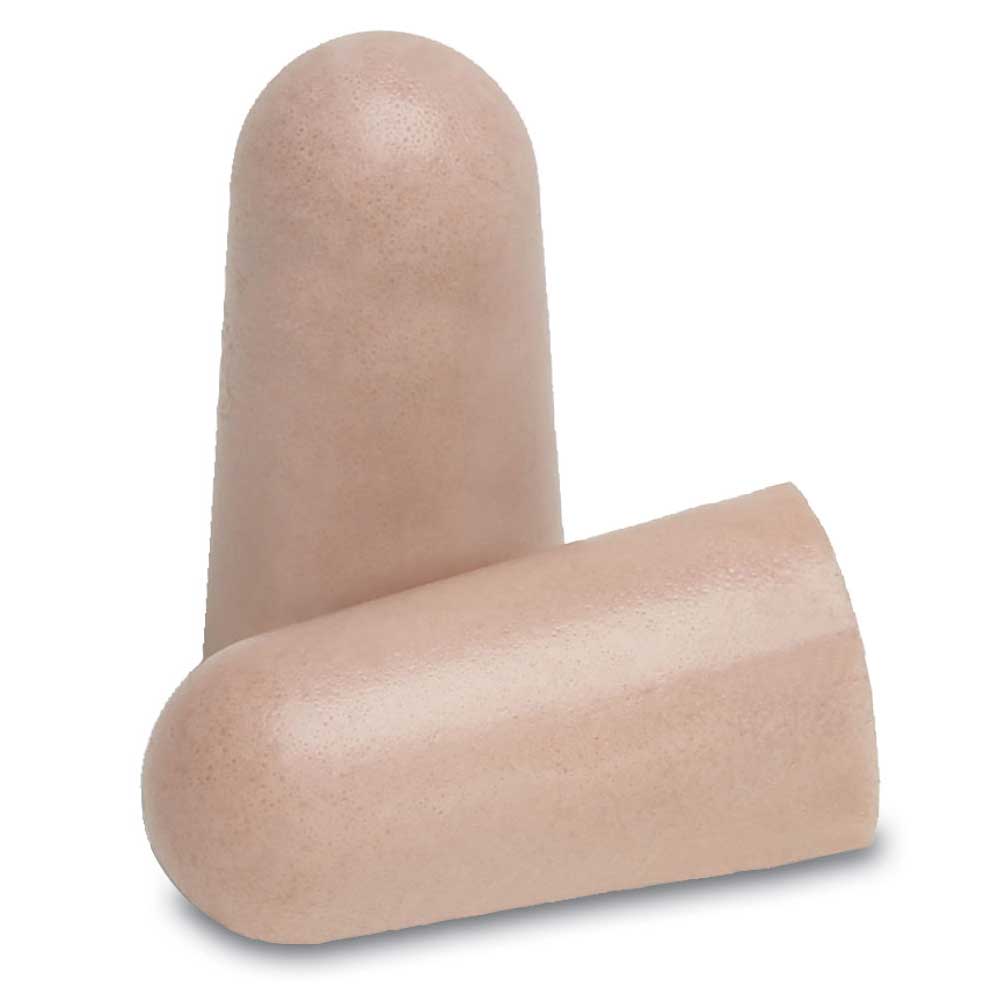
For studying at home in a genuinely noisy environment – building work nearby, a busy household, traffic through thin windows – higher attenuation is warranted and the Mack’s Ultra Soft Foam Earplugs at NRR 32dB are an excellent choice. The proprietary Ultra Soft Comfort Foam makes them comfortable for extended study sessions without the pressure build-up that causes discomfort over several hours. The tapered design makes insertion easy, and the skin tone colour is unobtrusive if you are studying in a shared household where drawing attention to your earplugs would invite interruption. At NRR 32dB they provide enough attenuation to make a busy household environment manageable for focused work without creating the total isolation that higher-rated options can produce.
NRR 32dB | Ultra-soft foam | Extended wear comfort | Discreet colour | Buy from Zoom Health – from £2.99
Best All-Rounder: Moldex Pura Fit Earplugs
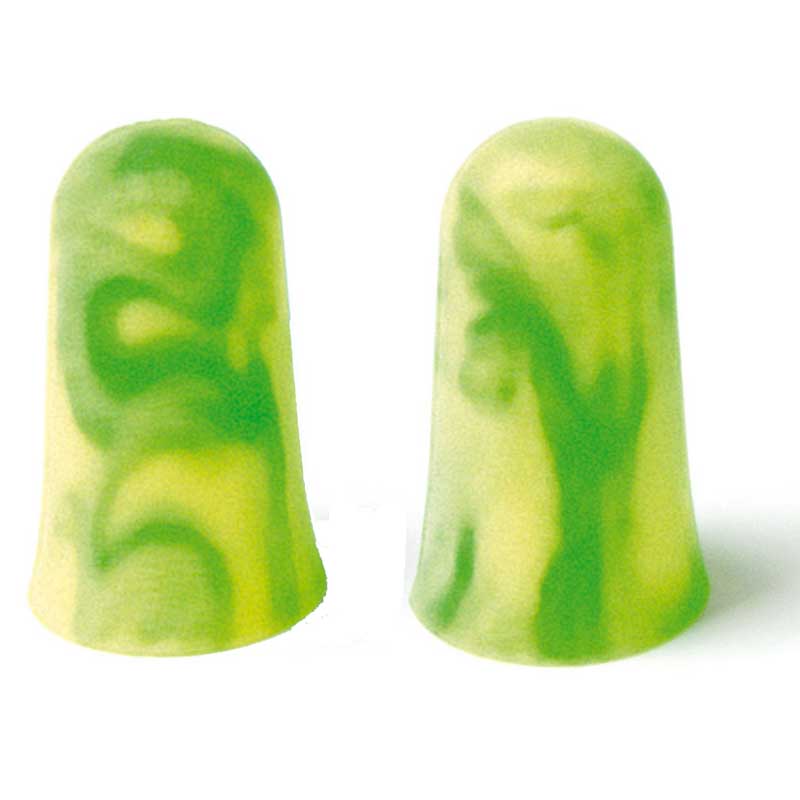
If you want a single earplug that works well across both quieter shared environments and noisier home settings, the Moldex Pura Fit at SNR 33dB sits in a useful middle ground. The super-soft extra-light foam is among the most comfortable in our range for extended wear – which matters considerably when a study session runs to three or four hours. The longer tapered body makes insertion easy without fuss, and the anchoring taper keeps the earplug in position through head movements and changes of position that occur during long sessions. The biodegradable packaging is a consideration for students and academics who use earplugs daily and accumulate packaging over time. At 33dB it is slightly higher than ideal for a very quiet library but entirely appropriate for most other study environments.
SNR 33dB | Best extended-wear comfort | Anchoring taper | Biodegradable packaging | Buy from Zoom Health – from £2.99
Maximum Focus: 3M EARsoft Yellow Neons
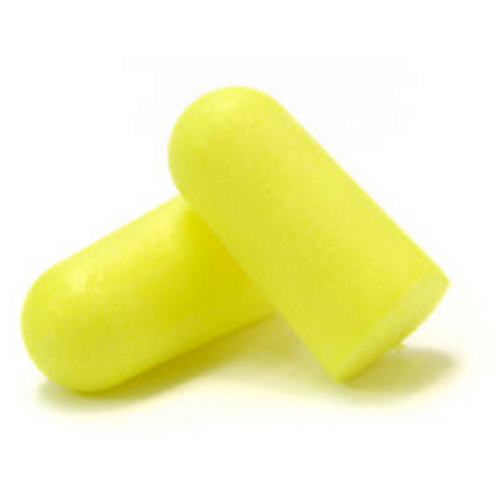
For students who work from home and need maximum acoustic isolation during revision or writing – particularly those who find any audible sound disruptive to concentration and are comfortable with a higher level of attenuation – the 3M EARsoft Yellow Neons at SNR 33dB offer strong performance alongside the extended-wear comfort that long study sessions demand. The hypoallergenic foam formulation is appropriate for daily academic use where regular contact with the foam material is unavoidable, and the tapered design distributes pressure evenly enough to remain comfortable across a full study day. A reliable and well-engineered choice for the student who needs to create a genuine cone of silence at their desk.
SNR 33dB | Hypoallergenic | Extended-wear comfort | Daily use appropriate | Buy from Zoom Health – from £2.99
Tips for Getting the Most from Study Earplugs
Correct insertion makes a significant difference to how well an earplug performs. Roll the earplug firmly between thumb and forefinger until it forms the thinnest possible cylinder, pull the ear gently upward and backward with your opposite hand, insert and hold for 20 to 30 seconds. A correctly sealed earplug creates a noticeable muffling of ambient sound as the seal forms – you will feel the difference. If you are finding earplugs uncomfortable after an hour or two, try a softer option rather than persisting with discomfort – the Moldex Mellows or Mack’s Ultra Soft are the most comfortable extended-wear options in our range.
Some students find a short break from earplugs every 90 minutes or so – removing them for five minutes while taking a break – helps prevent the mild ear fatigue that can develop during very long sessions. This mirrors the Pomodoro technique of structured work and break intervals, and the earplug removal serves as a useful physical cue that a break has begun.
Not Sure Which to Try First?
Our earplug sample packs are the most efficient way to find your preferred study earplug without committing to a bulk purchase of a single product. The Women’s Earplugs Sample Pack and Men’s Earplugs Sample Pack each contain 15 pairs including the Moldex Mellows, Pura Fit and 3M Yellow Neons recommended above, alongside 12 other options across foam, silicone and wax materials.
Find your perfect study earplug
Try multiple options with our Women’s Earplugs Sample Pack or Men’s Earplugs Sample Pack – 15 pairs each across three materials.
About the Author
Anthony Cunningham – Health Writer & Editor
Anthony Cunningham, BA (Hons), MA, is a UK-based health writer and editor with over 20 years’ experience running Zoom Health, a trusted source for home health tests, preventive care, and wellness guidance. He creates clear, evidence-based articles using NHS, NICE, and WHO guidance. Where possible, content is reviewed by practising clinicians to enhance accuracy and reliability, helping readers make informed healthcare decisions.