About This Article
Zoom Health has more than 20 years’ experience providing clear, practical health information. This article explains the common causes of toothache, warning signs, diagnosis, treatment and temporary ways to manage pain while awaiting dental care.
Published: 4 February 2024 | Last Updated: 13 September 2026 | By Anthony Cunningham
Contents
- What Causes Toothache
- Warning Signs Not to Ignore
- Diagnosing Toothache
- Treating Toothache
- Relieving Pain at Home
- Questions for Your Dentist
What Causes Toothache
Toothache refers to pain in and around the teeth and jaws. The pain can come and go, be mild or severe. It may feel like a sharp pain that suddenly hits when eating or drinking hot or cold foods. Toothache can also be a constant dull ache or throbbing, often worse at night. An infected tooth may also cause fever or headache.
It can be hard to pinpoint the exact location of toothache. Pain from lower molar teeth may feel like it’s coming from the ear. Upper tooth pain can seem to come from the sinuses, behind the cheekbones and forehead. The jaw near the sore tooth may also be tender.
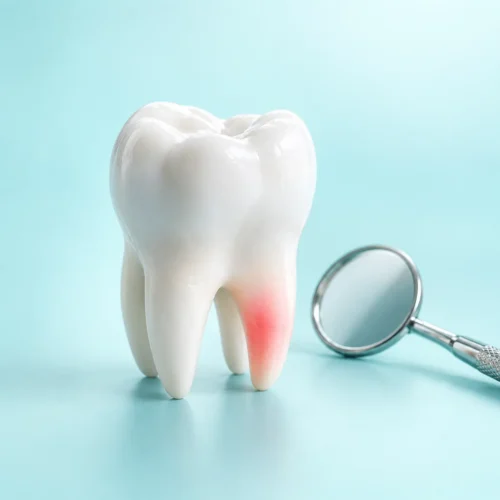
Toothache is usually caused by inflammation of the pulp inside the tooth. The pulp contains sensitive nerves and blood vessels. Inflammation occurs due to:
- Tooth decay – holes in the enamel let bacteria reach the pulp.
- Cracks in the tooth.
- Exposed dentine from receding gums.
- Decay under old fillings.
- Dental treatments irritating the pulp.
- Abscesses at the tooth root caused by infection.
Warning Signs Not to Ignore
While toothache is often caused by dental problems, sometimes jaw pain can indicate something more serious. Below are some warning signs that require prompt medical attention:
- Pain accompanied by swelling of the jaw, neck, or face could indicate a dental abscess. Abscesses should be treated quickly to prevent the spread of infection.
- Toothache combined with difficulty breathing or swallowing may be a sign of infection spreading from the tooth to other areas.
- New numbness or altered sensation in the face, mouth or lip should be assessed promptly by a dentist or healthcare professional.
- Jaw pain can occasionally have a non-dental cause. Call 999 if it occurs with possible heart attack symptoms such as chest pain, breathlessness, sweating, nausea or pain spreading to the arm, neck, jaw or back.
Contact a dentist promptly if toothache lasts more than two days, does not improve with painkillers, or is accompanied by fever, pain when biting, red gums, a bad taste or swelling of the cheek or jaw. Call 999 or go to A&E if swelling around the mouth or neck makes it difficult to breathe, swallow or speak.
Diagnosing Toothache
The dentist will ask about your pain and examine your mouth. X-rays help identify the problem.
Treating Toothache
Before seeing a dentist, try:
- Avoid hot, cold or sweet foods.
- Painkillers like paracetamol or ibuprofen.
- A pain-relieving mouth gel suitable for your age, used according to the product instructions.
- Toothpaste for sensitive teeth.
- Rinse your mouth with warm salt water, but do not give this to children because they may swallow it.
The dentist will tailor treatment to the cause:
- Fillings treat decay and cracked fillings.
- A filling or crown may be used to repair a cracked or damaged tooth.
- Root canal treatment may be needed if the dental pulp is infected. Antibiotics are generally reserved for infections that are spreading or causing systemic symptoms.
- Extraction if the tooth can’t be saved.
Relieving Pain at Home
While waiting to see the dentist, several home remedies may provide temporary relief:
- Cold compress – Applying a cold pack or ice wrapped in cloth to the outside of your cheek can reduce inflammation and swelling. Don’t apply ice directly to skin.
- Salt water rinse – Swishing with a warm saltwater solution may help ease discomfort. Dissolve half a teaspoon of salt in a glass of warm water, rinse your mouth and spit it out. Children should not use a salt water rinse because they may swallow it.
- Over-the-counter pain medication – Painkillers such as ibuprofen or paracetamol can help ease pain and discomfort. Follow the dosage instructions and ask a pharmacist if you are unsure which medicine is suitable for you.
Home measures may temporarily reduce discomfort, but only a dentist can diagnose and treat the underlying cause. Arrange dental care if the pain persists or you have any warning signs.
Questions for Your Dentist
When you see the dentist about toothache, come prepared with questions:
- What is causing my tooth pain?
- Do I need any dental work like a filling or root canal?
- What treatment options do I have?
- Are there any oral hygiene steps I should be taking?
- How can I prevent toothaches in the future?
Don’t be afraid to ask your dentist anything, however minor it may seem. Understanding the cause of your toothache and the recommended treatment will help you feel in control of managing the situation.
Understanding the cause and following your dentist’s advice can help with treatment and prevention. Along with professional dental care, good oral hygiene habits at home will help keep tooth pain at bay.
About the Author
Anthony Cunningham, BA (Hons), MA, is a UK-based health writer and editor with over 20 years’ experience running Zoom Health, a trusted source for home health tests, preventive care, and wellness guidance. He creates clear, evidence-based articles using NHS, NICE, and WHO guidance. Where possible, content is reviewed by practising clinicians to enhance accuracy and reliability, helping readers make informed healthcare decisions.
Medical Disclaimer
This article is for general information only and is not a substitute for professional medical advice, diagnosis or treatment. If you have concerns about your health or symptoms, speak to your GP or another qualified healthcare professional. In an emergency, seek urgent medical help.