About This Article
Zoom Health has supplied home health tests to UK customers for nearly 20 years. This guide draws on our experience helping thousands of people monitor their blood pressure at home. Always consult a healthcare professional for medical advice.
Published: 2 January 2024 | Last Updated: 1 February 2026 | By: Anthony Cunningham
Home blood pressure monitoring can provide you and your doctor with valuable information about your health. A device you use at home allows more regular blood pressure checks than occasional readings at your GP surgery.
Wrist blood pressure monitors are a convenient option for at-home use. However, they require some care to use properly. Follow some key tips and you can get accurate blood pressure readings from a wrist monitor.
What Is a Wrist Blood Pressure Monitor?
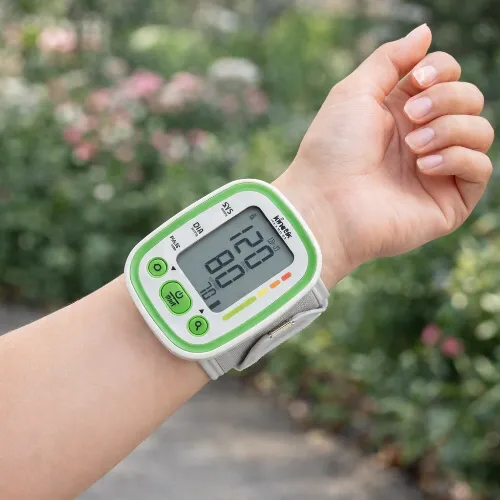
This is a device that you use yourself to measure your blood pressure. Most monitors have a cuff that wraps around your wrist. The cuff connects to a digital display that shows your blood pressure measurements.
Wrist monitors also come in wearable forms similar to a watch. These may track other health metrics like your activity levels and sleep patterns.
Using a wrist monitor allows you to check your blood pressure during normal daily activities. This provides you and your doctor a more complete view of your blood pressure outside the surgery. According to NHS guidance, wrist monitors tend to be less accurate than upper arm monitors. So doctors only recommend them in certain situations.
When Might You Need a Wrist Monitor?
Your doctor may advise using a wrist blood pressure monitor if:
- You received a diagnosis of high blood pressure (hypertension) or low blood pressure (hypotension)
- You show signs of common risk factors for high blood pressure
- New blood pressure medication has been given to you and your doctor wants to see how well it works
- You are pregnant
- Your doctor suspects you have “white coat hypertension” (high blood pressure only at the surgery) or “masked hypertension” (high blood pressure only at home)
Doctors usually recommend an upper arm cuff monitor, which resembles the device used at your surgery. However, for some people, a wrist monitor makes more practical sense.
Diagnosed with High or Low Blood Pressure
If you received a diagnosis of hypertension or hypotension, home monitoring can help provide your doctor a clearer picture of your overall blood pressure trends outside the surgery setting.
Your doctor may want you to check your levels at home to see how well medication and lifestyle changes are working to manage your blood pressure. Monitoring at home may also reveal if you have “masked hypertension”, meaning your blood pressure is only high when measured on your own rather than at your doctor’s office.
For low blood pressure, home monitoring can identify if you are experiencing drops that could indicate an underlying medical cause needing treatment. The NHS notes that low blood pressure usually only needs treatment if it causes symptoms.
At Risk for High Blood Pressure
Several medical conditions and lifestyle factors increase risk for high blood pressure, including:
- Being overweight or obese
- Physical inactivity
- Excessive alcohol intake
- High salt intake
- Chronic stress
- Older age
- Family history of hypertension
- Certain chronic conditions like kidney disease or diabetes
If you have one or more risk factors, your doctor may suggest home blood pressure monitoring even if your current readings are normal. Tracking your levels over time could help detect early signs of hypertension, allowing earlier intervention.
Starting New Medication
If your doctor prescribes blood pressure medication, they will likely want you to monitor your levels at home. This allows you and your doctor to evaluate how effectively the medication is lowering your blood pressure.
Home monitoring provides a more comprehensive view compared to relying solely on office visits. Your doctor can use your home readings to determine if medication adjustments are needed.
Continued home monitoring can also identify if your blood pressure becomes too low, which is a possible side effect of some blood pressure medications. According to NHS medicines guidance, beta-blockers and other antihypertensives can occasionally cause blood pressure to drop too much.
Pregnancy
Pregnant women face increased risk for developing high blood pressure or preeclampsia. Doctors often recommend home blood pressure monitoring during pregnancy to detect signs of these dangerous conditions.
Tracking your blood pressure daily in the second half of pregnancy can help identify preeclampsia, allowing early treatment to prevent complications. The NHS recommends notifying your midwife promptly if you notice a spike in your readings.
After giving birth, continue monitoring blood pressure for several weeks to ensure it returns to a healthy level. Your doctor may adjust medication started during pregnancy as your blood pressure normalises.
Is a Wrist Monitor Right for You?
Talk to your doctor before purchasing any blood pressure device. The American Heart Association advises monitors that fit your upper arm over wrist devices. Upper arm monitors tend to be more reliable.
However, a wrist monitor may suit you if:
- A cuff monitor does not fit well on your upper arm due to arm size
- You have medical conditions making upper arm devices unsafe or painful (such as lymphoedema)
- You have limited mobility in your arms
Your doctor can determine if a wrist monitor is appropriate for your circumstances. They will know if you have reasons an upper arm cuff monitor would not work well. Your doctor can also advise on proper technique to obtain accurate results from a wrist monitor.
Are Wrist Monitors Accurate?
Doctors normally recommend upper arm monitors as the most accurate. But wrist monitors can provide precise readings when you closely follow usage instructions, including positioning your arm properly.
Wrist monitors tend to work better than fingertip monitors as they are more accurate. You can take your wrist monitor to your next appointment so your doctor can check its accuracy.
How to Use a Wrist Blood Pressure Monitor
Before using a new monitor, take it to your doctor to validate the accuracy. Your doctor can compare wrist and upper arm monitor readings in their office. This will reveal if your device provides accurate readings at home.
To get the most out of your monitor, you should:
- Use proper technique
- Keep a log of readings to share with your doctor
- Learn what is normal for you
Use Proper Technique
Incorrect technique can lead to inaccurate blood pressure readings. When you bring your monitor to your appointment, ask your doctor to demonstrate proper technique. Practicing the right method before using the monitor at home can help.
Follow these steps when measuring your blood pressure at home:
- Avoid caffeine, tobacco, and exercise for 30 minutes before taking your blood pressure. Also use the toilet and sit still for five minutes.
- Decide which arm you will use. This is the arm that needs proper positioning. Your other arm can be in a comfortable position.
- Sit in a chair with both feet flat on the floor.
- Position your chair facing a flat surface like a table directly in front of you.
- Put the cuff on your wrist and secure it.
- Rest your elbow on the table.
- Gently place your hand on your chest so your wrist is level with your heart.
- Relax and remain in this position before starting the measurement.
- Take the measurement without moving or talking.
When checking your blood pressure, avoid:
- Having your wrist above or below heart level
- Resting your wrist on the table or your lap
- Keeping your arm vertical
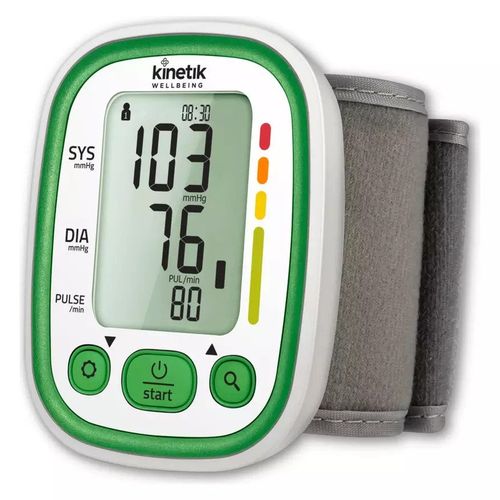
Take Action: Monitor your blood pressure accurately at home with the Kinetik Wellbeing Advanced Wrist Blood Pressure Monitor.
What Customers Say
★★★★★ Dale – March 2020
“Great little machine – I use it to monitor daily changes in my blood pressure and it works well. Recommended.”
★★★★★ Gillian – March 2020
“This small gadget is great. I’ve found that its readings are as accurate as the larger blood pressure monitor I have at my office. It’s nice and portable which is the bonus for me.”
★★★★★ Taff – March 2020
“Unit arrived quickly and well packed. Once unpacked I found the unit easy to use and it stores away nicely. Good for recording blood pressure and pulse readings for my regular trips to the GP.”
Keep a Blood Pressure Log
Your monitor may store readings in its memory. But you should still write down all your results in a notebook to share with your doctor. You can also print and use blood pressure logs available online from the Blood Pressure UK charity.
Ask your doctor what details to include in your log. General guidance includes:
- Note the date and time of each reading.
- Take your blood pressure twice daily, such as before breakfast and before bed. For each time, take two back-to-back measurements. So you would record four readings per day. Ask your doctor how many days per week to check.
- Jot down any relevant notes for the day. Make note if you have had a troublesome day at work, or if you had trouble sleeping, or you felt ill. Your doctor may also want you to record when you take certain medications.
Learn What’s Normal for You
Some people naturally have lower blood pressure like 90/60 mmHg. For others, that level could indicate a problem. Before using a home blood pressure monitor, ask your doctor:
- What is a normal blood pressure range for me?
- What level is high for me?
- What level is low for me?
- How should I contact the GP if I have questions about my readings?
When Medical Help Is Needed
⚠️ Emergency Warning
You should seek help if your blood pressure has increased to 180/120 mmHg or above, you are having high blood pressure symptoms, or you do not feel well and are worried about your blood pressure. You may be experiencing a hypertensive crisis which is a medical emergency.
Call 999 immediately.
Call your doctor if:
- Your blood pressure is higher or lower than usual for you
- You have trouble using your home monitor
- You have questions about your readings
Choosing a Validated Monitor
When selecting a wrist blood pressure monitor, choose a clinically validated device. The British and Irish Hypertension Society maintains a list of validated blood pressure monitors for home use.
Look for monitors that:
- Have been clinically validated to international standards
- Fit your wrist size properly (check the stated cuff range)
- Include features like irregular heartbeat detection
- Store multiple readings for tracking trends
- Display readings clearly and are easy to operate
Final Thoughts on Wrist Blood Pressure Monitoring
Talk to your doctor before purchasing a wrist blood pressure monitor. Many devices are available, and it can be difficult to know which are best for you.
Also, remember that home devices do not replace medical care. They supplement measurements and advice from your doctor. Be sure to get your blood pressure and other vital signs checked at regular visits with your doctor.
About the Author
Anthony Cunningham – Health Writer & Editor
Anthony Cunningham, BA (Hons), MA, is a UK-based health writer and editor with over 20 years’ experience running Zoom Health, a trusted source for home health tests, preventive care, and wellness guidance. He creates clear, evidence-based articles using NHS, NICE, and WHO guidance. Where possible, content is reviewed by practising clinicians to enhance accuracy and reliability, helping readers make informed healthcare decisions.
You May Also Like
Explore more articles on blood pressure and cardiovascular health: