About This Article: Zoom Health has supplied home health tests to UK customers for nearly 20 years. This guide draws on our experience helping thousands of people understand their blood type and its implications for health and medical care. Always consult a healthcare professional for medical advice.
Published: July 2023 | Last Updated: November 2025 | By: Anthony Cunningham
Contents
What Is A Negative Blood Type?
In the UK, only 1 in 13 people have A negative blood. If you are a blood donor who has A negative blood, you can donate to anybody with a blood type of A or AB, regardless of the positive or negative. But, if you have A negative blood you can only receive A- or O- blood.
This means that individuals with A negative blood have fewer options for transfusions compared to those with other blood types. In emergency situations, receiving the appropriate blood type can mean the difference between life and death.
One unique trait of A negative blood is that it lacks the A and B antigens found in other blood types. This makes A negative blood highly sought after for rare medical conditions where the immune system attacks the body’s own cells, such as autoimmune disorders or during pregnancy when the mother’s immune system can attack the foetus.
Understanding Blood Type Antigens
Blood types are determined by the presence or absence of specific antigens on the surface of red blood cells. A negative blood means:
- A antigen present: You have the A antigen on your red blood cells
- Rh factor absent: You do not have the Rh D antigen (hence “negative”)
- Antibodies: Your plasma naturally contains antibodies against B antigens
The NHS Blood and Transplant service classifies blood types based on both the ABO system (A, B, AB, or O) and the Rh factor (positive or negative). Understanding your blood type is essential for safe medical treatment.
Blood Donations & Transfusions
Having Rh negative blood in some countries can be very dangerous. In Southeast Asia, including countries such as Thailand, only a very small percentage of the population has Rh negative blood. Because of this, there is a lack of people who can donate blood with Rh negative blood, which has led to a worrisome shortage in blood banks. This means that for foreigners, tourists, and the few Thai people with Rh negative blood, even a small accident or simple surgery can quickly become a life-threatening situation.
Due to its rarity, A negative blood is always in high demand for transfusions. Blood donation centres are always looking for individuals with this blood type to donate, as it can save countless lives. So, if you have A negative blood, consider becoming a blood donor and help make a difference in the lives of those in need.
Who Can Receive A Negative Blood?
A negative blood can be given to patients with:
- A negative blood type
- A positive blood type
- AB negative blood type
- AB positive blood type
This makes A negative donors particularly valuable in emergency situations where the recipient’s blood type may not be immediately known.
The NHS provides detailed guidance on blood transfusions and the importance of matching blood types correctly. Receiving incompatible blood can trigger a severe immune response that can be life-threatening.
Health Implications of A Negative Blood
Pregnancy Considerations
One of the most important health considerations for women with A negative blood is during pregnancy. If you are Rh negative and your baby is Rh positive (inherited from the father), your immune system may produce antibodies against the baby’s blood cells. This is known as Rh incompatibility.
Modern medicine addresses this through Anti-D immunoglobulin injections, which prevent the mother’s immune system from producing these antibodies. The NHS routinely monitors Rh negative mothers and provides this treatment as standard care during pregnancy.
Travel and Medical Planning
If you have A negative blood and plan to travel to regions where Rh negative blood is rare (such as parts of Asia, Africa, or South America), it’s essential to take precautions. Consider:
- Registering with international blood donor databases
- Carrying documentation of your blood type
- Purchasing comprehensive travel insurance that covers medical evacuation
- Researching medical facilities in your destination that maintain Rh negative blood supplies
Emergency Situations
In emergency situations where blood type cannot be immediately determined, O negative blood is typically used as it is the universal donor type. However, once your blood type is confirmed, matching transfusions are always preferred to minimize any potential complications.
How to Test Your Blood Type at Home
There are lots of ways to find out your blood type. The importance of knowing your blood type is to stop the risk of receiving an incompatible blood type if a transfusion is needed. If the wrong blood types are mixed, it can cause a clumping of blood cells that can be potentially fatal.
If you do not know your blood group, you can contact your local doctor’s surgery or blood donation group to make an appointment and try to find out. (Your GP may not be keen to give you a blood test when there is no medical need to carry one out, so be prepared for that!)
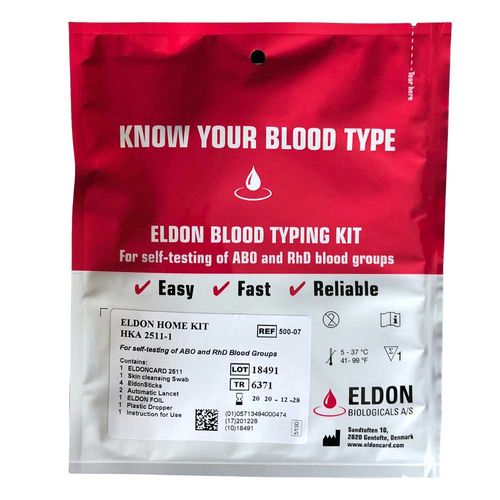
The easiest way to find out your blood group is by taking a test at home. We suggest the Eldon blood typing kit for this purpose. As well as being an inexpensive kit, this product also produces results within minutes. Also, you can test at home as soon as the packet from Zoom Health pops through your letterbox, no waiting for days or weeks for a surgery appointment!
How the Home Test Works
The Eldon blood typing kit is straightforward to use:
- Clean your finger with the alcohol wipe provided
- Use the lancet to prick your finger (virtually painless)
- Apply blood drops to the test card circles
- Mix with reagents using the provided sticks
- Read results after 2 minutes by comparing to the guide card
The entire process takes less than 5 minutes, and the kit contains everything you need including detailed instructions.
What Customers Say
★★★★★ Sophie — July 2015
“I decided to get one of these for every member of my family; knowing your blood group is so important. Not only was it fairly painless and easy to do this test, but the instructions are so detailed that it is almost impossible to mess up. The information you get could be lifesaving for you or another person.”
★★★★★ Ash L — April 2015
“This home blood test kit was really simple to use. I was a bit worried about doing this at home but I really should not have been. The little blood pricking tool that comes with the kit is fairly painless to administer and makes a tiny hole. Great kit for the money and came next day.”
★★★★★ Anonymous — November 2024
“Efficient delivery, and process as described. Very pleased. Would definitely recommend this service if you want to know your blood group.”
Find Out Your Blood Type Today
Order your home blood typing kit and get results in minutes. Fast UK delivery with everything you need included.
Why Knowing Your Blood Type Matters
Beyond emergency medical situations, knowing your blood type has several practical benefits:
- Pregnancy planning: Rh negative women can discuss Anti-D treatment with their midwife early in pregnancy
- Blood donation: You can help address critical shortages of rare blood types
- Family planning: Understanding potential Rh incompatibility issues before conception
- Medical records: Having accurate documentation for any future medical procedures
- Travel safety: Being prepared when visiting countries with limited blood supplies
- Organ transplantation: Blood type matching is essential for successful transplants
For individuals with A negative blood, this knowledge becomes even more critical given the rarity of the blood type and the limited options for receiving transfusions. Carrying a card or medical alert bracelet with your blood type can provide vital information to medical professionals in emergency situations.
Key Takeaways for A Negative Individuals
- Only 7-8% of the UK population has A negative blood
- You can donate to A+, A-, AB+, and AB- recipients
- You can only receive blood from A- or O- donors
- Rh negative mothers need Anti-D injections during pregnancy
- Your blood type is always in demand for donations
- Consider carrying blood type documentation when travelling
About the Author
Anthony Cunningham — Health Writer & Editor
Anthony Cunningham, BA (Hons), MA, is a UK-based health writer and editor with over 20 years’ experience running Zoom Health, a trusted source for home health tests, preventive care, and wellness guidance. He creates clear, evidence-based articles using NHS, NICE, and WHO guidance. Where possible, content is reviewed by practising clinicians to enhance accuracy and reliability, helping readers make informed healthcare decisions.
You May Also Like
Explore more articles on blood types and home health testing: